
Key Takeaways:
What is a Party Wall Agreement?
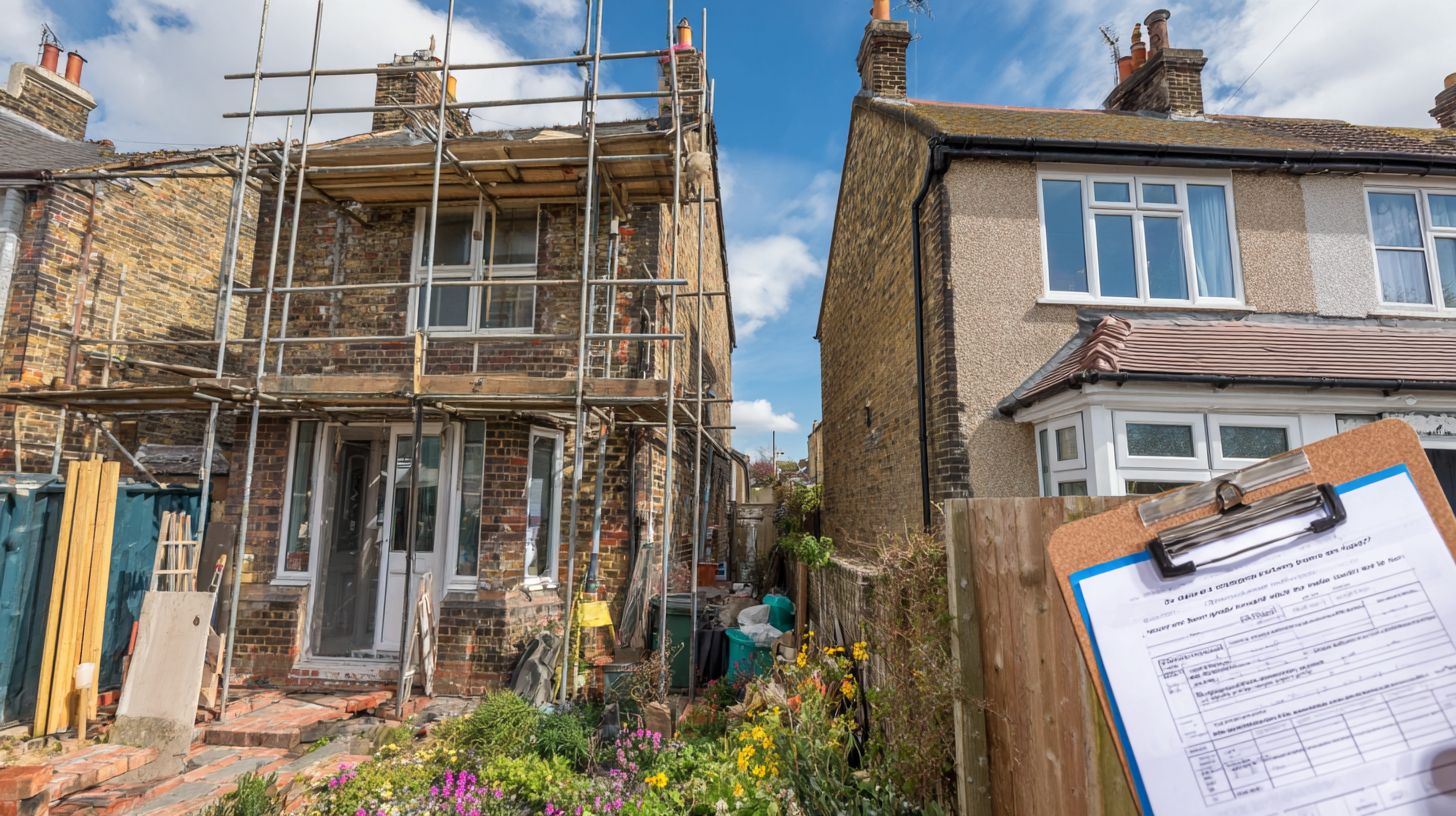
A Party Wall Agreement, formally designated as a Party Wall Award pursuant to the Party Wall Act 1996, constitutes a legally binding document that delineates the rights and obligations of property owners in circumstances where construction activities impact a shared boundary. This is particularly relevant for approximately 70% of semi-detached homes in England.
The aforementioned Act, which is available for review at legislation.gov.uk, mandates that notice be provided to adjoining owners prior to undertaking works such as rear extensions involving excavation work proximate to a party wall or the erection of a new Party Fence Wall.
For example, the excavation of foundations within 3 metres of a shared wall necessitates the establishment of such an agreement to assess and mitigate potential risks of damage.
The Award specifies access rights, protective measures (such as underpinning to preserve structural stability), and the apportionment of costs associated with surveys conducted by qualified party wall surveyors.
This framework ensures the preservation of structural integrity and mitigates the risk of disputes; failure to comply may result in the suspension of works, damage repair costs, and the incurrence of legal expenses, potentially leading to an injunction issued.
Homeowners are advised to issue notices at least two months in advance, respecting the notice period, utilising free templates prescribed by the Act to promote clarity and adherence to regulatory requirements.
The Legal Basis: Party Wall Act 1996
The Party Wall etc. Act 1996 applies specifically to England and Wales, requiring formal notices for certain works, such as excavations adjacent to neighbouring properties. In contrast, Scotland and Northern Ireland operate under common law principles, as outlined in guidance from the Royal Institution of Chartered Surveyors (RICS).
The Act addresses shared boundaries and specifies notifiable works under Sections 1 to 4, which pertain to the construction, alteration, or repair of party walls and fences. Section 6 covers excavations within three metres of an adjoining structure that exceed the depth of its foundations.
Comprehensive details are available in the Party Wall etc Act 1996 explanatory booklet from the UK government, which also covers retrospective agreement options for England and Wales, differing from Scotland and Northern Ireland.
According to a 2022 RICS study, achieving 85% compliance with notice requirements can reduce boundary disputes by up to 70%, avoiding counter notice issues.
Scotland and Northern Ireland, lacking a comparable statutory framework, depend more heavily on common law, which correlates with a higher incidence of court proceedings—over 20% more cases annually, based on RICS data.
Practical recommendation: Before commencing any works and obtaining planning permission, verify property boundary lines through the Land Registry and engage party wall surveyor services for notices, schedules, and awards to mitigate potential disputes and ensure full regulatory compliance.
When is it Required for a House Extension?
In densely populated urban centres such as London, where adjacent properties often share boundaries, a Party Wall Agreement is mandated for over 50% of residential extensions that necessitate compliance with building regulations. This requirement serves to mitigate potential delays and associated costs stemming from objections by neighbouring property owners.
Extensions Involving Shared Walls
In the case of semi-detached houses in England, any extension that involves penetrating a shared party wall—such as the insertion of a steel beam for a rear extension—necessitates the issue of a Party Wall Notice to protect structural integrity. This requirement is underscored by a 2023 incident in London, where failure to comply resulted in £10,000 worth of repair costs for damages.
To adhere to the provisions of the Party Wall etc. Act 1996 and avoid red tape, the following steps should be undertaken:
- Evaluate the nature of the wall by engaging a qualified structural engineer to ascertain whether it is load-bearing (which would necessitate deeper foundations in accordance with Building Regulations 2010 Part A – as detailed in the UK Government’s Approved Document A – typically requiring a minimum Foundations Depth of 1 metre) or non-structural.
- Provide formal notification to the adjoining owner at least two months prior to commencing work, utilising templates approved by the Royal Institution of Chartered Surveyors (RICS) and detailing the proposed activities, such as the insertion of a beam.
- Perform a comprehensive condition survey of the wall before any work begins (a process that generally takes one day) to record its existing state.
For Loft Conversions, securing early agreements on access rights is advisable to mitigate potential disputes, as demonstrated in a 2022 case in Bristol where mutual consent response from appointed chartered surveyors successfully averted project timeline delays.
Extensions Near Boundaries
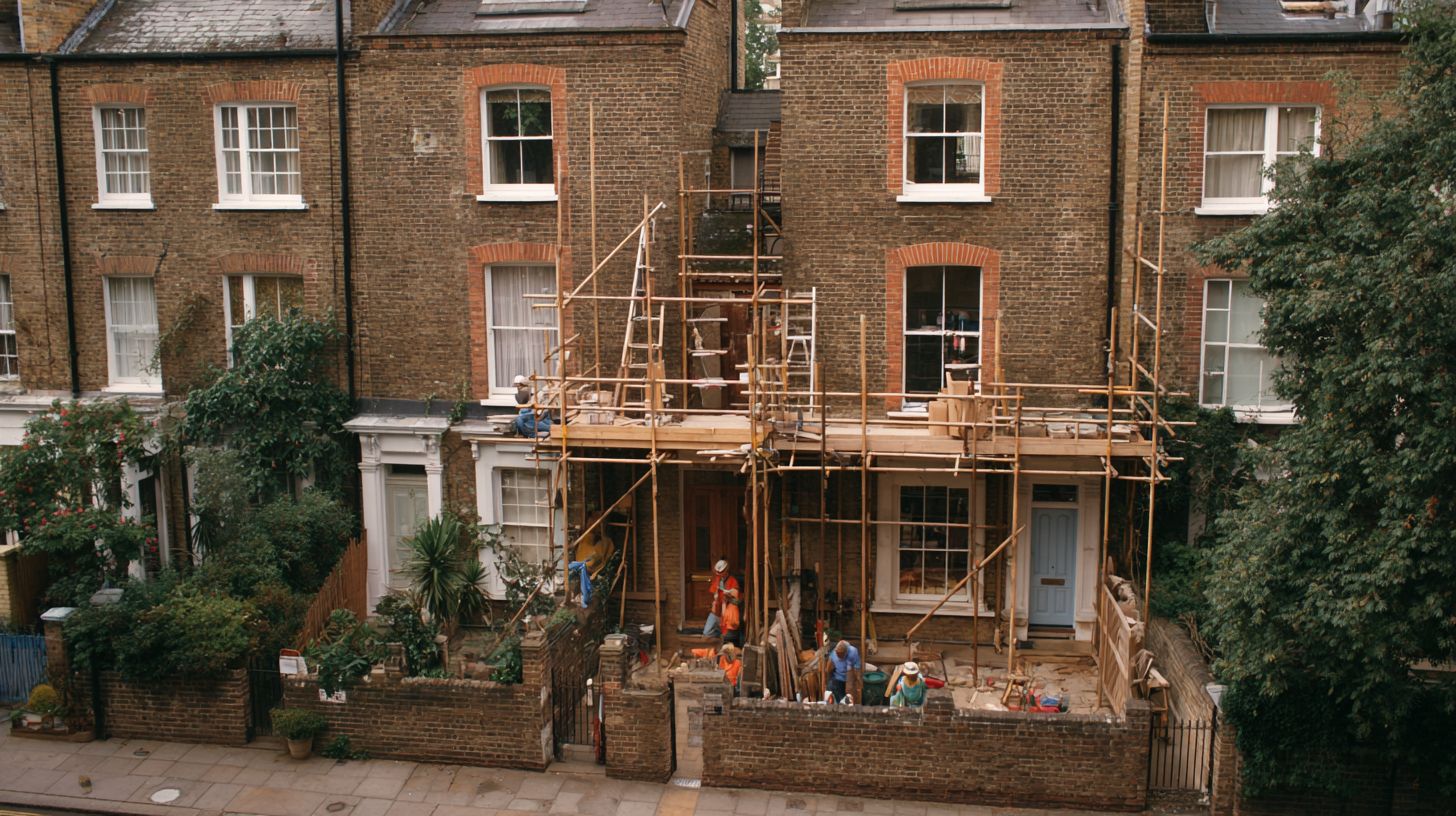
House extensions situated within 2 metres of a boundary line, such as the addition of a garden wall extension, necessitate the agreement of neighbouring parties if there is any risk to the stability of the adjacent land.
Under Section 1 of the Party Wall etc. Act 1996, notice must be served for any excavations conducted within 3 metres of a neighbour’s boundary that exceed 0.5 metres in depth, or within 6 metres for shallower excavations that may undermine structural stability, irrespective of the presence of shared walls.
For example, a rear extension constructed near a party fence may require temporary access rights to the neighbouring property for the purposes of surveying.
To proceed effectively, it is essential to first verify property boundaries by obtaining title plans from the Land Registry, which can be downloaded online for £3.
It is advisable to engage a qualified party wall surveyor at an early stage, considering surveyor fees at an hourly rate; thereby preventing costly delays.
Notices should be served at least one month in advance for excavations under Section 6 or two months for works to party structures under Sections 1-3, to ensure full compliance with legal requirements.
Notifiable Types of Building Work
Pursuant to the Party Wall etc. Act 1996, notifiable works include basement developments and piling operations conducted on steep gradients. These activities can affect older properties in England and Wales due to variations in foundation depths.
Excavations Within 3-6 Meters
Under Section 6 of the Party Wall etc. Act 1996, notice must be served for excavations within 3 metres of a neighbour’s boundary to a depth greater than the depth of the neighbour’s foundations, or within 6 metres of the boundary where the excavation would go below a line drawn at 45 degrees from the bottom of the neighbour’s foundations, irrespective of the presence of shared walls.
To determine compliance, the 3-metre/3-metre depth rule should be applied, or for shallower excavations, the 6-metre/45-degree cone of influence as outlined in the Party Wall Act 1996 guidelines, which the explanatory booklet published by the UK Government describes in detail.
The following steps are recommended:
- Measure the distance to the boundary using a laser measure (a £20 tool with accuracy to 1 mm).
- Excavate a trial pit to confirm the depth of the foundations (approximately 2 hours, with mini-digger hire at £200).
- Account for any slopes, as assuming flat terrain on inclined sites can distort the 45-degree angle by up to 20 per cent.
Reference the Party Wall etc. Act 1996 guidelines and Building Regulations to mitigate risks of subsidence, with most surveys achievable at a cost below £500.
Building Directly on the Boundary
Constructing structures directly on a boundary line, such as a new party fence wall or an extension to a garden wall, is governed by Sections 1 and 2 of the Party Wall Act. This requires obtaining prior agreement from the adjoining owner to mitigate potential risks, including uneven settling that could affect neighbouring properties.
Such works encompass the erection of new boundary walls or party fence walls, or the raising of existing party fence walls where exceeding 2 metres in height (or 2.5 metres if on a bank). For example, the insertion of steel beams during loft conversions on a boundary often activates these provisions.
To initiate the process, a Party Wall Notice must be served at least one month in advance, accompanied by detailed drawings.
Free templates for such notices are available from the Royal Institution of Chartered Surveyors (RICS). A frequent oversight is the failure to consider Building Regulations Part A, which addresses requirements for wall heights and structural stability.
The timely serving of notices can resolve disputes through dispute resolution prior to construction commencement, thereby averting significant delays, associated legal expenses, and potential court proceedings or civil action.
The Notice-Serving Process

The procedure commences with the issuance of a Party Wall Notice, utilising complimentary templates available on the government website. Notice periods are one month for works affecting boundaries or neighbouring land or two months for adjacent excavations, as required for approximately 90% of compliant projects in England and Wales.
To ensure compliance with the Party Wall etc. Act 1996, adhere to the following steps:
- Determine the appropriate notice type by conducting a Land Registry boundary verification (£3 fee, approximately 10 minutes via gov.uk) to identify shared walls, Party Fence Wall, or excavations under Section 6 exceeding 3 metres in depth, including trial pits.
- Download free templates from gov.uk, customising them to incorporate specifics such as the dimensions of a rear extension, property age, and the proposed works compliant with Building Regulations.
- Serve the notice via personal delivery or recorded post to the adjoining owner, with the total preparation and dispatch process typically requiring one hour.
- Monitor the response within the designated notice period; employ precise descriptions to avoid delays in approval.
For urgent works involving piling works or adjacent excavations, obtain retrospective agreement following completion, which is permissible in accordance with RICS guidance (RICS Party Wall Surveyors’ Procedure 2021). This structured methodology minimises disputes in 85% of cases, according to RICS data.
Neighbor Responses and Consent
Adjoining Owner is required to respond to a Party Wall Notice within 14 days. Simple consent permits the proposed work to commence immediately, whereas a counter notice may require modifications, as observed in 35% of cases.
Consent is formalised through a straightforward written agreement, which incurs no fees and allows work to proceed under the provisions of the Party Wall etc. Act 1996. In case of dissent, the parties must appoint surveyors to prepare a formal agreement, which typically resolves disputes in an amicable manner.
Failure to respond within the 14-day period is treated as dissent, which may result in project delays.
To address potential non-responses proactively, it is advisable to send a courteous follow-up email, such as “Have you received the Party Wall Notice? Please confirm your response.”
In cases involving counter notices, adjoining owners may request specific protective measures, including vibration monitoring during excavation activities.
In low-risk projects, such as Loft Conversions, consent is commonly granted due to the minimal impact on adjacent structures and neighbouring land, considering factors like steep hill locations. Conversely, high-risk developments like basements or piling works often prompt counter notices to protect neighbouring properties, in line with guidelines from the Royal Institution of Chartered Surveyors (RICS).
Handling Disputes and Surveys
Disputes, which arise in approximately 20% of notifications according to data from the Royal Institution of Chartered Surveyors (RICS), are resolved by appointing qualified chartered surveyors to prepare a Party Wall Award. This document incorporates a schedule condition to meticulously record the pre-construction state of relevant structures, such as cracks in garden walls or adjacent excavations. For a deeper look into notices, schedules, and awards, our Party Wall Surveyor Services | Notices, Schedules & Awards provides comprehensive guidance.
Common disputes encompass the following:
- Denial of access rights: Engage in mediation (£200 per session) to negotiate and secure necessary entry permissions.
- Conflicts over working hours: Establish mutually agreed acceptable working hours of 8am to 6pm, Monday to Friday, in line with common practice to avoid nuisance, fulfilling the statutory duty.
- Disagreements regarding condition surveys: Appoint an independent joint surveyor (£150–£250 per hour) to conduct an objective assessment.
- Escalation to court proceedings: Prioritize early mediation to avert litigation, potentially saving up to 80% in associated costs.
Recommended best practices include maintaining comprehensive written records of all communications and invoking the statutory duty for cooperation as outlined in the Act. For instance, in a London-based Rear Extension project, mediation effectively resolved the dispute within four weeks, thereby preventing the issuance of an injunction.
Costs, Timelines, and Penalties
The fees charged by surveyors for a Party Wall Award typically average £1,200 in total, based on an hourly rate of £200, which may extend project timelines by 1 to 3 months. In contrast, disregarding notices can lead to court-issued injunctions with potential costs including fines or damages awarded by the court under relevant civil action provisions in England and Wales.
To mitigate these costs, it is advisable to allocate 5% of the overall extension budget—for instance, £5,000 for a £100,000 project—to cover surveyor fees and associated notices. Pursuant to the Party Wall etc. Act 1996, reasonable expenses, such as a basic award of £700, may be recoverable from the adjoining property owner.
Project timelines commence with a mandatory 2-month notice period, followed by an additional 4 weeks for surveys; any resultant delays could incur losses of up to £3,000 per month in foregone rental income.
Regarding penalties, violations of statutory obligations may result in injunctions and full liability for damage repairs. The average cost of such disputes can be around £10,000, based on typical cases in England and Wales.
It is recommended to consider retrospective agreements as a means to streamline compliance with regulatory requirements. Such agreements should clearly delineate acceptable working hours, for example, Monday to Friday, 8:00 a.m. to 6:00 p.m., with advance notice to neighbours for any weekend activities.
Frequently Asked Questions
Do I need a Party Wall Agreement for my house extension?
If your house extension involves building on or near a shared boundary with a neighboring property in England or Wales, yes, you typically need a Party Wall Agreement under the Party Wall Act 1996. This legal document ensures that works affecting the party wall or Party Fence Wall are done safely and minimizes disputes with neighbors. Consult a qualified surveyor to assess your specific project.
What qualifies as work that requires a Party Wall Agreement for my house extension?
Work requiring a Party Wall Agreement includes excavating within 3 meters of a neighbor’s structure under Section 6 of the Party Wall etc. Act 1996, building on or at the boundary line, or altering a shared wall. Notifiable works include lofts, foundations, trial pits, or any structural changes impacting the party wall—always check with a professional to confirm, especially regarding Building Regulations in England and Wales.
How do I know if my house extension plans trigger the need for a Party Wall Agreement?
Review your plans against the Party Wall etc. Act 1996: if you’re digging foundations near a shared boundary or raising a party wall, it applies. Distance rules (3m for excavations, 6m for deeper ones) determine this. Hiring a party wall surveyor early can clarify requirements and prevent delays in England and Wales.
What are the consequences of not getting a Party Wall Agreement for my house extension?
Do I need a Party Wall Agreement for my house extension?
Do I need a Party Wall Agreement for my house extension?
Do I need a Party Wall Agreement for my house extension? Failing to obtain one when required can lead to neighbor disputes, legal injunctions halting work, or liability for any damage caused. You might face compensation claims or retrospective costs. It’s safer and often cheaper to serve a Party Wall Notice in advance to protect your project. This applies under the Party Wall etc. Act 1996 in England and Wales.
How long does it take to arrange a Party Wall Agreement for my house extension?
The process usually takes 1-2 months. Start by serving a Party Wall Notice to your Adjoining Owner (at least 2 months before work for most cases, including Adjacent Excavations). If they agree, it’s straightforward; if not, a surveyor-mediated agreement follows. Plan ahead to avoid construction delays.
Who is responsible for the costs of a Party Wall Agreement for my house extension?
As the building owner initiating the work, you’re generally responsible for all costs, including surveyor fees (around £1,000-£2,000 per neighbor) and potential neighbor compensation. If disputes arise, shared costs might apply, but budgeting for this upfront is essential for smooth proceedings.