
Key Takeaways:
Permitted Development Rights Overview
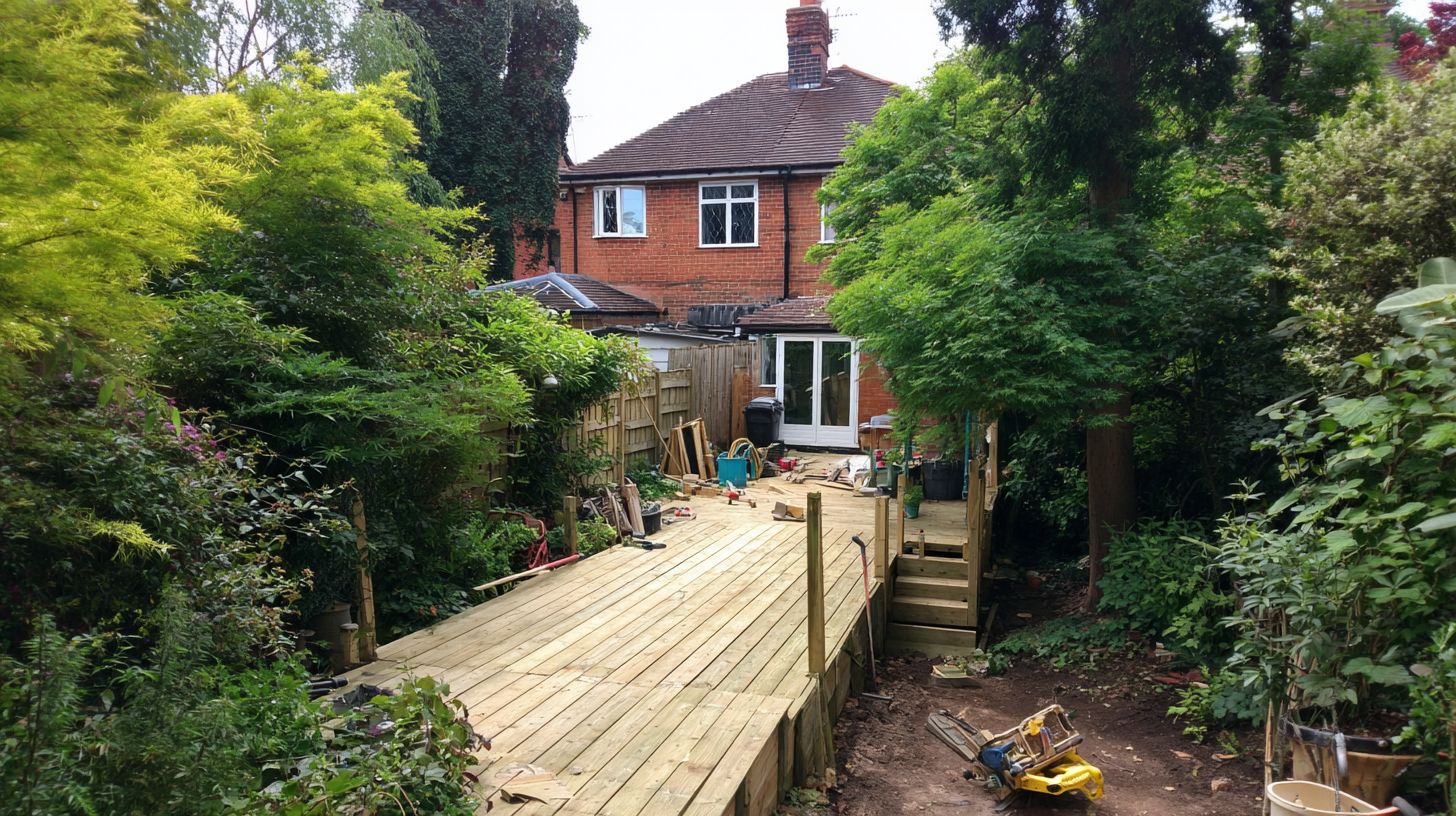
Pursuant to The Town and Country Planning (General Permitted Development) (England) Order 2015 (applicable in England; similar rules apply in Wales under the equivalent Welsh legislation), specifically Schedule 2, Part 1, Class E, which covers buildings incidental to the enjoyment of the dwellinghouse, the construction of decking is permitted development without the need for planning permission, provided the total area of such developments does not cover more than 50 percent of the net area of the curtilage (garden) to the rear of the principal elevation. This permitted development framework extends to other home enhancements, such as bungalow extensions, allowing for expanded living spaces under similar conditions.
Size and Height Limits
Under permitted development rights for decking, platforms must not exceed 30cm height above ground level to obviate the need for planning permission. Additionally, the total area of outbuildings extensions must not surpass 50 percent of the original garden area.
To ensure compliance, adhere to the following best practices:
- Accurately measure the garden area using reliable measuring tools or an online calculator to ensure precision within 0.1 m². Simply input the dimensions to obtain immediate results.
- Maintain decking height below 30 cm on level sites, in accordance with Article 2(3) of the Town and Country Planning (General Permitted Development) Order 2015. This approach avoids the inclusion of verandas or balconies, which would necessitate planning permission.
- In the case of sloping gardens, modify measurements in line with the UK Government’s Planning Portal guidelines, incorporating the minimum elevation required to achieve compliance.
Compliance can be effectively visualised through a straightforward site diagram: delineate the garden boundaries, indicate the 50 per cent coverage limit with a red line, and annotate key elevation points.
A frequent oversight involves disregarding the 50 per cent rule. It is imperative to verify measurements meticulously to avert expensive redesigns.
Raised Platform vs Ground-Level Decking
Ground-level decking, which aligns flush with existing surfaces, is typically classified under permitted development and is exempt from height restrictions. In contrast, raised platforms exceeding 30 cm in height require comprehensive structural evaluations, with particular attention to drainage issues on slope ground or sloping terrain.
| Type | Height Limit | Planning Needed | Best For | Examples |
|---|---|---|---|---|
| Ground-Level | 0 cm | No | Flat gardens | Timber decking |
| Raised | >30 cm | Yes if over limit | Sloping sites | Composite Decking Boards |
For the installation of raised decking, it is advisable to follow these structured procedural steps:
- Evaluate the slope using a reliable gradient measurement tool at a 1:40 ratio, thereby confirming structural stability.
- Implement drainage systems, such as permeable gravel strips, to avert water accumulation.
- Consult applicable local building regulations through the government website or official government portal to secure requisite permits.
Adherence to these protocols ensures the development of safe and fully compliant structures.
Property Location Factors
The location of a property exerts a substantial influence on permissions for decking installations. Specifically, land classified under Article 2(3) of the Town and Country Planning (General Permitted Development) (England) Order 2015—such as national parks—imposes rigorous restrictions, requiring planning permission for decking within 20 metres of the highway or within 2 metres of neighbouring boundaries if raised above ground level.
Conservation Areas and Listed Buildings
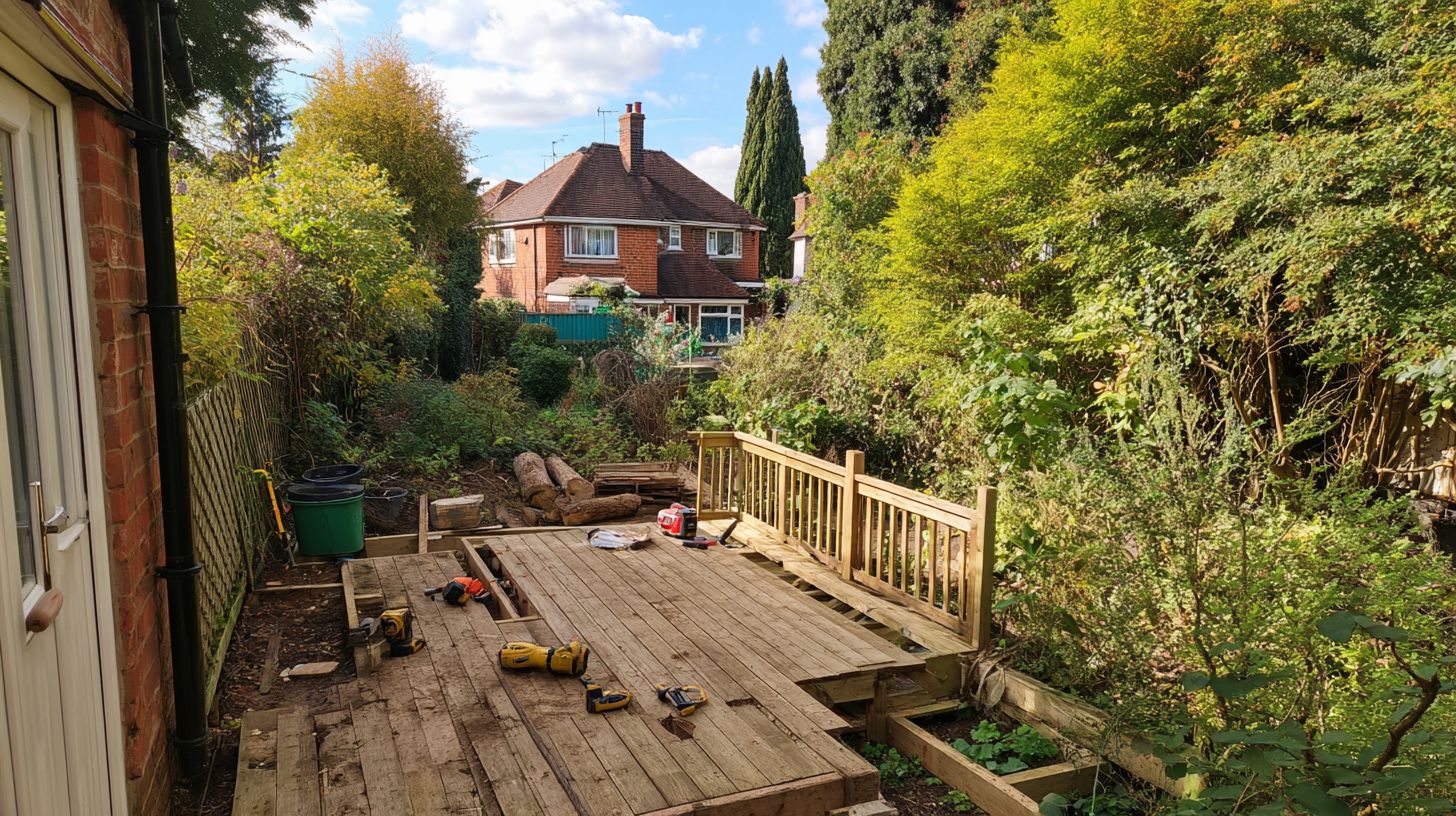
In conservation areas or for listed buildings, permitted development rights are restricted, so the installation of decking typically necessitates full planning permission, as even ground-level structures can impact historical aesthetics.
Obtaining approval requires addressing three primary challenges through structured, actionable measures.
- To mitigate visual impact, submit a heritage impact assessment to the local planning authority—typically at a cost of £250 to £500—to thoroughly evaluate and address potential aesthetic alterations.
- For material restrictions, opt for sustainable, low-maintenance products sourced from suppliers approved by Historic England, thereby ensuring long-term durability while safeguarding heritage integrity.
- To pre-empt objections from neighbours, conduct consultations at least four weeks prior to the application submission, thereby promoting community engagement and support.
A 2022 case study by Historic England on a decking project for a listed building exemplifies this approach: targeted modifications resulted in successful approval, reducing costs by 20 per cent while maintaining the site’s original character. For those interested in a comprehensive overview of such heritage modifications, Historic England’s Making Changes to Heritage Assets covers the full spectrum of implications.
National Parks and AONBs
National parks, areas of outstanding natural beauty (AONBs), and world heritage sites such as The Broads impose stringent restrictions to preserve their landscapes. In these areas, permitted development rights for outbuildings (including decking) are excluded under Article 2(3), so full planning permission is typically required for any decking installation.
Regulations in protected areas are more rigorous than those in standard zones. For instance, while standard rear gardens permit decking up to 30 cm in height without planning permission (subject to other conditions), in protected areas, any decking typically requires full planning permission regardless of size or height.
In a recent case, composite decking within an AONB received approval following an ecological assessment that demonstrated negligible visual impact.
For practical guidance, it is advisable to consult the relevant National Park Authority or AONB board guidelines, which recommend the following steps:
- Submit a pre-application query (processing time: 2-4 weeks; fee: £100).
- Compile site photographs and an impact assessment.
- Participate in a consultation meeting.
According to a 2023 study by the Campaign to Protect Rural England (CPRE), engaging in early consultations can increase compliance rates by 60%.
Building Regulations Considerations
Even if a deck qualifies under permitted development rights, building regulations still impose mandatory safety standards. For instance, raised platforms exceeding 600mm in height require guardings (balustrades or railings) at a minimum height of 900mm to 1100mm to ensure user safety, in accordance with Approved Document K from GOV.UK.
To facilitate compliance, it is advisable to register with the competent person register of the Competent Person Scheme through a building control body such as the Local Authority Building Control (LABC) or private building control. This allows for self-certification of the work, potentially saving over £300 in costs associated with full building control inspections.
Additionally, consulting LABC’s technical guidance is essential for obtaining site-specific approvals.
Prioritise structural integrity in deck construction by adhering to BS 8579:2012, which stipulates that timber decking must support a uniform distributed load of at least 1.5kN/m². For accurate calculations, consult a structural engineer or use approved calculation methods to determine precise joist sizing—for example, employing 150x50mm C24 timber at 400mm centres for a 3m span deck.
Regarding balustrades, ensure all gaps do not exceed 100mm in accordance with Part K of the Building Regulations 2010, thereby mitigating the risk of falls. A straightforward compliance verification can be represented as: if the gap exceeds 100mm, the installation fails to meet regulatory standards.
Application Process if Permission Needed
Should the proposed decking exceed the permitted limits, it is required to submit a planning application through the Planning Portal. If you’re seeking professional guidance to ensure your submission meets all requirements, our Architectural Services by Local Architect can provide the necessary support. The average processing time for such applications is 8 weeks, with an approval rate of 85% for compliant submissions.
Required Documents and Fees
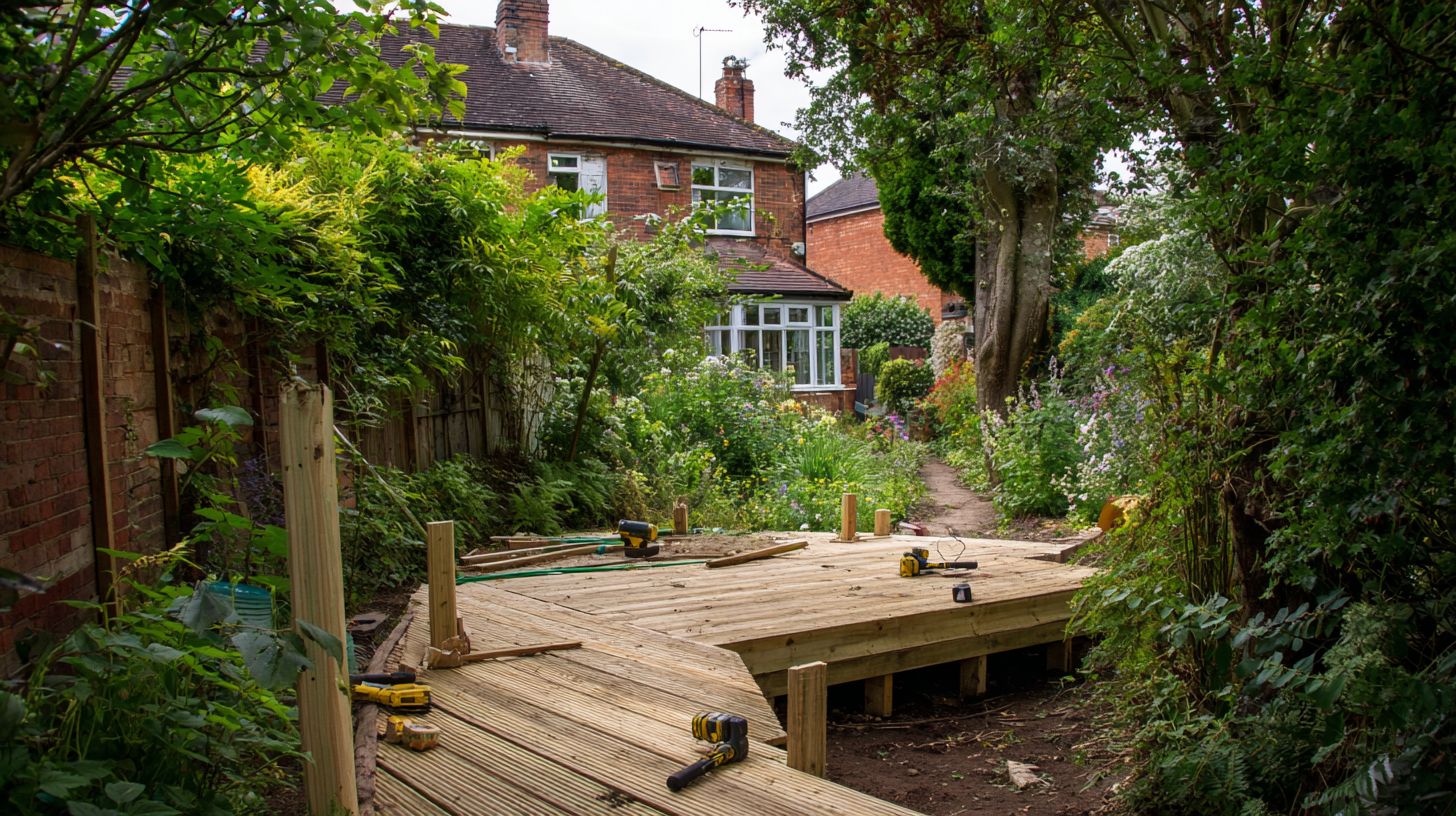
A standard householder planning application for decking requires a location plan at a scale of 1:1250, a site plan at a scale of 1:50, and design drawings. Application fees commence at £258 as of January 2024.
To submit the application effectively, adhere to the following procedures:
Updated August 12, 2024. Rules valid until Thu 28 Jul 2026. For Local Planning Authority and Garden Area considerations in England and Wales home improvement.
- Employ the templates provided on the Planning Portal (gov.uk) to prepare the requisite plans. Ensure that all PDF files do not exceed 5MB and incorporate block plans detailing the deck dimensions (for example, 4m x 3m raised by 0.6m). Include elevation drawings if the deck exceeds 0.3m in height to address visibility concerns.
- Remit fees via secure online payment using a credit or debit card; the fee for a standard householder planning application is £258.
- Transmit the application through your local authority’s designated online portal. Processing is typically completed within 8 weeks, consistent with 2023 UK statistical data.
Prevalent challenges include the omission of neighbour notifications, which contribute to approximately 20% of rejections according to Ministry of Housing, Communities and Local Government (MHCLG) records. Approval for a 25m² deck can be secured in just 6 weeks through the submission of comprehensive documentation, thereby mitigating potential delays.
Consequences of Non-Compliance
Non-compliance with decking regulations may result in enforcement notices, fines of up to £20,000, or demolition orders, particularly in 15% of cases involving drainage issues that impact neighbouring properties.
To mitigate these risks, it is advisable to address common issues proactively. According to 2023 Planning Portal statistics, enforcement actions increased by 12% compared to the previous year, a trend that persisted into 2024 according to a recent publication from the Planning Inspectorate.
- Height breaches: Exceeding the 30 cm height limit without obtaining planning permission has resulted in fines of £2,500 in 2024 cases. Retrospective planning applications can be submitted to local authorities, which are approved in 70% of instances.
- Structural failures: Collapses on sloped sites, such as the 2022 incident in Devon, pose significant risks of injury. Engaging private building control services for audits costing approximately £500 ensures compliance with load-bearing requirements.
- Neighbour disputes: Failure to consider privacy can lead to conflicts. Utilising RICS mediation services, at a cost of around £200, resolves 85% of such cases amicably.
- Delayed property sales: Prospective buyers often hesitate to proceed with non-compliant decks. Securing Building Regulations compliance certificates in advance can expedite transactions by 20-30 days.
Professional Advice and Resources
It is recommended to consult professional organisations and utilise resources like the Planning Portal’s decking calculator to obtain accurate estimates prior to commencing work by 12 August 2025.
Adhere to the following five best practices to ensure compliance and efficiency in decking projects:
- Arrange a complimentary consultation to receive quotes within 24 hours, thereby ensuring designs tailored to the specific site.
- Download technical guidance from the UK government’s planning website, which addresses permissions and safety standards in accordance with the NPPF 2021.
- Select sustainable options such as composite decking boards, which offer long-term warranties and require minimal maintenance. This approach is supported by studies from the UK Green Building Council, demonstrating that eco-friendly materials can reduce lifecycle costs.
- Enrol in a competent person register to facilitate self-certification of installations, thereby streamlining compliance with Building Regulations.
- Review case studies from professional bodies for insights into return on investment, including examples of cost savings achieved through professional oversight, which also enhances property value.
Frequently Asked Questions
Do I need planning permission for decking in England and Wales?
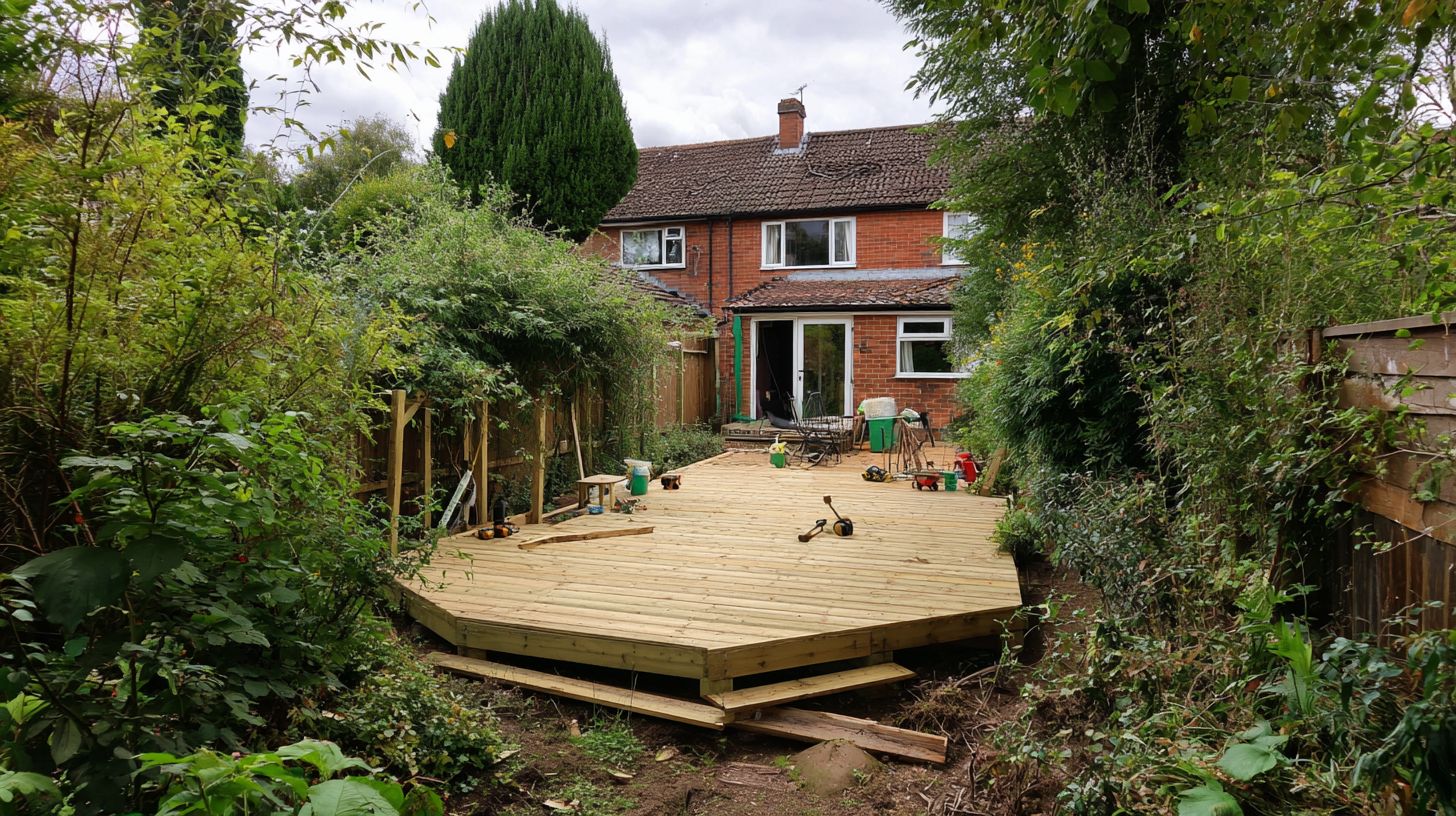
In England and Wales, you generally do not need planning permission for decking if it is for domestic use, raised no more than 30cm above ground level, and does not cover more than 50% of the total garden area. However, check local council rules as permitted development rights may vary. For “Do I need planning permission for decking in England and Wales” scenarios involving higher structures or conservation areas, always consult your local planning authority.
Do I need planning permission for decking in England and Wales if it’s over 30cm high?
Yes, if your decking is raised more than 30cm above the original ground level, you will likely need planning permission in England and Wales. This falls outside permitted development rights. For “Do I need planning permission for decking in England and Wales” questions like this, it’s advisable to submit a prior approval application to your local council to avoid enforcement action.
Do I need planning permission for decking in England and Wales near a boundary?
You may need planning permission for decking in England and Wales if it is within 2 meters of a boundary and raised more than 30cm, or if it affects neighboring properties. Standard permitted development allows decking without permission if these conditions aren’t met. When asking “Do I need planning permission for decking in England and Wales” in such positions, review Schedule 2 Part 1 Class E of The Town and Country Planning (General Permitted Development) (England) Order 2015 for specifics.
Do I need planning permission for decking in England and Wales on a listed building?
For properties that are listed buildings, in conservation areas, National Parks, The Broads, Areas of Outstanding Natural Beauty, World Heritage Sites or Article 2(3) Land in England and Wales, you almost always need planning permission for any decking installation, regardless of size or height. Permitted development rights are restricted here. If you’re wondering “Do I need planning permission for decking in England and Wales” for historic sites, contact your local heritage officer early in the process.
Do I need planning permission for decking in England and Wales in a flat or apartment?
In England and Wales, decking on balconies or shared spaces in flats or apartments typically requires planning permission, as it doesn’t qualify under domestic permitted development rights for houses. Leaseholder agreements may also apply. For queries like “Do I need planning permission for decking in England and Wales” in multi-occupancy buildings, seek approval from both the council and your building management.
Do I need planning permission for decking in England and Wales if it’s temporary?
Temporary decking in England and Wales might not always need planning permission if it’s in place for less than 28 days in a year and doesn’t exceed permitted development limits. However, for anything more permanent, permission is required. When considering “Do I need planning permission for decking in England and Wales” for short-term setups like events, confirm with your local authority to ensure compliance.