
Introduction to Home Extensions in the UK: Planning a Timber Frame vs Traditional Brick Built Extension
Homeowners often weigh speed against solidity in construction choices. This guide compares timber frame extensions—known for prefabricated efficiency—with robust brick extensions, focusing on cost, build time, and durability. Drawing from UK building standards and industry reports, discover which option best suits your needs for a seamless, value-adding addition.
Key Takeaways:
- Timber frame extensions offer faster construction through prefabrication, typically completing in weeks versus months for brick, reducing site disruption and costs by up to 20% in the UK.
- Traditional brick extensions provide superior durability and seamless integration with existing homes, ideal for long-term value, though they require more on-site labor and weather-dependent timelines.
- For energy efficiency and sound insulation, timber frames excel with modern insulation options, while brick offers solid thermal mass; choose timber for quick, eco-friendly builds or brick for timeless aesthetics.
Understanding Timber Frame Extensions
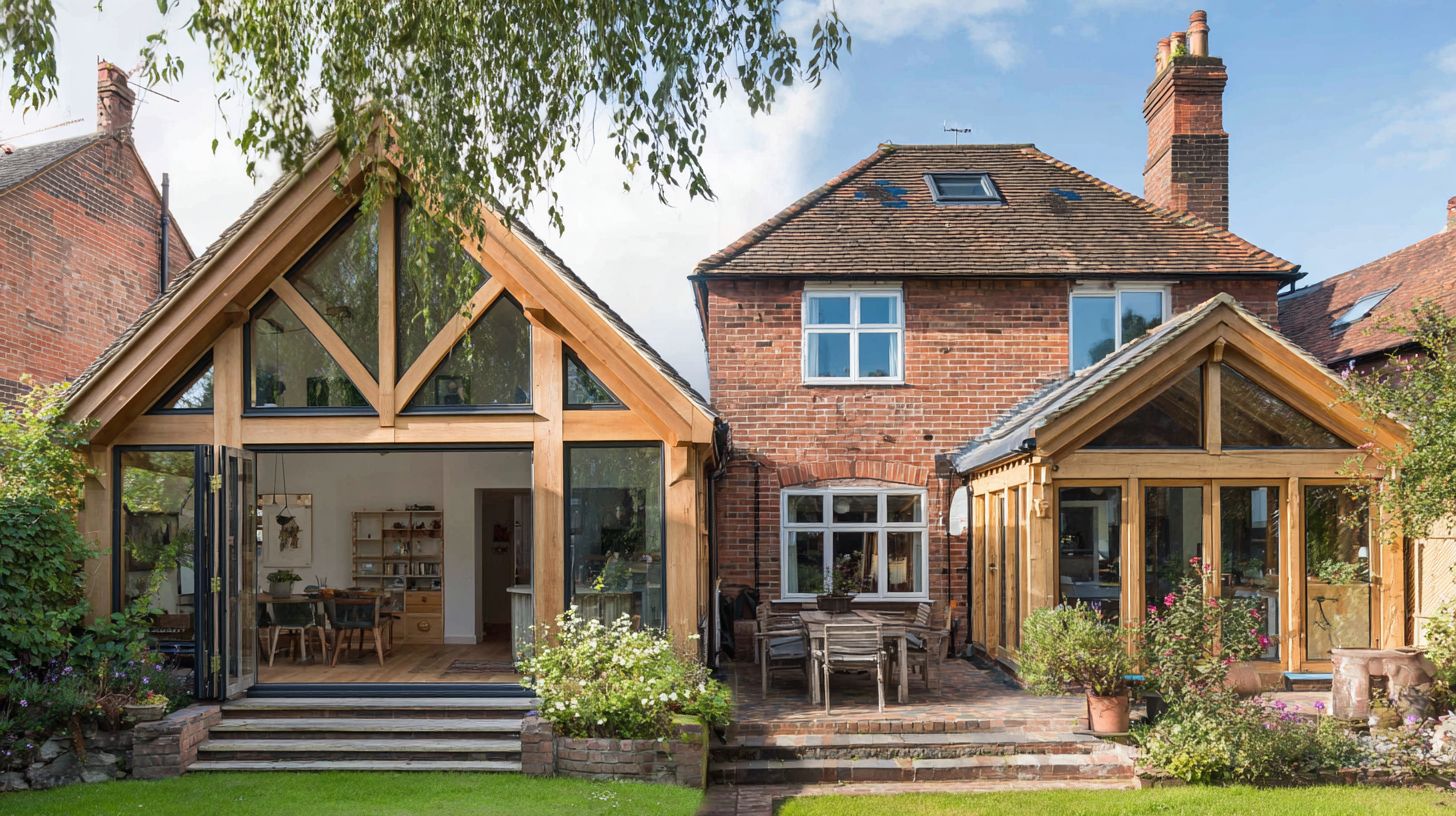
Timber frame extensions have gained significant popularity in the United Kingdom due to their sustainability and environmentally friendly attributes, which result in a lower environmental impact with carbon dioxide emissions up to 30% lower than those associated with traditional construction methods, according to Statista data on UK construction emissions. These extensions typically employ engineered oak or softwood panels, such as Enville Oak, facilitating efficient and rapid assembly processes.
Key Materials and Construction Process
Timber frame extensions utilise oak or softwood frames, often completed with cladding or render, commencing with concrete slabs or strip foundations to address subsidence risks inherent in UK clay soils.
The construction of these extensions adheres to a structured process that complies with UK Building Regulations. The following delineates the principal numbered steps:
- Site Preparation (1-2 weeks): Conduct excavation for trench fill footings in accordance with Building Regulations Part A to ensure structural integrity. Soil testing is essential to mitigate subsidence risks; omission of this step may incur repair costs exceeding £5,000.
- Off-site Panel Fabrication (3-4 weeks): Employ CAD software to design and fabricate oak or softwood panels in a controlled factory environment, thereby achieving precision and quality control.
- On-site Assembly (1 week): Erect stud work and roof trusses using cranes to facilitate safe and efficient panel lifting, while minimising exposure to adverse weather conditions.
- Integration with Existing Home (2 days): Apply high-performance sealants to joints to prevent moisture ingress and achieve a seamless structural connection.
Advantages in Speed and Prefabrication
Timber frame extensions reduce construction time by 40-50% compared to traditional brick methods, allowing for completion in 8-12 weeks rather than the 20+ weeks typically required by conventional approaches, according to data from the Timber Frame Association.
This efficiency arises from off-site prefabrication, in which panels are produced in controlled factory environments. Such processes significantly lower on-site labour costs, often by £10,000-£15,000 for a standard 30m² extension, as reported by the UK Structural Timber Association.
To proceed with implementation, it is advisable to consult certified suppliers for design services. These providers offer advanced CAD modelling to tailor layouts precisely to project requirements.
A practical illustration involves a self-builder on a self build project in Surrey, United Kingdom, who incorporated prefabricated panels to add a home office. This approach resulted in a 30% reduction in the project timeline and avoided £8,000 in costs associated with weather-related delays.
Return on investment can be calculated straightforwardly: an initial prefabrication investment of approximately £5,000 generally generates savings of £10,000-£15,000 through minimised site disruptions and accelerated occupancy, rendering this method particularly suitable for budget-conscious homeowners.
Understanding Traditional Brick Built Extensions
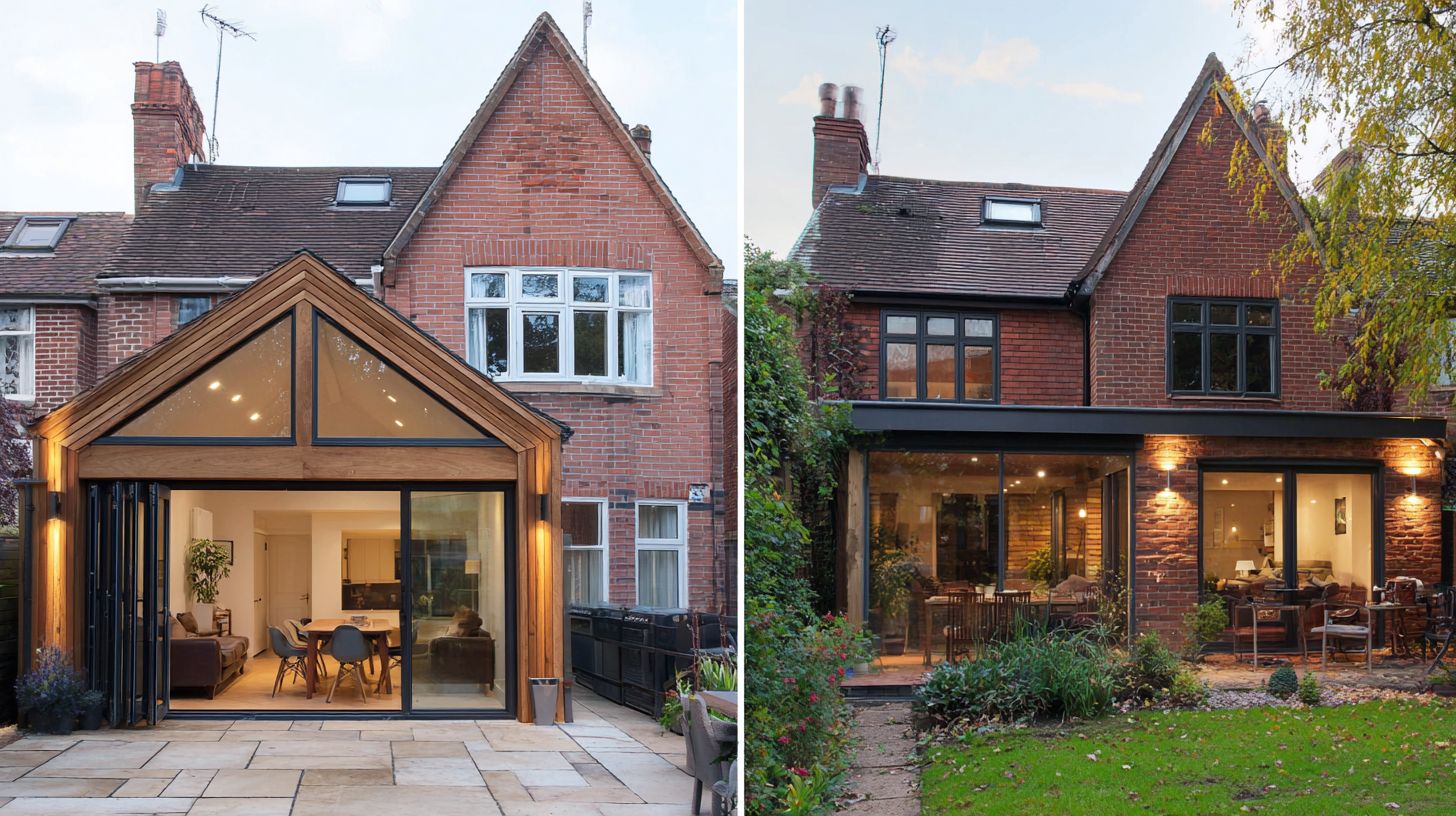
Traditional brick-built extensions, embodying a traditional build in the United Kingdom, constructed entirely on-site using masonry and blockwork, provide a durable and substantial aesthetic. However, they are susceptible to challenges such as weather-dependent construction timelines, which can extend project durations by 4 to 6 weeks.
Key Materials and On-Site Construction
Brick extensions are constructed using facing bricks and concrete blocks, commencing with strip foundations or concrete slabs to mitigate dampness issues associated with the United Kingdom’s variable climate.
The construction of a brick extension adheres to the following key steps:
- Foundation Laying (2-3 weeks): Trenches are excavated, and footings are filled with concrete. A vibrating plate compactor is employed to achieve proper compaction, thereby preventing subsidence claims under Building Regulations Part A. A common error is omitting compaction, which may lead to structural failure.
- Bricklaying and Blockwork Walls (4-6 weeks): The outer facing brick walls and inner concrete blockwork are erected using mortar mixers to enhance efficiency; laser levels are utilised to ensure precise alignment.
- Roof Installation with Trusses (1 week): Prefabricated trusses are installed, with full compliance with wind load standards.
- Internal Stud Work (1 week): Timber studs are erected to form partitions. Note: For extensions exceeding 4 metres in height, Planning Permission must be obtained from the relevant local authority pursuant to the Town and Country Planning Act.
Advantages in Solidity and Customization
Brick extensions offer enhanced structural integrity, featuring walls up to 9 inches thick that enable extensive design flexibility, such as curved designs that are impractical with timber framing.
Research from the Building Research Establishment (BRE) indicates that brick structures provide 20-30% greater load-bearing capacity compared to timber equivalents, thereby promoting long-term durability in multi-storey additions.
To proceed effectively, it is advisable to engage a structural engineer at an early stage to evaluate the site’s soil conditions and incorporate damp-proof courses, which are mandatory under UK Building Regulations Part C.
In a practical case study, a kitchen extension in London incorporating bespoke arched windows and brickwork increased the property’s value by £50,000, according to data from the Royal Institution of Chartered Surveyors (RICS).
An additional investment of £2,500 in custom masonry yielded a 15% return on investment, achieved through improved aesthetics and resilience, outperforming timber options particularly in complex, weather-exposed configurations.
Cost Comparison
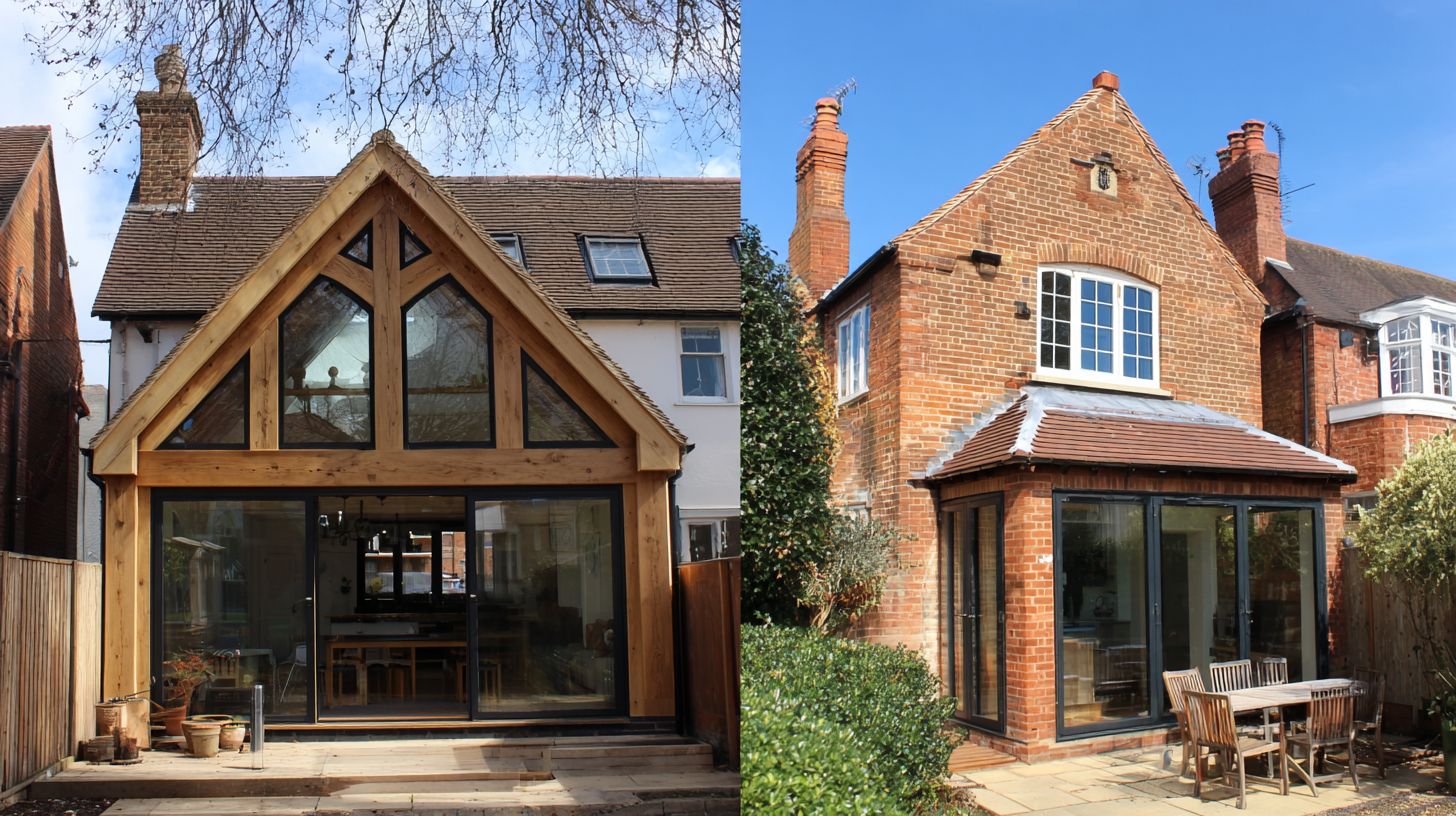
Timber frame extensions in the United Kingdom typically range from £1,800 to £2,500 per square metre, which is generally lower than the £2,200 to £3,200 per square metre for brick extensions, according to 2023 data from the HomeOwners Alliance.
| Aspect | Timber Frame | Brick | Example |
|---|---|---|---|
| Cost per sq m | £2,000 average | £2,800 average | 20 sq m room: timber £40,000 vs. brick £56,000 |
| Labour | £15,000 (off-site) | £25,000 (on-site) | Faster timber assembly (2-3 weeks) |
| Total for 20 sq m bedroom | £40,000 | £56,000 | Potential 25% savings with timber frame options |
Certain factors, such as a location in London, can increase costs by 20% (based on RICS 2023 indices). To achieve measurable cost savings, consider selecting timber frame construction in rural areas and consult local builders for site-specific quotations, including the preparation of [Building Regulations Plans & Drawings](https://www.survdesign.co.uk/architectural-services/building-regulations-plans/), to capitalise on off-site fabrication efficiencies — a perspective supported by the CMA’s Housebuilding Market Study.
Build Time and Site Disruption
Timber frame construction disrupts sites for only 2 to 4 weeks, in contrast to 8 to 12 weeks for traditional brick builds, thereby minimising noise transfer and family disruption during the construction process.
This abbreviated timeline arises from off-site prefabrication, which reduces on-site labour to approximately 20 days for timber framing compared to 60 days for brick masonry.
As a result, timber framing receives a low disruption rating of 3 out of 10, versus 7 out of 10 for brick, according to the Federation of Master Builders (FMB) 2023 survey.
To maximise these benefits, it is advisable to schedule the delivery and assembly of timber frames during periods of low household activity, such as school holidays, thereby eliminating the need for family relocation.
For example, a home office extension in England and Wales utilising timber framing was completed in just three weeks during a school holiday, resulting in savings of £2,000 on temporary housing expenses.
It is recommended to engage builders accredited by the FMB for tailored site planning, ensuring full compliance with Building Regulations Part L regarding energy efficiency.
Durability, Maintenance, and Longevity
Brick extensions offer a longevity exceeding 100 years with minimal maintenance requirements, surpassing the 50- to 70-year lifespan of untreated timber, as outlined in Historic England guidelines on materials for historic building repairs. To address the primary vulnerability of timber—rot induced by moisture—regular annual inspections, costing approximately £200, are recommended.
Additionally, selecting pressure-treated softwood from the outset can enhance decay resistance by up to 40 years.
For brick structures, cracking due to subsidence can be prevented by employing lime mortar in accordance with British Standard BS 5628, which facilitates flexible movement and avoids fractures.
Both brick and timber materials commonly exhibit inadequate sound insulation; retrofitting with acoustic panels, such as mineral wool insulation, can reduce noise transmission by up to 40 dB.
A 2019 case study by the Building Research Establishment (BRE) illustrates how untreated oak timber in coastal UK residences deteriorates due to damp conditions far more rapidly than brick, reinforcing the importance of these proactive durability measures.
Insulation, Energy Efficiency, and Comfort
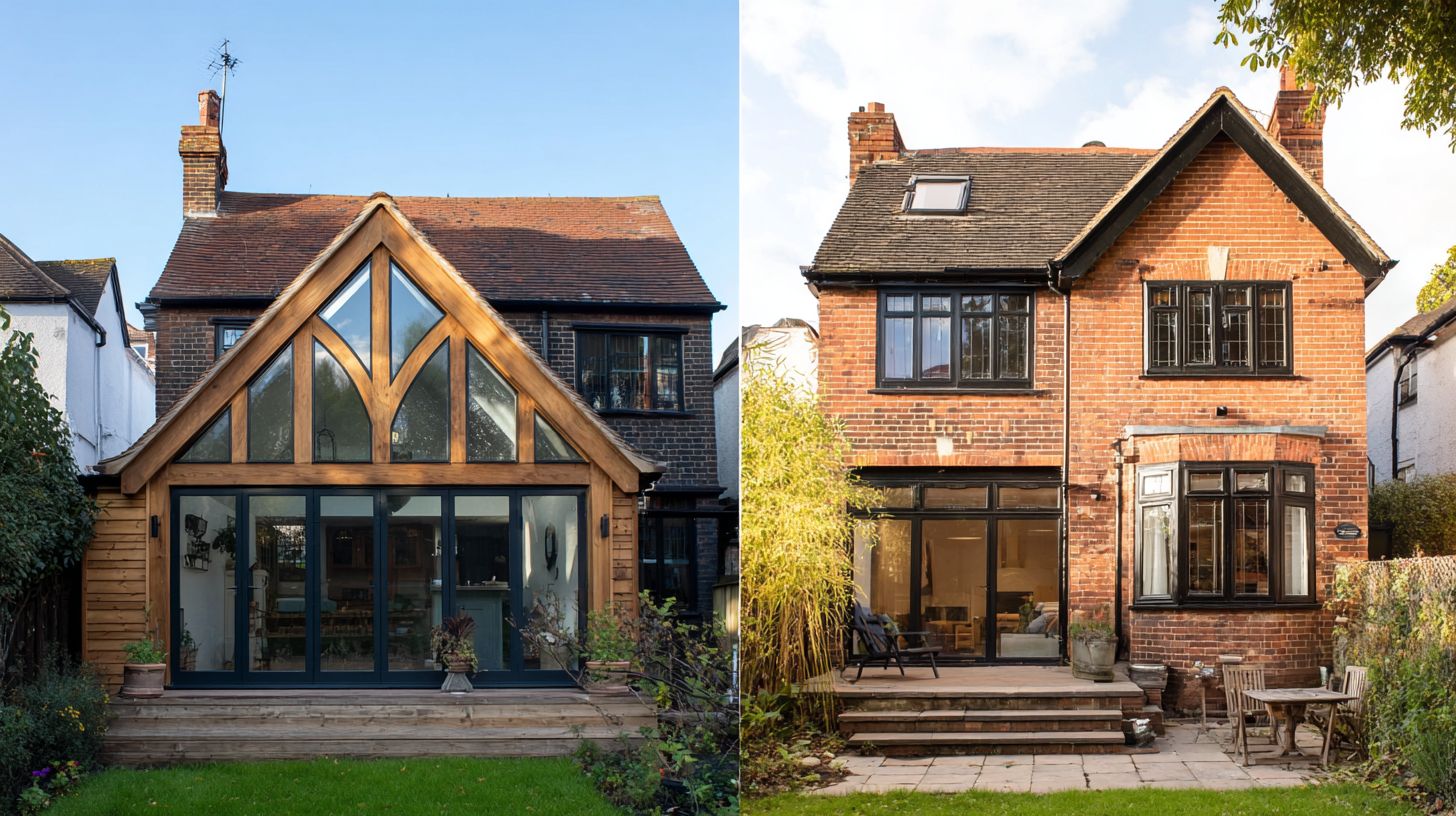
Timber framing systems can achieve U-values as low as 0.15 W/m²K when incorporating built-in insulation, resulting in a 25% improvement in energy efficiency compared to uninsulated brick constructions, according to the Energy Saving Trust.
Timber construction offers a 26% reduction in CO2 emissions relative to traditional brick builds, as reported by the Wood for Good initiative. This environmental advantage stems from timber’s natural carbon sequestration during growth.
To achieve comparable performance in brick structures, additional cavity wall insulation is required, which frequently incurs higher upfront costs.
For instance, in the case of a bedroom extension, timber framing can reduce annual heating expenses by £300 through improved Standard Assessment Procedure (SAP) ratings. With an insulation investment of approximately £1,000, a return on investment is typically realised within three years.
To ensure adherence to Building Regulations Part L, it is advisable to engage certified contractors and installers and utilise official tools, such as the government’s SAP calculator, for accurate performance evaluations.
Aesthetics, Design Flexibility, and Integration
Brick extensions can be seamlessly integrated into existing UK homes through the use of matching render or cladding, providing enduring aesthetic appeal for areas such as kitchens or bedrooms.
To attain the best possible outcomes, it is advisable to follow these established best practices:
- Select materials that harmonise with the existing structure: Apply render to brick walls at approximately £50 per square metre to achieve a unified finish, or incorporate timber cladding on steel frames for a modern interpretation, with costs ranging from £40 to £60 per square metre.
- Emphasise design adaptability by utilising modular timber systems, which facilitate straightforward additions—such as windows in home offices—without necessitating structural modifications.
A pertinent case study involves a kitchen extension in London that effectively combined traditional brick elements, resulting in a 15% increase in property value according to recent property market reports. Furthermore, under Permitted Development Rights (Part 1, Class A) in England and Wales, single-storey rear extensions up to 3 metres in depth for semi-detached or terraced houses (or 4 metres for detached houses) may qualify for exemption from full planning permission, subject to certain conditions, thereby expediting the approval process and potentially reducing associated costs by as much as 20%.
Frequently Asked Questions
What are the key differences between timber frame and traditional brick built extensions in England and Wales?
In the debate of Timber Frame vs Traditional Brick Built Extensions in the UK – Which is best?, timber frame extensions use prefabricated wooden structures assembled on-site, offering flexibility in design and quicker installation, despite some disadvantages like potential vulnerability to moisture if not treated. Traditional brick built extensions, on the other hand, involve laying bricks or blocks with mortar, providing a solid, masonry-based construction that’s common in UK homes for its classic aesthetic. Timber frames are lighter and more modular, while brick is heavier and more labor-intensive.
### Which option is faster to build: timber frame or traditional brick built extensions?When considering Timber Frame vs Traditional Brick Built Extensions in the UK – Which is best? for speed, timber frame extensions typically take 8-12 weeks to complete due to off-site prefabrication and easier on-site assembly, minimising weather disruptions common in the UK. Traditional brick built extensions can take 20+ weeks or longer, as bricklaying is weather-sensitive and requires skilled labor for precise work, making timber frame the quicker choice overall.
### How do costs compare for timber frame versus traditional brick built extensions in the UK?Evaluating Timber Frame vs Traditional Brick Built Extensions in the UK – Which is best? on cost, obtaining quotes from contractors shows that timber frame extensions often range from £1,800-£2,500 per square meter, thanks to faster build times and less material waste. Traditional brick built options cost £2,200-£3,200 per square meter due to higher labor and material expenses, though they may add long-term value to property resale in the UK market—timber frame edges out for budget-conscious projects.
### What about energy efficiency in timber frame vs traditional brick built extensions?In the discussion of Timber Frame vs Traditional Brick Built Extensions in the UK – Which is best?, timber frame extensions excel in energy efficiency with superior insulation options like SIPs (Structural Insulated Panels), achieving U-values as low as 0.15 W/m²K, which suits the UK’s push for net-zero homes. Traditional brick built extensions offer good thermal mass but may need extra insulation to match, potentially increasing costs—timber frame is often better for modern eco-friendly builds.
### Which is more durable for the UK’s weather: timber frame or traditional brick built extensions?Assessing Timber Frame vs Traditional Brick Built Extensions in the UK – Which is best? for durability, traditional brick built extensions are highly robust against the UK’s damp climate, with bricks resisting rot and pests for decades with minimal maintenance. Timber frames, when properly treated, are also durable but require good ventilation to prevent moisture issues; brick wins for longevity in exposed areas, while timber offers flexibility if maintained well.
### Are there planning permission differences for timber frame versus traditional brick built extensions in the UK?When exploring Timber Frame vs Traditional Brick Built Extensions in England and Wales – Which is best? regarding permissions, both require similar planning rules under permitted development rights in England and Wales (subject to specific dimensional limits, such as single-storey rear extensions up to 3 metres depth for attached houses or 4 metres for detached houses with prior approval, along with height and coverage restrictions), but timber frames might face scrutiny in conservation areas due to aesthetics. Brick built blends seamlessly with existing UK properties, easing approvals—consult local councils, as neither is inherently “best” but timber can be more innovative for unique designs.