
Key Takeaways:
Overview of Tree Protection Laws in England and Wales
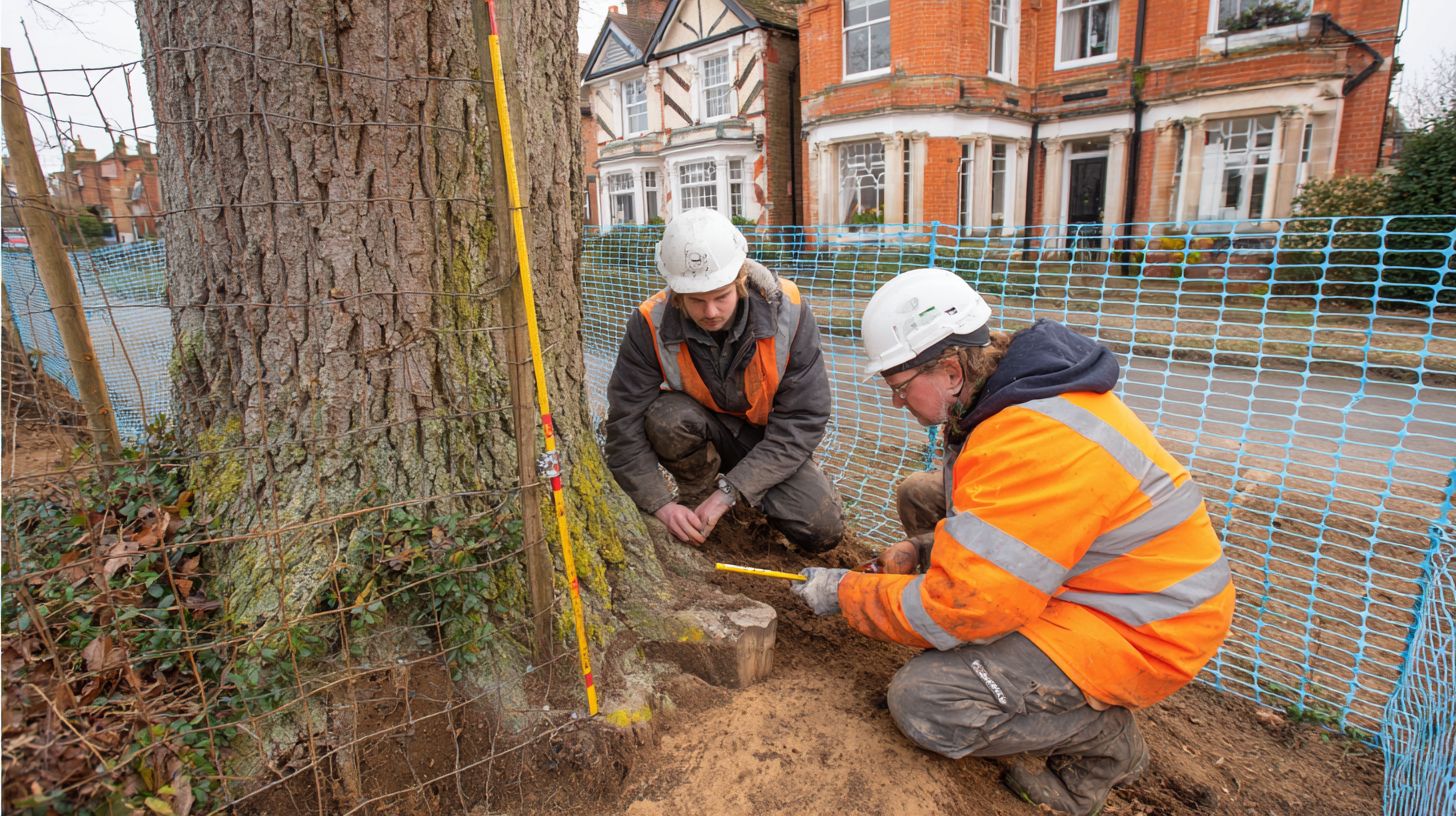
In England and Wales, tree protection legislation under the Town and Country Planning Act 1990 annually safeguards more than 400,000 urban trees, thereby preventing unauthorised felling or pruning that may result in subsidence, heave, or ground movement within urban environments.
At the core of these measures are Tree Preservation Orders (TPOs), which legally restrict any works on designated trees without prior approval from the local authority, alongside the High Hedges Act 2005, which addresses encroachments on privacy arising from excessively overgrown boundary vegetation.
The Building Research Establishment (BRE) provides detailed guidance, including BRE 298, which outlines how tree roots contribute to 25% of subsidence claims—as documented in the National House-Building Council’s (NHBC) 2022 Foundation report—affecting insurance companies, building insurers, and content insurers—by extracting soil moisture from clay soils through water uptake.
Property owners and tree owners are required to adhere to these regulations to minimise structural hazards and evade penalties of up to £20,000 per violation, thereby promoting urban stability through the engagement of qualified arborists for assessments prior to any proposed interventions.
Tree Preservation Orders (TPOs)
Tree Preservation Orders (TPOs), administered by local planning authorities in England and Wales, safeguard approximately 200,000 significant trees against unauthorised felling or substantial pruning.
Definition and Scope
A Tree Preservation Order (TPO) legally prohibits the cutting down, topping, lopping, uprooting, or wilful physical damage of specified trees. This includes species such as oak tree (Quercus), eucalyptus, populus, and salix, which can attain a mature height of 20-30 metres and exhibit high water demand through water absorption.
Under Sections 198-202 of the Town and Country Planning Act 1990 (applicable in England and Wales), Tree Preservation Orders (TPOs) are designed to protect trees that possess amenity value.
These orders may apply to individual trees, such as a 25-metre oak located in a London suburb; groups comprising 10 or more trees within an area of 0.5 hectares, for example, a row of willows in a park; or entire woodlands exceeding 0.2 hectares, including mixed stands of eucalyptus.
Exclusions are provided for fruit trees situated in commercial orchards, where agricultural requirements are given precedence.
For information on species-specific risks, reference is recommended to P.G. Biddle’s ‘Tree Roots and Buildings’ (1998) and Tree Root Damage to Buildings, which outline the potential for root damage from high-water-demand species such as populus.
It is advisable to consult your local authority’s online maps or contact planning officers to confirm TPO boundaries prior to undertaking any tree-related work, as violations may result in fines of up to £20,000.
Checking for TPOs on Your Property
To verify the presence of Tree Preservation Orders (TPOs), consult the online portal of your local planning authority, as TPOs are managed locally in England and Wales. There is no national mapping tool for all protected trees.
The following numbered steps are recommended for comprehensive verification:
- Access your local council’s website using the GOV.UK ‘Find your local council’ tool (approximately 5-10 minutes) and search their TPO database, or use the Planning Portal for accessing digital records.
- Submit a free TPO enquiry form online, providing your property address; a response is typically received within 10-20 days.
- If the results are inconclusive, engage a certified arborist for on-site root identification (£200-£500, obtainable through referrals from the Arboricultural Association).
It is essential to avoid the common error of presuming the absence of a TPO. Data from the NHBC highlights the prevalence of undisclosed orders, which may delay development projects under the Town and Country Planning Act 1990.
Buildings in Conservation Areas
In the United Kingdom, conservation areas—designated pursuant to the Planning (Listed Buildings and Conservation Areas) Act 1990—comprise more than 10,000 designated zones that safeguard historic trees and structures from the adverse effects of development, often requiring detailed planning drawings for planning permission to ensure compliance.
Notification Requirements
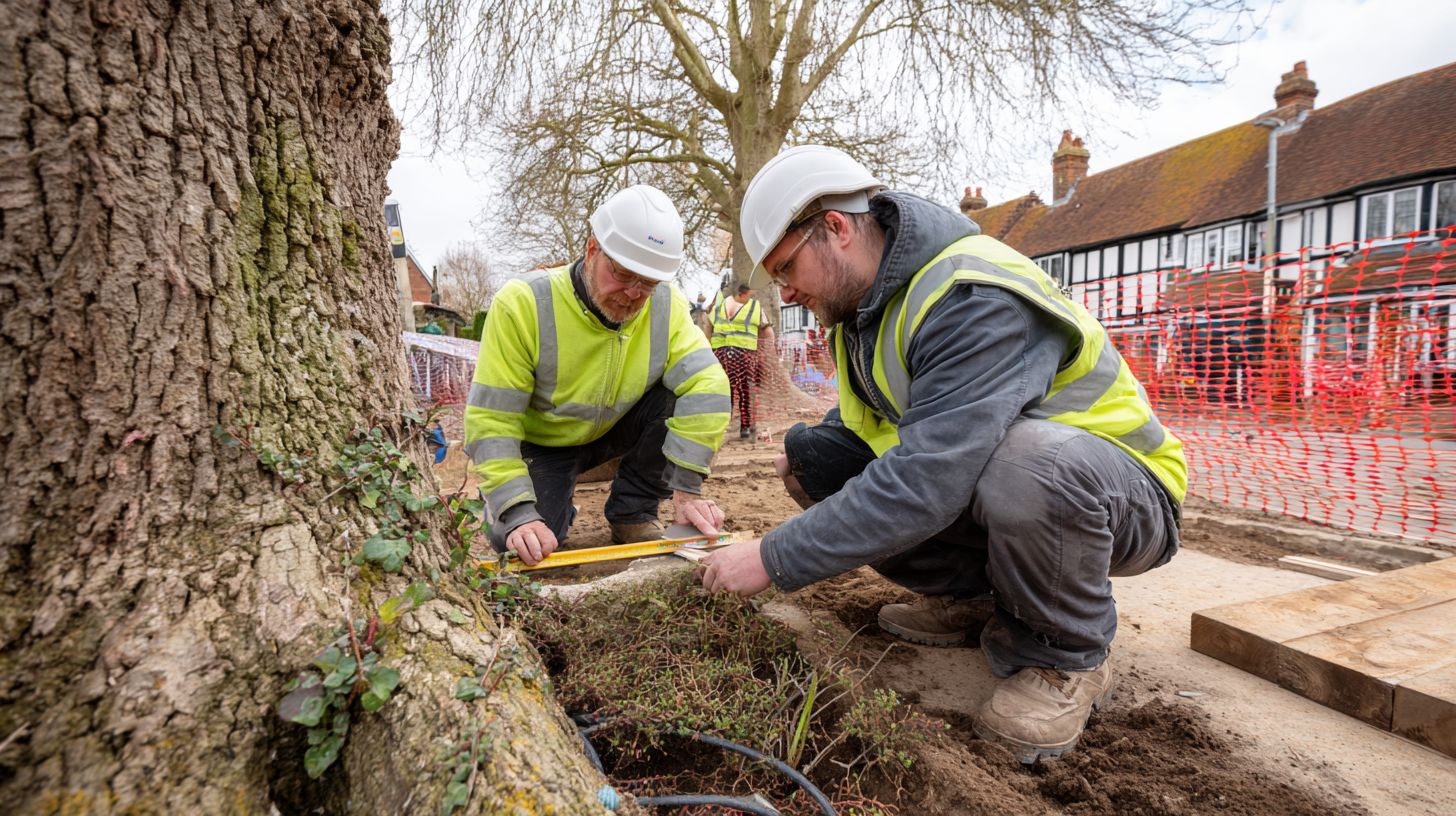
In conservation areas, any proposed works to trees with a trunk diameter exceeding 75mm require six weeks’ prior notification to the local planning authority. Limited works may proceed after this period if no objections are raised, but felling always requires consent.
To ensure compliance, the following process should be followed, outlined in numbered steps:
- Submit Form T1 through the Planning Portal, which is a free online service typically completed in approximately 10 minutes and accessible via gov.uk.
- Include detailed information about the tree, such as its species (for example, oak or willow/Salix), along with its precise location, specified using GPS coordinates or site plans.
- Allow for the six-week decision period, during which the authority evaluates the potential impact on the conservation area’s character. Should no objections be raised, the proposed works may commence immediately thereafter.
A frequent error involves failing to provide notification, which may result in the issue of enforcement notices and substantial fines.
Failing to provide notification may result in enforcement notices and substantial fines, as seen in various cases across the UK.
It is advisable to consult the official guidance on GOV.UK for full details of the regulations under the Town and Country Planning Act 1990.
Permitted Development Limits
In conservation areas, after providing the required six-week notification, certain works like crown thinning or reduction to a tree’s pre-existing shape may be allowable if they do not exceed 25% of the canopy volume and no objections are raised. The removal of deadwood is generally permitted without prior approval, subject to notification.
Under the provisions of the Town and Country Planning (General Permitted Development) Order 2015, crown thinning or reduction to a tree’s pre-existing shape is allowable, provided it does not exceed 25% of the canopy volume. Additionally, the removal of deadwood is permitted without requiring prior approval.
For example, the trimming of branches encroaching on drainage systems may be permissible after notification, provided it complies with the authority’s assessment.
To maintain compliance, it is advisable to accurately measure the canopy volume using a free clinometer application available for iOS or Android devices. Furthermore, adherence to building regulations and the NHBC and RHS standards for safe operational limits is essential to mitigate risks of subsidence or heave claims, particularly by avoiding excessive disturbance to roots in proximity to building foundations.
Root Protection Zones (RPZs)
Root Protection Zones (RPZs), which define zones of influence as outlined in NHBC Standards Chapter 4.2, encompass the root system including radial roots within a radius equivalent to 12 times the trunk diameter at breast height (DBH), which typically ranges from 5 to 15 metres for mature oaks.
To determine the RPZ radius, multiply the DBH by 12. For instance, a Quercus (oak) with a 0.5-metre DBH results in a 6-metre radius, encompassing approximately 113 square metres. For accurate mapping, consult the diagrammatic guidance provided in BS 5837:2012, ‘Trees in relation to design, demolition and construction.’
On-site delineation of the zone may be achieved using the string method: secure a non-stretch string to the trunk at breast height and traverse a circular path at the calculated radius, placing stakes at intervals of 2 metres. Within RPZs, no-dig zones must be designated to prevent soil desiccation due to compaction or excavation, thereby safeguarding root integrity.
Non-compliance with RPZ requirements accounts for approximately 20% of foundation cracks in the United Kingdom, according to BRE Digest 412 (2005).
Safe Distances for Construction
The safe distances for construction near trees vary depending on the species, soil type, and soil conditions. The National House Building Council (NHBC)’s Structural Defects Reference Manual for Low Rise Buildings recommends setbacks ranging from 7 to 21 metres in shrinkable clay soils, such as London clay, to mitigate the risks of subsidence.
Foundation Types and Tree Proximity
For trees such as Populus situated within 10 metres of a structure, deep strip foundations at a foundation depth of 2.5 metres, raft foundations, or root barriers are recommended to mitigate subsidence in clay soils due to seasonal deficit and permanent deficit, in accordance with National House-Building Council (NHBC) guidelines.
These foundation designs effectively address moisture fluctuations caused by tree roots. For comparative analysis, the following table presents key foundation types:
| Type | Depth | Best Soil | Tree Distance | Cost Estimate | |———–|———|——————-|—————|——————| | Deep Strip| 2.5m | Clay | 5-10m | £5,000-£10,000 | | Raft | 0.6-1m | Shrinkable clay | <5m | £15,000-£25,000 | | Pile | 4m+ | Heavy clay | <5m | £20,000+ |Root barriers should be installed to safeguard against potential damage, such as plastic sheets priced at £50 per metre for Salix species in proximity to drainage systems. Recommended procedural steps include:
- Evaluate soil moisture levels using soil moisture probes (approximately £300) to quantify water absorption.
- Incorporate void formers to avert heave.
For detailed guidance on preventing structural damage, consult Building Research Establishment (BRE) Report 452.
Planning Permission Process

In England and Wales, the process for obtaining planning permission related to tree works entails submitting formal applications to local authorities. According to 2023 data from the Planning Portal, compliant proposals endorsed by qualified arborists achieve an approval rate of 70%.
Tree Surveys and Arborist Reports
It is recommended to engage a certified arborist, such as through the Royal Horticultural Society (RHS) directory, to carry out tree surveys in compliance with British Standard (BS) 5837. These surveys, which typically cost between £500 and £2,000, should encompass root identification and soil investigation to assess potential desiccation.
Upon hiring the arborist, adhere to the following structured steps to ensure a comprehensive assessment:
- Arrange an initial site visit within one week. Verify the arborist’s credentials using the Arboricultural Association database, with preference given to those qualified under LANTRA standards.
- Carry out the survey over a period of two to three days. Utilise GPS mapping to document tree locations and excavate trial pits to examine radial roots extending up to 1.5 times the tree’s height from the trunk. Incorporate soil borings to evaluate moisture levels, which frequently reveal desiccation cracks.
- Deploy monitoring equipment for level monitoring and crack monitoring, including crack gauges (approximately £10 each) and laser levels (approximately £150), to facilitate ongoing evaluations of subsidence.
The resulting report must provide detailed information on tree species (for example, Oak (Quercus), Populus with a mature height of 20 metres), influence zones, and remedial recommendations, such as the installation of root barriers.
For context, a 2022 study by the Tree Council indicated that 15% of subsidence claims in England and Wales are attributable to mature trees. It is imperative to refrain from carrying out DIY surveys, as such approaches are not recognised for insurance purposes or planning permissions.
Legal Responsibilities and Penalties
Owners of trees in England and Wales are liable for unlimited fines in the event of breaches to Tree Preservation Orders (TPOs). The average subsidence claim incurred by building insurers totals £25,000 per incident, typically resulting from damage to drains or structural components.
To mitigate these risks, tree owners are required to notify local authorities prior to undertaking any works on trees protected by TPOs and to maintain their trees in a manner that prevents subsidence affecting neighbouring properties. Essential responsibilities encompass conducting regular inspections for root-related damage and performing pruning to minimise soil desiccation, especially in clay soils such as London clay where research indicates permanent moisture deficits extending up to 2 metres in depth (e.g., Biddle P.G., 1998).
Recommended actions include:
- Consulting with your insurer prior to commencing any tree works to prevent the denial of claims;
- Obtaining assessments from qualified arborists to substantiate liability.
Penalties may include unlimited fines plus associated costs, which can be imposed by magistrates’ courts or the Crown Court—for instance, a 2022 case resulted in a £50,000 fine for the unauthorised felling of eucalyptus trees. According to the Association of British Insurers’ (ABI) 2023 report, subsidence claims attributable to desiccation have increased by 15%, reinforcing the critical need for proactive maintenance.
Frequently Asked Questions
What are the rules for building close to trees in the UK?
The rules for building close to trees in the UK primarily revolve around protecting tree roots to prevent subsidence and complying with planning laws. Trees protected by Tree Preservation Orders (TPOs) or in conservation areas require local council permission before any work that could damage them. Building regulations (Part A) mandate that foundations account for tree proximity, often requiring deeper or piled foundations if within the tree’s root protection area, typically extending to the canopy spread or 12-15 meters. Always consult a structural engineer and your local planning authority for site-specific advice.
Do I need planning permission for building close to trees in the UK?
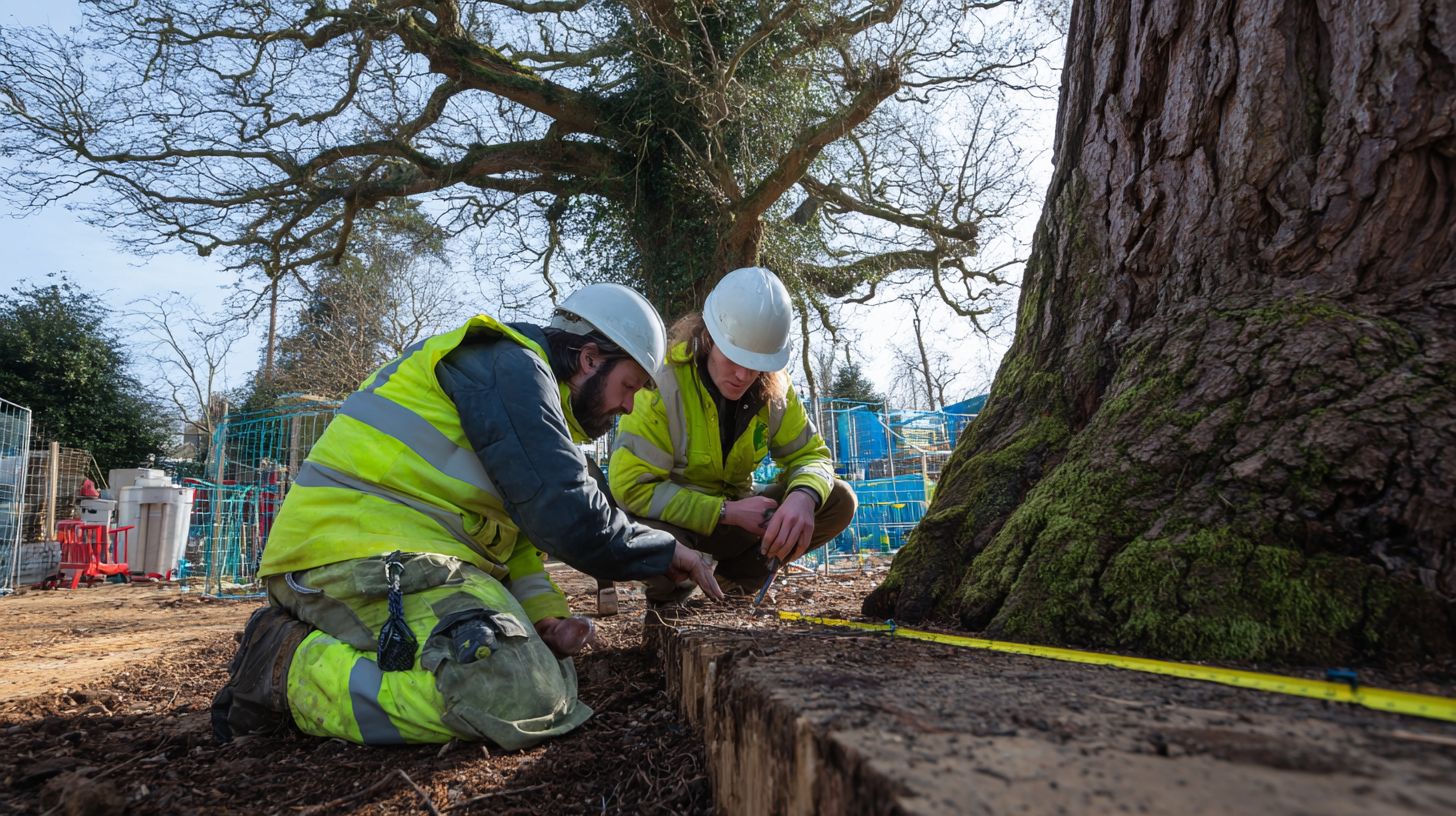
Yes, planning permission is often required when building close to trees in the UK, especially if the trees are subject to TPOs or located in conservation areas. This includes submitting an arboricultural report with your application, detailing how construction will avoid root damage. Even without TPOs, proximity may trigger conditions on foundation design to mitigate risks like heave or subsidence. Check with your local council early in the process.
What is the minimum distance for building close to trees in the UK?
There is no fixed minimum distance for building close to trees in the UK, but guidelines suggest staying outside the root protection zone, typically calculated as 12 times the trunk diameter or based on canopy spread. Guidelines emphasize using the NHBC Standards (Chapter 4.2), which classify soil and tree types to determine safe setbacks—for example, 7-15 meters for large trees on shrinkable clay soils. A site survey by an arborist is essential to calculate precise distances.
How do tree roots affect foundations when building close to trees in the UK?
Tree roots can cause significant issues like subsidence or heave when building close to trees in the UK, as they absorb water from surrounding soil, leading to uneven ground movement. Rules require foundations to be designed accordingly—shallow foundations may need to be at least 1 meter deeper in root zones, or special measures like root barriers or heap-and-replace techniques. Building Control will inspect to ensure compliance with BS 5837 for tree site works.
Are there special rules for protected trees when building close to trees in the UK?
Protected trees under TPOs or in conservation areas have stricter rules for building close to trees in the UK; you cannot prune, remove, or damage them without council consent, and fines can be unlimited for violations. Rules include obtaining a Tree Works Application alongside planning permission, often requiring compensatory planting. Hire a qualified arborist to assess and propose protective measures like fencing off the root protection area during construction.
What should I do if a neighbor’s tree affects my building plans close to trees in the UK?
If a neighbor’s tree impacts your building plans close to trees in the UK, start by discussing amicably, but legal recourse may involve the Party Wall etc. Act 1996 if roots encroach. The rules for building close to trees in the UK mean that you might need to serve a Party Wall Notice for works near boundaries, and if the tree is protected, involve the council. For subsidence risks from shared trees, a joint survey can help; ultimately, building insurance may cover root-related claims, but prevention through expert advice is key.