
Key Takeaways:
Understanding Semi-Detached Extensions
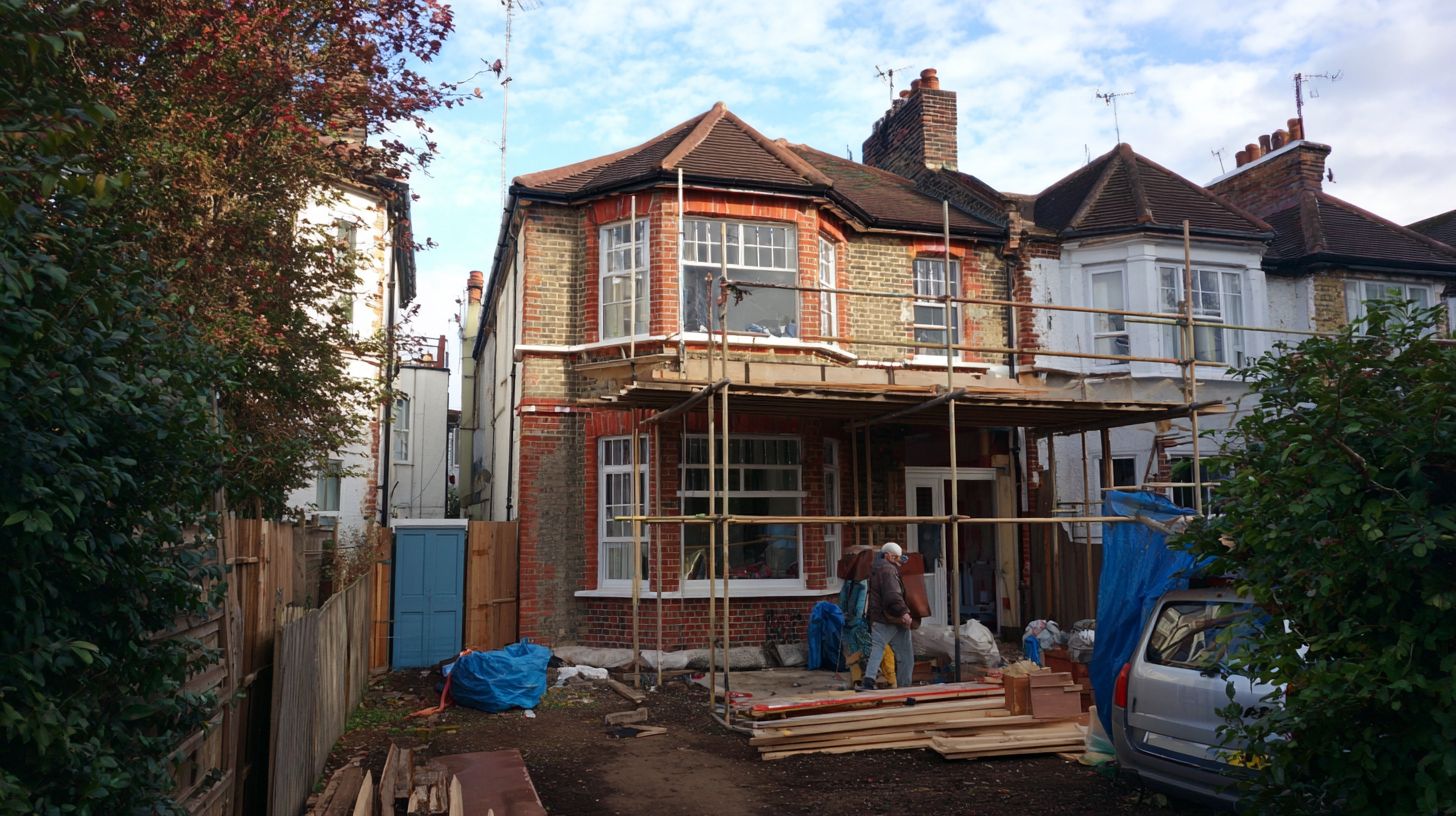
Semi-detached houses constitute 32% of the United Kingdom’s housing stock, as reported by the Office for National Statistics, and present distinctive opportunities for extensions under permitted rights and Permitted Development Rights, without affecting the front elevation. These provisions permit rear extensions of up to 3 metres without the need for full planning permission.
Extensions to semi-detached properties provide a cost-effective means of increasing living space in these attached dwellings, particularly in regions such as London and Surrey, where available space is limited. Prevalent extension types include Rear Extension, Side Extension, and Wraparound Extension designs such as rear extensions to create kitchen-dining areas, side-return infills to capitalise on narrow side passages, and wraparound configurations that integrate both elements into L-shaped additions.
Regulated by the Town and Country Planning (General Permitted Development) Order 2015, such extensions may extend up to 3 metres in depth for semi-detached houses without requiring full planning permission, provided they comply with local authority verifications. Particularly suitable for family home residences, these modifications can enhance property value by 15-20%, according to research from the Nationwide Building Society, by improving bedroom accommodation or open-plan living spaces in an economical manner.
It is advisable to commence the process by engaging a Royal Institute of British Architects (RIBA)-registered architect and structural engineer to develop architectural design for your extension scheme tailored to the specific site.
Assessing Personal Needs
Assessing personal requirements is essential to ensure that an extension to a semi-detached house aligns seamlessly with daily living needs. For example, this approach might involve designing an open-plan kitchen to accommodate a growing family, thereby reclaiming 20 to 30 square metres of underutilised garden space.
Current Space Limitations
To identify current space limitations in a semi-detached home, begin by mapping the property’s layout, taking into account common constraints such as kitchens averaging 10 square metres in pre-1980s constructions. Utilise free online floor planning tools to visualise potential bottlenecks and inefficiencies.
For a comprehensive assessment, adhere to the following structured steps:
- Perform a room-by-room audit, allocating 1-2 hours for the process. Employ precision measuring devices, such as a laser measuring tool (approximately £100), to record accurate dimensions of the total land.
- Document key pain points, including the absence of hidden storage solutions in approximately 70% of UK semi-detached properties, while identifying areas prone to clutter accumulation.
- Establish priorities through a family survey, ensuring that essential requirements—such as dedicated laundry spaces—are not overlooked.
It is advisable to avoid prevalent errors, such as neglecting the impact of natural light distribution. A case study indicates that inadequate audits can result in up to 15% wastage of available space, underscoring the value of meticulous mapping to facilitate effective and efficient renovations.
Future Lifestyle Changes
It is prudent to anticipate future changes, such as accommodating ageing parents or establishing remote work arrangements, wherein a 20-square-metre Double Storey Extension could facilitate split-level living inspired by Scandi style design principles for multi-generational households.
To execute this planning process effectively, adhere to the following structured forecasting steps:
- Project needs over the next 5 to 10 years, incorporating relevant trends such as significant increases in home office space requirements post-COVID, as indicated by UK national statistics.
- Develop mood boards on platforms like Pinterest, incorporating Scandinavian elements or industrial touches—such as light woods, open layouts, and neutral colour palettes—for visualisation purposes (approximately 30 minutes).
- Engage in consultations with family members to align on priorities, thereby avoiding assumptions regarding uniform requirements.
UK research on lifestyle adaptations indicates that approximately 25% of homeowners express regret over inadequate planning. For instance, a family in Surrey incorporated flexible rooms into a 20m² extension at a cost of £50,000, which subsequently enhanced the property’s value by £65,000, yielding a return on investment of £15,000.
Financial Evaluation
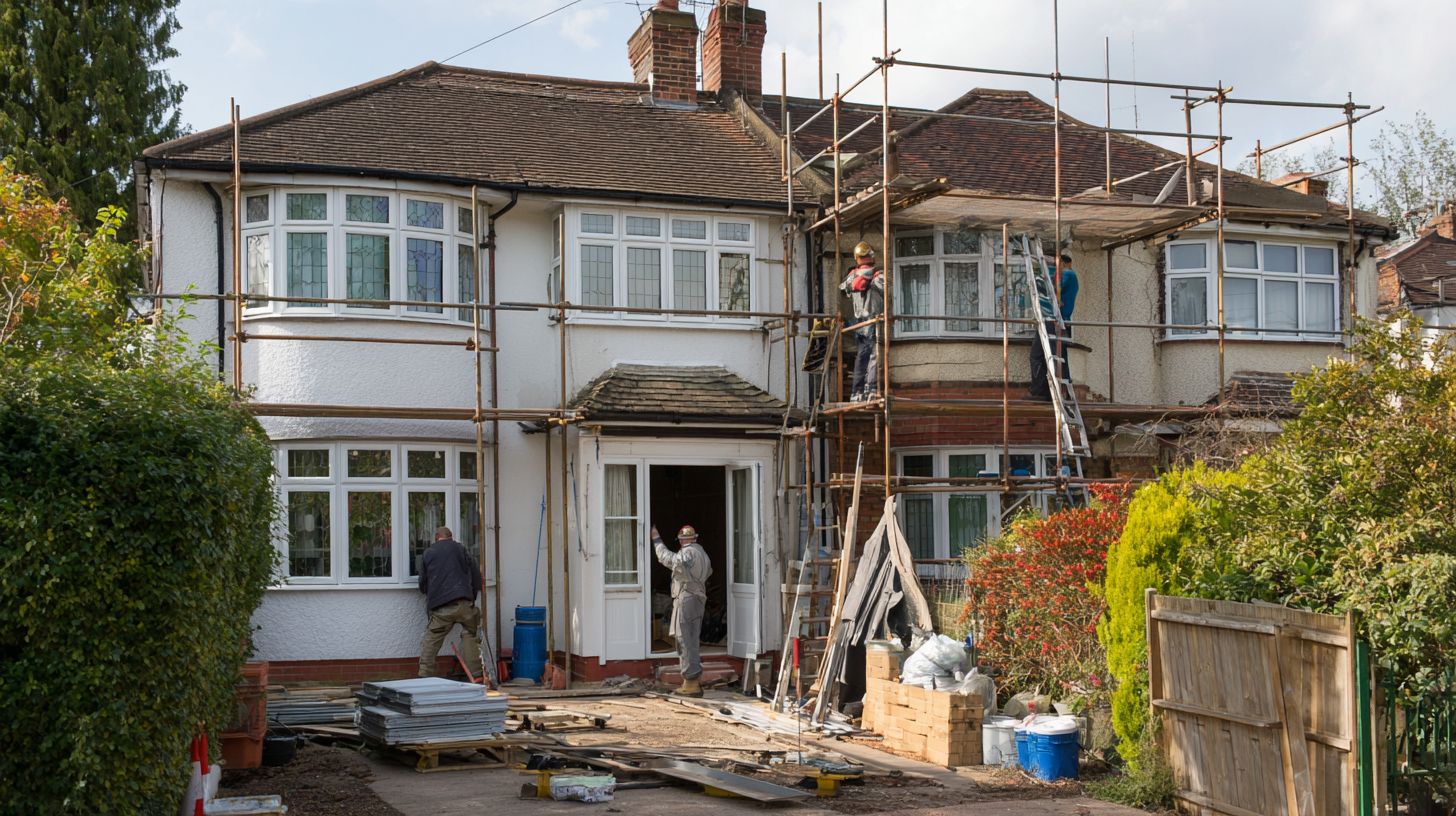
A comprehensive financial analysis indicates that extensions for semi-detached properties in London and Surrey typically range from £1,800 to £3,000 per square metre. This aligns with findings from This is Money, which details how such home improvements can add the most to house prices. This option presents a cost-effective strategy for increasing property value while avoiding the need for relocation.
Cost Breakdown
The costs associated with a Single Storey Rear Extension are itemised as follows, amounting to a total of £25,000: foundations (£5,000), steel frames (£4,000), insulated panels (£6,000), and labour (£10,000). For a double storey extension that incorporates structural work, these costs escalate to £60,000.
| Component | Estimated Cost (London/Surrey) | Percentage of Total | Examples |
|---|---|---|---|
| Foundations | £4,000-£8,000 | 20% | Concrete slabs for stability |
| Materials like brickwork | £10,000 | 25% | Exterior walls, roofing tiles |
| Fixtures | £3,000 | 10% | Bifold doors, Glass Glazing, skylights, lighting |
Certain variables, such as the incorporation of timber cladding, may impose an additional premium of 5-10%, depending on the material’s quality and procurement source. For precise quotations, it is recommended to reference the guidelines of the Royal Institution of Chartered Surveyors (RICS), which stress the necessity of thorough site surveys to circumvent common oversights, including the underestimation of the 20% Value Added Tax (VAT) on materials and labour.
It is essential to account for location-specific expenses, particularly in areas such as London and Surrey, to facilitate accurate and realistic budgeting.
ROI Projections
Projections indicate that a £40,000 Kitchen Extension on a semi-detached house in Surrey can increase the property’s value by £60,000, according to Nationwide Building Society’s 2023 data, with potential returns on investment (ROI) up to 50% in some cases, though averages are 12-18%.
This equates to a 50% ROI, calculated using the formula (Added Value – Cost) / Cost × 100: (£60,000 – £40,000) / £40,000 × 100.
For practical planning purposes, consider real-world examples. In London, a £30,000 rear extension typically adds £45,000 to the property value, resulting in a 50% ROI and a potential two-year payback period through rental income uplift or resale proceeds.
In conservation areas, wraparound extensions are subject to restrictions, such as projection limits of 3 metres for single-storey rear extensions on semi-detached houses in accordance with Permitted Development rights in England and Wales, which may reduce costs to £35,000 while adding £42,000 in value (a 20% ROI). For site-specific projections, utilise online property value estimators.
Analysis from UK property experts like Savills (2022) emphasises that open-plan designs enhance lifestyle appeal, thereby potentially increasing ROI by an additional 5%.
Legal and Planning Requirements
Compliance with the Party Wall Act 1996 and building regulations is essential when undertaking extensions to semi-detached properties, particularly as it mandates neighbour consultation with adjoining owners for any construction activities within 3 metres of the shared boundary to mitigate potential disputes, privacy concerns, or sunlight blocking — a key aspect covered in the UK Government’s overview on party walls and building work.
To ensure adherence, the following procedures should be followed:
- Issue a Party Wall Notice at least two months prior to commencing work, providing a comprehensive description of the proposed Wraparound Extension or other extension types—templates are available free of charge via the UK Government’s Planning Portal.
- Allow time for the neighbour’s response; in the absence of a reply within 14 days, consent is presumed, although unresolved disputes may necessitate the engagement of qualified surveyors (typically incurring costs of £1,000 to £2,000).
- If there is a failure to reach agreement, the appointed surveyors will prepare a Party Wall Award to address pertinent matters, such as permissible vibration thresholds.
For instance, in a 2022 London case, construction activities were suspended through a court injunction due to non-compliance, in accordance with Royal Institution of Chartered Surveyors (RICS) guidelines. It is advisable to seek counsel from a solicitor at an early stage to avert significant delays and associated expenses.
Design and Practical Options
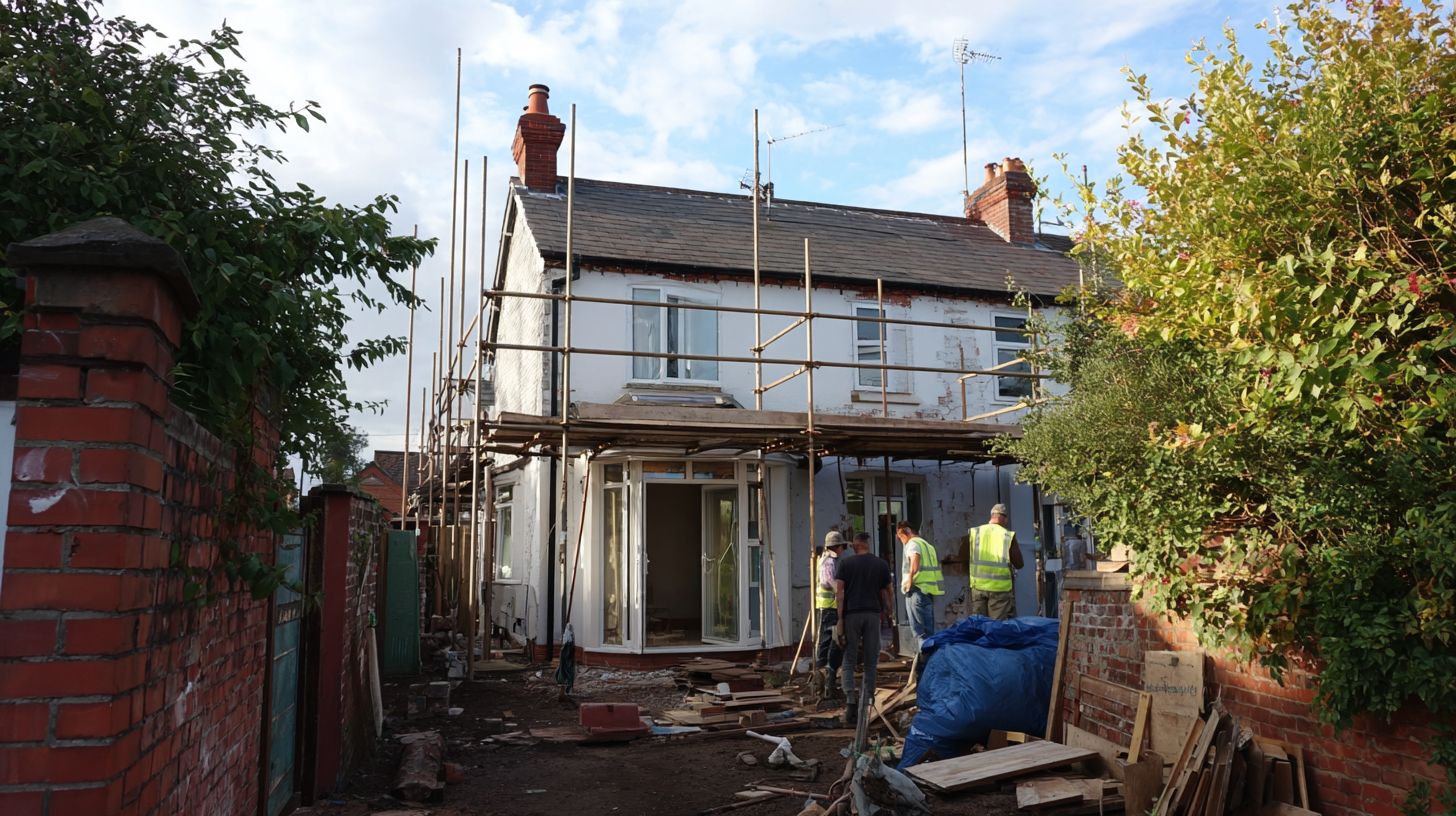
Consider design options such as a wraparound extension incorporating glass glazing and bifold doors to optimise natural light penetration, which can result in a significant increase in usable space.
Evaluate extension types to align with your requirements under Permitted Development Rights (PDR):
| Type | Max Size under PDR | Materials | Best For | Cost per sqm |
|---|---|---|---|---|
| Rear Extension | Up to 3m projection (terraced/semi) | Brickwork with skylights | Kitchen Extension | £2,000 |
| Side Extension | Up to half house width | Timber cladding | Side returns | £2,500 |
| Wraparound Extension | Combines rear/side limits | Glass/insulated panels | Open plan living | £2,800 |
For a deeper exploration of rear extensions that extend beyond these single-storey limits into two-storey designs requiring full planning approval, our comprehensive guide to 2-storey rear extensions covers key planning, regulations, and construction details.
To enhance practicality, integrate Scandi style design principles with concealed storage solutions, such as under-bench cabinets, to uphold a minimalist aesthetic.
Adhere to Royal Institute of British Architects (RIBA) best practices by utilising steel frames to ensure structural integrity and reinforcing load-bearing walls, in accordance with their 2022 guidelines on sustainable extensions.
It is recommended to consult a local architect to verify compliance with Permitted Development Rights (PDR).
Impact on Property Value
Property extensions can significantly enhance the value of semi-detached homes by 10-25% in regions such as London and Surrey. According to the Nationwide Building Society, kitchen extensions costing under £40,000 typically yield an average uplift of £52,000.
A 2022 study by Robert Wilson and Sarah Broadstock, affiliated with the Royal Institute of Chartered Surveyors, indicates an average value increase of 15% for designs that comply with regulatory standards, incorporating factors such as planning permissions and energy efficiency measures.
To determine the return on investment (ROI), apply the formula: (New Value – Original Value) / Cost.
For instance, a Double Storey Extension on a family home with an original value of £500,000 and a construction cost of £90,000 may result in a £70,000 increase in property value, achieving an ROI of 78%. This enhancement is further supported by expanding the original footprint from 100 square metres to 150 square metres.
Alternatively, a single-storey extension integrating the garden through bifold doors can add 8% to the property value. With an investment of £40,000, this approach delivers a £32,000 gain, equating to an 80% ROI, while optimising the use of available land without impacting height restrictions.
It is advisable to consult local surveys to account for site-specific considerations, including plot size. For those interested in potential drawbacks amid changing market conditions, this article in The Telegraph explores why home extensions might no longer be worth it in some scenarios.
Potential Risks and Drawbacks
Key risks in construction projects encompass party wall disputes under the Party Wall etc. Act 1996, which impact approximately 20% of semi-detached developments according to data from the Royal Institution of Chartered Surveyors (RICS), as well as sunlight obstruction that can erode neighbour relations.
Other prevalent challenges require proactive mitigation measures.
- Privacy issues stemming from elevated front elevations may inadvertently expose interior spaces; these can be effectively addressed by installing frosted glass glazing as a £2,000 supplementary feature, thereby preserving external views while upholding discretion.
- Structural deficiencies, such as unstable foundations, present the potential for substantial repair costs; commissioning an early assessment from a structural engineer, at an estimated £800, can forestall remediation expenses exceeding £10,000.
- Budget overruns due to scope creep; diligent tracking of project milestones using Gantt charts within Microsoft Project enables timely adjustments and cost control.
- Inadequate consultation with neighbours can result in delays and additional legal expenditure, as seen in various cases on the Planning Portal—initiating formal discussions through official notices at the outset promotes goodwill and regulatory adherence.
Alternatives to Extending
Loft conversions provide a cost-effective permitted development option, enabling the addition of typically 30-50 square metres of usable space without requiring groundwork, which is particularly suitable for conservation areas where ground-level extensions are prohibited. Those curious about the planning and building requirements for such ground-level alternatives might appreciate our Single Storey Side Extension Guide.
Loft conversions are a popular choice among UK homeowners to optimise living space while avoiding planning permission challenges. The following table compares alternative options to facilitate knowledge-based decision making:
| Alternative | Cost | Space Gained | Pros/Cons | Best For |
|---|---|---|---|---|
| Loft Conversion | £25,000-£50,000 | 30-50 sq m | No garden loss; requires stair access | Terraced semis |
| Internal Remodelling | £10,000-£20,000 | 20 sq m | Quick installation; limited scope | Urban London flats |
| Modular Pods | £15,000 | 15 sq m | Eco-friendly insulated panels; temporary | Short-term needs |
Loft conversion projects generally require approximately 8 weeks to complete:
- Engage a structural engineer initially to assess feasibility.
- Secure Party Wall Agreements if the property shares walls with adjacent structures.
- Consult architects registered with the Royal Institute of British Architects (RIBA) to develop designs that comply with Building Regulations.
Frequently Asked Questions

Is it worth extending a semi-detached house?
Extending a semi-detached house can be worth it if you need more space and plan to stay long-term, as it often increases property value by 10-20%. However, weigh costs against benefits; it’s ideal if the extension adds functionality like extra bedrooms without over-developing the area.
Is it worth extending a semi-detached house for resale value?
Yes, extending a semi-detached house is often worth it for resale, boosting market appeal and value, especially in family-oriented neighbourhoods. A well-designed extension can yield a strong return on investment, but consult local market trends to ensure it aligns with buyer demands.
Is it worth extending a semi-detached house to add a kitchen?
Absolutely, if your current kitchen is cramped; extending a semi-detached house for a larger kitchen enhances daily living and cooking efficiency. It’s a worthwhile investment if it modernises the home, potentially increasing its appeal and value for future sales.
Is it worth extending a semi-detached house versus moving?
Extending a semi-detached house can be more cost-effective than moving, saving on relocation fees and stamp duty while customising your space. It’s worth it if you love your location; compare extension costs (around £1,500-£3,000 per sqm) to house prices in the area.
Is it worth extending a semi-detached house in a conservation area?
It can be worth extending a semi-detached house in a conservation area if you secure permissions and design sensitively to match the aesthetic. While restrictions add complexity and cost, a compliant extension preserves value and avoids devaluation from non-compliance.
Is it worth extending a semi-detached house for home office space?
With remote work rising, extending a semi-detached house for a dedicated office is increasingly worth it, improving productivity and work-life balance. This addition can future-proof your home, adding resale value as buyers seek versatile spaces post-pandemic.