
Key Takeaways:
- Under permitted development rights, single-storey rear extensions can typically extend up to 3 metres deep for semi-detached or terraced homes and 4 metres for detached houses, without needing full planning permission (extensions up to 6 metres and 8 metres respectively require prior approval under the larger home extension scheme).
- Side and loft extensions have stricter limits: side extensions are usually single-storey and must not exceed half the original house width, while loft conversions are capped at 50 cubic meters of added space for detached and semi-detached homes, and 40 cubic meters for terraced houses.
- Planning permission is required for extensions in designated areas such as national parks, areas of outstanding natural beauty, or the Broads, and may also be required in conservation areas if Article 4 Directions apply; it is always required if extensions exceed height limits (e.g., over 4 metres for single-storey).
Understanding Permitted Development Rights
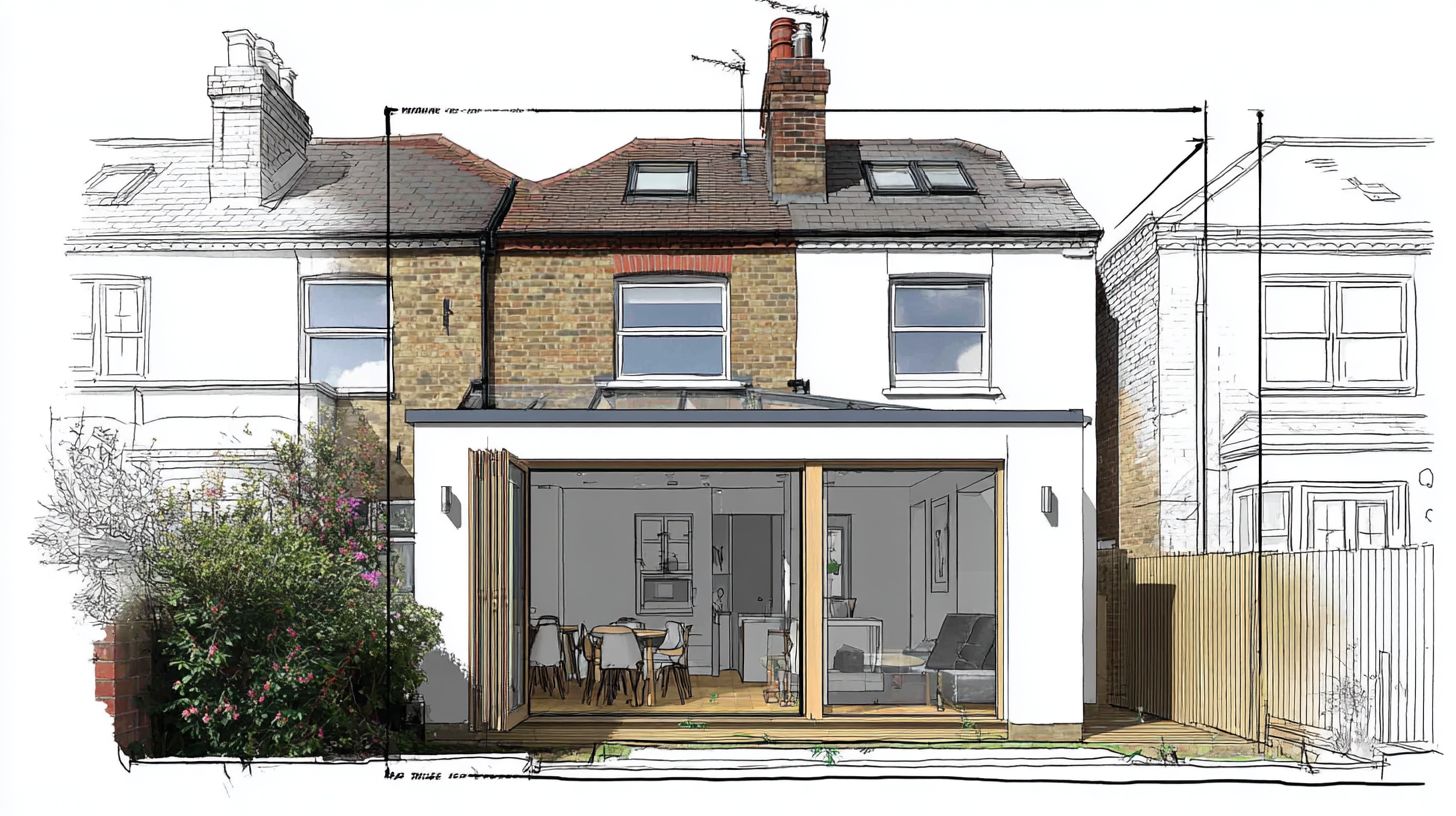
Permitted Development Rights in England, as governed by the Town and Country Planning (General Permitted Development) (England) Order 2015 (as amended up to 10 September 2019), enable homeowners to extend their properties without the need for full planning permission. This framework allows for average savings of £1,000 to £5,000 in application fees, according to data from the Ministry of Housing, Communities and Local Government.
These rights trace their origins to the Town and Country Planning Act 1948, which took effect on 1 July 1948, and have since evolved to facilitate the efficient processing of minor developments. To apply these rights appropriately:
- Verify the historical context: The rights originated from the Town and Country Planning Act 1947 (which came into effect in 1948), designed to promote effective home improvements while reducing administrative burdens.
- Identify the key classes: For householders, Classes A to D encompass extensions such as rear extensions, side extensions as outlined in our Single Storey Side Extension Guide, loft conversions, porch erections, changes to hard surfaces, microwave antennas, solar panels, chimney flues, soil vent pipes, restricted to 50% of the original curtilage area (for example, a 30 square metre garage extension on a 60 square metre plot).
- Confirm applicability: These rights are limited to dwellinghouses in England; flats and converted properties are excluded and necessitate full planning permission. For Wales, consult the Welsh Government. Properties fronting unadopted streets should check with the Local Planning Authority for any additional rules.
Common errors include the erroneous assumption of universal applicability, failure to check for Article 4 Directions that withdraw permitted development rights, or overlooking potential Community Infrastructure Levy implications; it is recommended to consult the official Permitted Development Rights for Householders: Technical Guidance on gov.uk for detailed information, to verify requirements for prior approval, and to apply for a Lawful Development Certificate to ensure lawfulness — [ a key resource from the UK Government outlining when full permission is truly needed].
Types of Home Extensions Covered
Under the Permitted Development Rights framework, common residential extensions—such as single storey rear extensions or side additions or loft conversions—may be constructed without obtaining planning permission, provided they conform to the precise dimensional requirements specified in Class A of the 2015 Order. This regulatory provision benefits over 300,000 UK households annually, as shown in the live tables on planning application statistics from GOV.UK.
Rear Extensions
Rear extensions, as permitted under Class A(a) of the relevant regulations, allow for a projection from the original rear wall of up to 3 metres for terrace houses or 4 metres for detached properties, provided the extension remains within the curtilage area of the dwelling and does not extend to the principal elevation facing the highway frontage.
To ensure full compliance and achieve a cohesive integration with the existing structure, it is advisable to adhere to the following best practices:
- Select materials that match the original construction, such as compatible bricks, to maintain architectural consistency.
- Ensure compliance with boundary restrictions under permitted development rules (e.g., single-storey extensions may be closer than 2 metres to boundaries if under 2.5 metres high), incorporating additional screening measures, such as 1-metre-high fencing, to preserve privacy and neighbour amenity.
- Commence with single-storey designs to reduce visual impact on the surrounding area.
- Initiate early consultation with neighbours through established protocols to foster cooperation.
Where prior approval is required (e.g., for larger extensions beyond standard permitted development limits), processing typically takes 2 to 4 weeks.
For projects involving construction adjacent to shared boundaries or party walls, it is essential to consult the Party Wall etc. Act 1996 to address potential disputes in a collaborative manner and prevent unnecessary legal complications or delays.
Side Extensions
Side extensions are limited to single-storey constructions, with a maximum height of 4 metres and a width that does not exceed half the side elevation of the original house.
These extensions are particularly suitable for incorporating utility spaces while preserving the street view.
In comparison, rear extensions permit greater projection depths—up to 4 metres for detached properties and 3 metres for semi-detached or terraced houses—under England’s Permitted Development Rights as outlined in the Town and Country Planning (General Permitted Development) Order 2015.
Such extensions are well-suited for creating expansive family rooms or kitchens.
They must not exceed 4 metres in height. Additionally, the total area of such extensions and other additions must not cover more than 50% of the curtilage (land) surrounding the original house.
For properties with narrow plots, such as terraced houses, side extensions offer a practical solution as their width (along the house) must not exceed half the width of the original house.
For instance, a 3-metre by 2.5-metre side extension on a semi-detached property in Manchester provided an additional 7.5 square metres of space at a cost of £15,000.
This project was fully compliant with regulations, as confirmed by the Local Planning Authority, and enhanced the property’s functionality without generating disputes with neighbours.
Loft or Roof Extensions
Under Class B of permitted development rights, loft conversions may add up to 40 cubic metres of additional space for terraced houses or 50 cubic metres for detached houses, provided that the eaves height does not exceed the original roof pitch by more than 20 centimetres.
To determine the allowable volume, apply the formula: Length × Width × Height increase ≤ 40 m³. For instance, in a typical room measuring 8 metres by 5 metres with a 1-metre height addition—comparing the pre-conversion flat roofline to the post-conversion pitched dormer—the calculation yields exactly 40 m³, which is suitable for creating a bedroom.
The transformation can be envisioned as follows: the original low eaves are raised to align with the roof slope, thereby increasing headroom for upper floor areas, potentially including juliet balconies, while preserving the external walls.
It is important to note that Class B provisions address planning permission exclusively; separate approval under Building Regulations is mandatory to ensure structural integrity and safety, including obscure glazed windows where required. A frequent oversight involves changes to ground levels, which contributes to the failure of approximately 15% of applications, according to 2022 data from the UK Government’s Planning Portal.
Size Limits for Rear Extensions
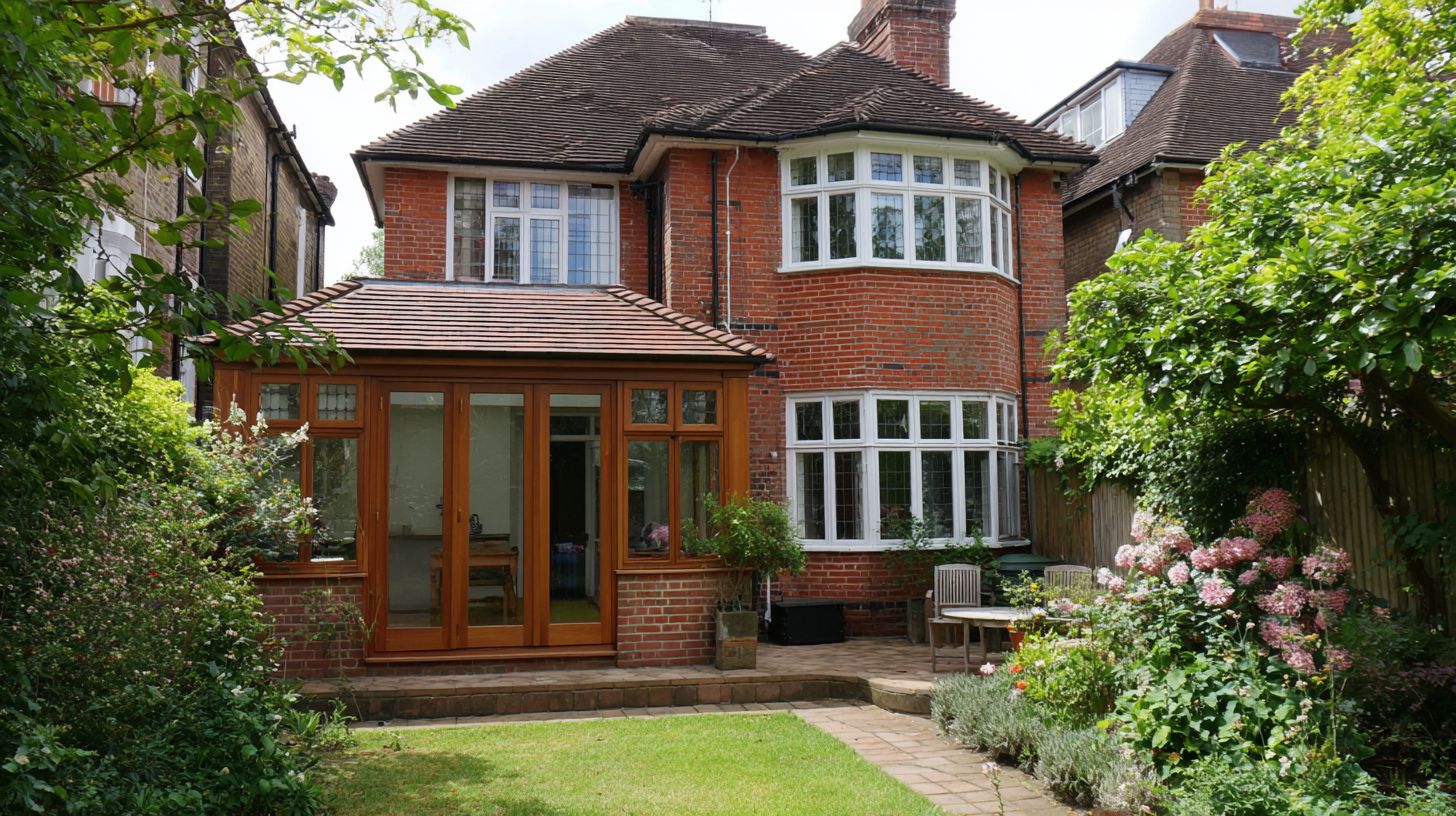
The size limits for rear extensions are explicitly outlined in Schedule 2, Part 1, Class A of the 2015 Order.
For detached homes, single-storey extensions are restricted to a maximum depth of 4 metres to safeguard neighbour amenity.
Data from the Planning Portal indicates that 70% of applications concentrate on this provision.
Single-Storey Limits
Under the amended permitted development rules effective from 30 May 2013, single-storey rear extensions may project up to 3 metres for terraced or semi-detached houses and 4 metres for detached houses, with measurements taken from the original rear wall at ground level.
To ensure compliance with permitted development rights as outlined in the Town and Country Planning (General Permitted Development) Order 2015, adhere to the following measurement procedure:
- Determine the original rear wall: For properties constructed before 1948, reference historic maps or engage a chartered surveyor; for those built after 1948, it is the unaltered wall line.
- Measure the projection: From the original rear wall, employ a laser distance measuring tool to the furthest extent of the extension—for instance, a 3-metre projection on a semi-detached property would meet the criteria.
- Observe the 50% curtilage rule: Confirm that the extension does not occupy more than half of the original garden area to the rear of the principal elevation of the house.
Per guidance from the Planning Portal, exclude verandas terraces, raised platforms, or decks from these measurements.
Site surveys typically require one day to complete; for listed buildings or other designated properties, consultation with the local planning authority is mandatory. Adhering to these protocols mitigates the risk of enforcement action, which affects approximately 15% of non-compliant cases according to data from Gov.uk.
Two-Storey Limits
Multi storey rear extensions, including two-storey ones, are restricted to a maximum depth of 3 metres and must not exceed the height of the original roof. These provisions apply solely when the extension is positioned at least 7 metres from the rear boundary.
These regulations originate from the UK’s Town and Country Planning (General Permitted Development) Order 2015, which permits such extensions without the need for full planning permission under permitted development rights. However, several common challenges may arise in compliance:
- Boundary distance violations: Should the extension be located closer than 7 metres to the boundary, it is necessary to seek prior approval through the local council’s 21-day review process to prevent enforcement actions.
- Height exceedance: To ensure seamless compliance, the extension should align with the ridge line of the original roof.
- Multi-storey complexity: Early consultation with an architect, typically costing between £500 and £1,000, is advisable to address structural limitations effectively.
In a 2018 case in suburban England, an application was rejected, necessitating a reduction in depth from 4 metres to 3 metres, which underscores the rigorous enforcement of these guidelines.
Height and Depth Restrictions
Height restrictions for extensions under Permitted Development Rights limit single-storey additions to a maximum of 4 metres and multi-storey additions to the height of the existing wall, in accordance with Class A(e) guidelines. Additionally, the depth of such extensions must not exceed 50% of the rear curtilage of the original house.
Compliance with these regulations can enhance property value by 20-30%, potentially generating a return on investment of £20,000 to £50,000, based on data from the Royal Institution of Chartered Surveyors (RICS). This approach also mitigates the risks and expenses associated with planning appeals.
For example, a single-storey extension measuring 3 metres in depth and 3.5 metres in height on a detached house can yield up to 15% improvements in energy efficiency through superior insulation, thereby reducing annual heating costs by as much as £300, according to a 2022 study by the Energy Saving Trust.
To confirm adherence to these standards, property owners are advised to apply for a lawful certificate, specifically a Lawful Development Certificate, through their local council’s planning portal. This requires the submission of detailed plans and a fee ranging from £103 to £234, with processing typically completed within 8 weeks.
Obtaining this certificate provides essential legal assurance, particularly for future property transactions.
Rules for Different Property Types
Under the England order, the Town and Country Planning (General Permitted Development) (England) Order 2015, as amended on 10 September 2019 and building on the framework established on 1 July 1948, permitted development rights vary according to property type. In Wales, the Welsh Government has separate regulations.
Detached houses are permitted rear extensions of up to 4 metres, in contrast to 3 metres for terrace houses—a distinction that has key implications for homeowners considering single-storey additions, as explored in our Single Storey Rear Extension Guide | Planning & Build. Flats, however, are not eligible for these rights.
According to statistics from the Ministry of Housing, Communities and Local Government, approximately 80% of claims under this framework originate from single-family homes.
Detached vs. Semi-Detached Houses
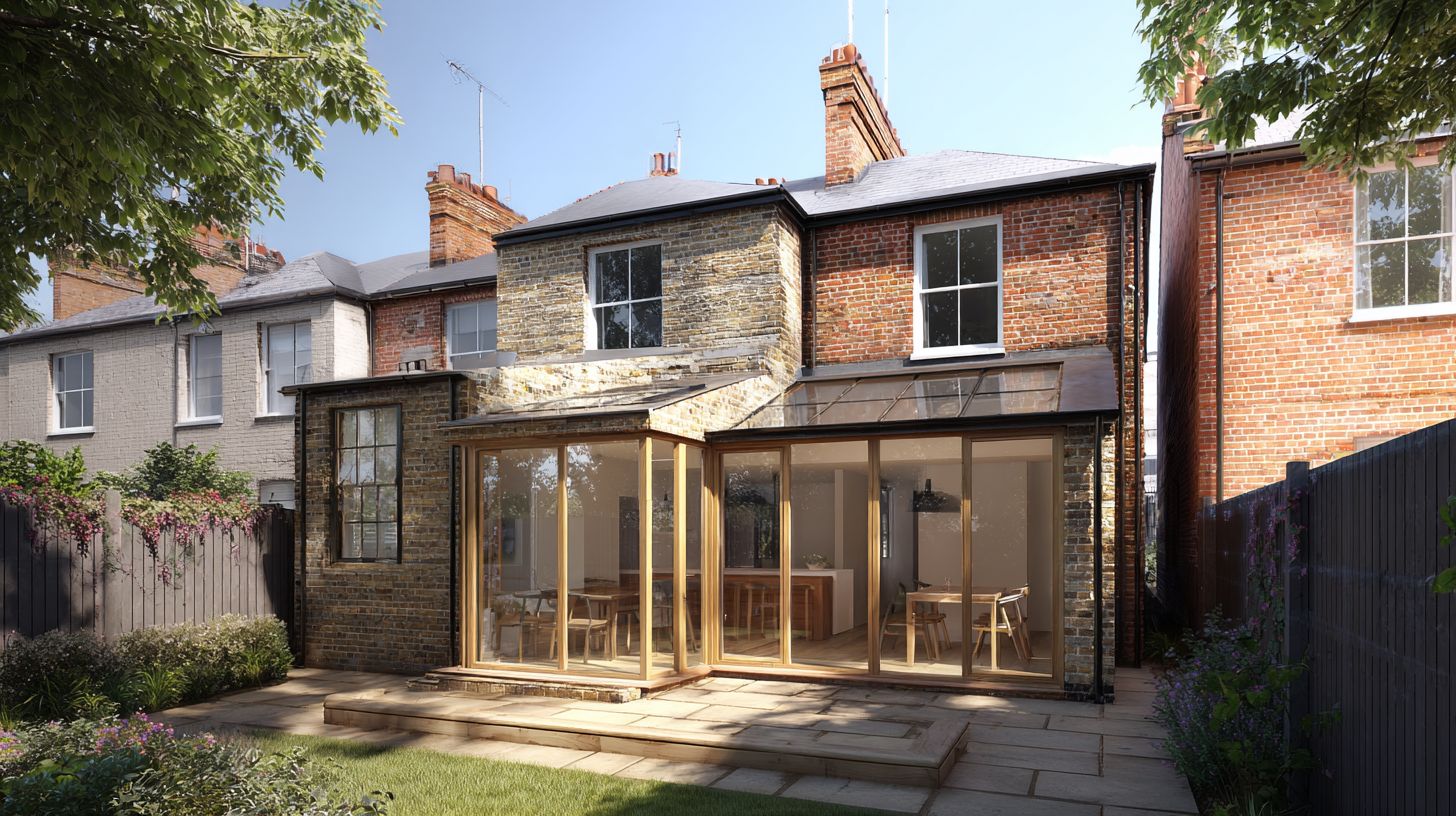
For all dwellinghouses, single-storey side extensions are permitted provided they do not exceed 50% of the width of the original house. For semi-detached properties, the installation of obscure glazed windows is required on any elevations facing neighbouring properties.
Permitted development rights are not applicable to properties located on unadopted streets unless adequate highway frontage is confirmed through appropriate verification.
To effectively navigate these regulations under the Town and Country Planning (General Permitted Development) (England) Order 2015, it is advisable to consult your local planning authority (LPA) at an early stage.
For practical steps to ensure compliance:
- Measure the width of the original house to confirm that the extension does not exceed 50% of that width.
- For semi-detached properties, install obscure glazing on windows facing neighbouring properties.
- Verify highway frontage using Ordnance Survey maps.
| Property Type | Side Extension Maximum Coverage | Rear Depth Limit | Example Cost (2023 LPA Data) |
|---|---|---|---|
| Detached | <50% of side elevation | 4m | £30,000 for kitchen addition; 40% greater flexibility according to LPA reports |
| Semi-Detached | Partial, with obscure windows required | 3m | £25,000 for extension; Party Wall Act notice required including neighbour consultation |
It is essential to submit an application for a Lawful Development Certificate (fees ranging from £100 to £300) to confirm permitted development rights and avoid potential fines of up to £20,000.
Flats and Maisonettes
Flats and maisonettes are classified separately from dwellinghouses and, as such, possess no Permitted Development Rights for extensions. Full planning permission is required even for minor alterations, such as the erection of a porch, as outlined in the Householder Guide.
This classification frequently surprises property owners. To address potential challenges, the following common issues should be considered:
- Misclassification as a dwellinghouse: Property owners often assume that flats qualify for Permitted Development Rights; the recommended solution is to review leasehold documentation or consult the local planning authority, in accordance with the guidelines provided by the Planning Portal.
- Limitations on curtilage: Extensions must not encroach upon communal areas; boundaries should be verified through title deeds to prevent disputes.
- Increased costs: Full planning applications submitted to the Local Planning Authority incur a fee of £462 (England rate, 2023); additional budgeting is necessary for surveys and architectural fees.
For example, maisonette owners have faced significant rework costs, such as £2,000, after incorrectly assuming eligibility for Permitted Development Rights. It is advisable to commence the process with a request for pre-application advice to facilitate efficiency.
Special Areas and Exceptions
In designated areas such as Conservation Areas, National Parks, and the Broads, Permitted Development Rights are significantly restricted. According to data from Natural England, over 10,000 such zones exist across England, where these limitations are imposed to preserve cultural heritage by curtailing property extensions and developments.
Conservation Areas
In Conservation Areas, permitted development rights for front elevations are typically suspended, and Article 4 Directions may be imposed to remove such rights for side and rear elevations. This often requires that any modifications use materials that precisely match the original structure.
To effectively manage these restrictions, it is advisable to adhere to the following best practices:
- First, consult the Local Planning Authority (LPA) maps available online through the Planning Portal to verify the status of your property.
- Second, for rear extensions where Permitted Development rights apply, submit an application for prior approval, which generally requires up to 42 days (approximately 6 weeks) for processing.
- Third, procure materials that align with the original design, such as reclaimed tiles or bricks appropriate to the period, to maintain authenticity.
- Fourth, refrain from incorporating raised platforms or other elements that could alter the property’s original silhouette.
Failure to comply with these regulations can result in enforcement measures, emphasising the importance of thorough due diligence to avoid potentially expensive fines.
When Planning Permission is Still Required
Planning permission is required for extensions that exceed specified limits, involve upper floors situated more than 3 metres from boundaries, include features like a juliet balcony, or are subject to Article 4 Directions. which frequently requires concurrent compliance with Building Regulations and the Party Wall Act.
The following case studies exemplify these requirements: A multi-storey extension in an Area of Outstanding Natural Beauty (AONB) typically demands full planning permission, which may entail a Community Infrastructure Levy (CIL) payment varying by local authority and an approval timeline of up to 13 weeks, potentially adding usable space depending on the project. By comparison, a side extension in a conservation area may activate Article 4 Directions, requiring a comprehensive application with costs varying by project, potentially increasing property value as per general RICS valuation guidance.
For minor works exempt from planning permission in England, it is essential to secure a Lawful Development Certificate (LDC) to avoid potential enforcement action, including fines up to £50,000 under the Town and Country Planning Act 1990. In Wales, similar provisions apply under the Town and Country Planning Act 1990 (as amended).
- Compiling evidence such as Planning Drawings for Planning Permission, photographs, and affidavits.
- Submitting an application for a Lawful Development Certificate to the Local Planning Authority (LPA), along with applicable fees of £117 for householder applications or £462 for full applications in England (fees may differ in Wales).
- Awaiting a decision within 8 weeks, as stipulated by the Town and Country Planning Act 1990.
Frequently Asked Questions

How big can an extension be without planning permission?
Under Permitted Development Rights in England, a single-storey rear extension can be up to 3 metres deep for semi-detached or terraced houses, or 4 metres for detached houses, without prior approval. Larger extensions (6 metres for semi-detached/terraced or 8 metres for detached) may be possible with prior approval from the LPA. In Wales, limits differ under separate regulations. Change ‘UK’ to ‘England’ and clarify prior approval for accuracy.
What are the size limits for a single-storey rear extension without planning permission?
In England and Wales (with Wales having variations), for single storey rear extensions without prior approval, the maximum depth is generally 3 metres for semi-detached or terraced properties and 4 metres for detached homes, using materials that match the existing property. The extension must not cover more than half the curtilage around the original house, and the eaves height should not exceed 3 metres if over 2 metres from the boundary. These limits are part of Permitted Development Rights under The Town and Country Planning (General Permitted Development) (England) Order 2015 (as amended). Prior approval is required for larger extensions under the extended scheme.
Can I build a two-storey extension without planning permission, and how big can it be?
Two-storey extensions usually require planning permission in England and Wales. Under Permitted Development Rights in England, side extensions are limited to single-storey only, up to half the width of the original house, with height no more than 4 metres. There are no Permitted Development rights for two-storey rear extensions; full planning permission is typically required. In Wales, rules differ.
How big can a side extension be without planning permission?
A side extension without planning permission in England is limited to single storey, must not exceed half the width of the original house, with height not surpassing 4 metres. If within 2 metres of the boundary, the height must not exceed 2.5 metres. In Wales, similar but varied rules apply.
Are there different extension size limits without planning permission for flats or maisonettes?
Flats and maisonettes generally do not qualify for Permitted Development Rights for extensions in England or Wales, meaning any extension usually requires planning permission. Consult your local planning authority or, in Wales, the Welsh Government guidance. Extensions may be liable for the Community Infrastructure Levy in applicable areas.
How big can an extension be without planning permission in a conservation area?
In conservation areas, Permitted Development Rights are more restricted, so extensions without planning permission are limited or often not allowed. Rear extensions are subject to the same standard permitted development limits (up to 3 metres for terraced houses or 4 metres for detached/semi-detached houses), but only if more than 2 metres from the rear boundary; extensions within 2 metres of the boundary are limited to 2 metres depth. These rights may be further restricted or removed by Article 4 Directions. Front extensions are typically prohibited. Check with your local council for specific Article 4 Directions that may remove these rights entirely. To confirm your proposal qualifies, obtain a Lawful Development Certificate from your local planning authority.