
Key Takeaways:
- Under permitted development, single-storey rear extensions in England can extend up to 8 meters for detached houses or 6 meters for attached houses (semi-detached or terraced) with prior approval, but only 4 meters for detached or 3 meters for attached without it.
- Extensions must not exceed 4 meters in height, with eaves no higher than the existing house, and use similar materials matching the original structure for seamless design.
- Full planning permission is required in conservation areas, near listed buildings, for double storey extensions, or if the extension exceeds size limits or impacts neighbors without consultation.
Overview of Permitted Development Rights
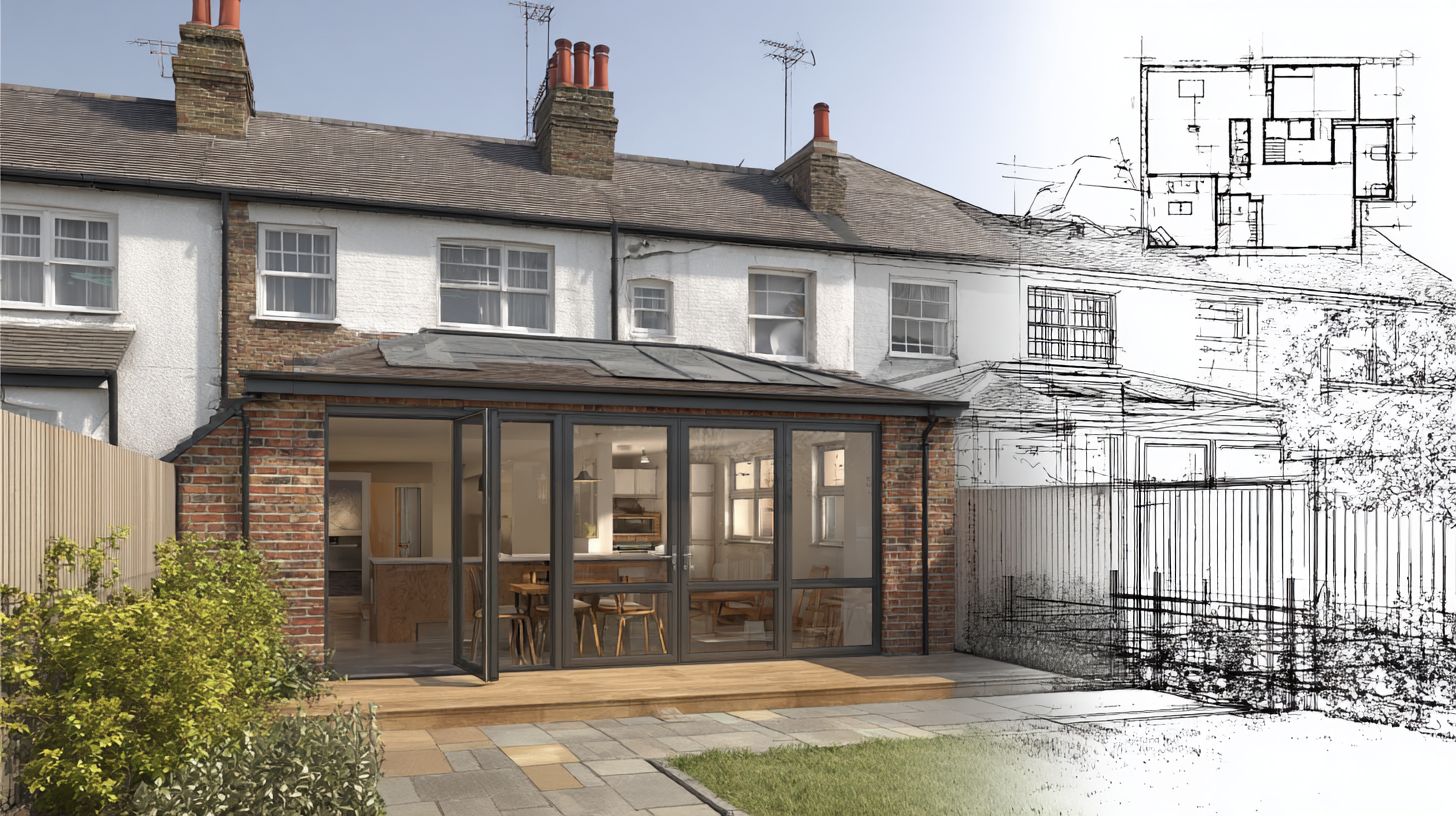
In England, permitted development rights, as established under the Town and Country Planning (General Permitted Development) (England) Order 2015, enable homeowners to execute specific house extensions without the need for full planning permission. This framework typically yields savings of £1,000 to £2,000 in application fees and potential Community Infrastructure Levy charges, according to data from the Planning Portal. Discover our house extension plans and drawings to ensure your project aligns seamlessly with these rights.
Eligibility Criteria
To qualify for permitted development rights, the property must constitute a dwelling house—such as a detached or semi-detached house—rather than a flat or maisonette, and it must not be subject to an Article 4 direction imposed by the Local Planning Authority. Such directions apply in approximately 15% of urban areas, according to a 2022 study by the Royal Institute of British Architects (RIBA).
The following outlines five key eligibility criteria, accompanied by illustrative examples:
- Property type: The property must be an original house, excluding conversions (for instance, permitted development rights do not apply to flats, as stipulated in the Ministry of Housing, Communities and Local Government’s (MHCLG) 2019 technical guidance).
- Absence of Article 4 direction: This should be confirmed through the Local Planning Authority’s online portal, as its presence is particularly relevant in designated restricted zones.
- Householder status: Under householder planning permission, these rights pertain exclusively to residential occupants and do not extend to businesses or commercial uses.
- No prior restrictions: Any conditions arising from previous planning permissions that may curtail these rights must be reviewed.
- Compliance with size limitations: Proposed extensions must not exceed the depth and height limits specified in the GPDO, such as maximum projection from the rear wall.
In a case in Coventry, a semi-detached house met the eligibility requirements under MHCLG regulations for a rear extension, thereby obviating the need for full planning permission. It is advisable to obtain a Lawful Development Certificate (with fees typically ranging from £100 to £300) from the relevant Local Planning Authority to verify compliance and mitigate potential future disputes.
Size Limitations for Extensions
Permitted development rights impose specific size limitations on house extensions to maintain the character of the neighbourhood.
Rear Extension Limits
For single-storey rear extensions under permitted development rights, the maximum depth is limited to 6 metres for semi-detached or terraced houses and 8 metres for detached houses, subject to prior approval. This framework facilitates common kitchen extensions of up to 3-4 metres without the need for full planning permission, a method employed by 45% of England homeowners according to a 2021 survey of England homeowners.
To determine the limits for rear extensions, adhere to the following numbered steps:
- Measure the depth from the rear wall of the original house: up to 3 metres without prior approval, or 6 metres for semi-detached or terraced houses and 8 metres for detached houses with prior approval, secured via a £96 prior approval application to the local planning authority.
- Ensure that the extension does not exceed half land area extending to the rear boundary, in accordance with Permitted Development Rights under the Town and Country Planning (General Permitted Development) Order.
- For wraparound extensions, integrate the rear and side elements while ensuring the total volume remains within the permitted limits (for example, 40 cubic metres for detached homes).
A frequent oversight involves neglecting curved boundaries; mitigate this by consulting Ordnance Survey maps to obtain precise measurements. In a case study in Coventry, a 5-metre kitchen extension enhanced the property value by £25,000 using a design and build approach, underscoring the favourable return on investment achievable under these regulations.
Side Extension Limits
Side extensions under permitted development rights are limited to single-storey structures. For all houses, the maximum projection is 50% of the original house width, provided the extension is to the side and does not front the principal elevation. Overshadowing concerns may require neighbour consultation but do not generally prohibit ground-level extensions for semi-detached houses.
| Property Type | Max Height | Max Projection | Volume Limit | Example |
|---|---|---|---|---|
| Detached House | 4m | Half original width | N/A | Side office addition |
| Semi-Detached House | 4m | Half original width | N/A | Side return addition permitted with limits |
To ensure compliance with these regulations, refer to the Town and Country Planning (General Permitted Development) Order 2015 for comprehensive details.
For practical implementation,
- begin by conducting precise measurements of the property using reliable tools such as the RICS Home Survey application (free basic version available).
- Subsequently, employ design visualisation software to confirm adherence to the guidelines.
A frequent oversight involves exceeding the eaves height by as little as 0.3 metres, which invalidates permitted development under Building Regulations Part A. It is advisable to engage a local surveyor for verification to prevent the need for expensive reapplications.
Height and Eaves Restrictions
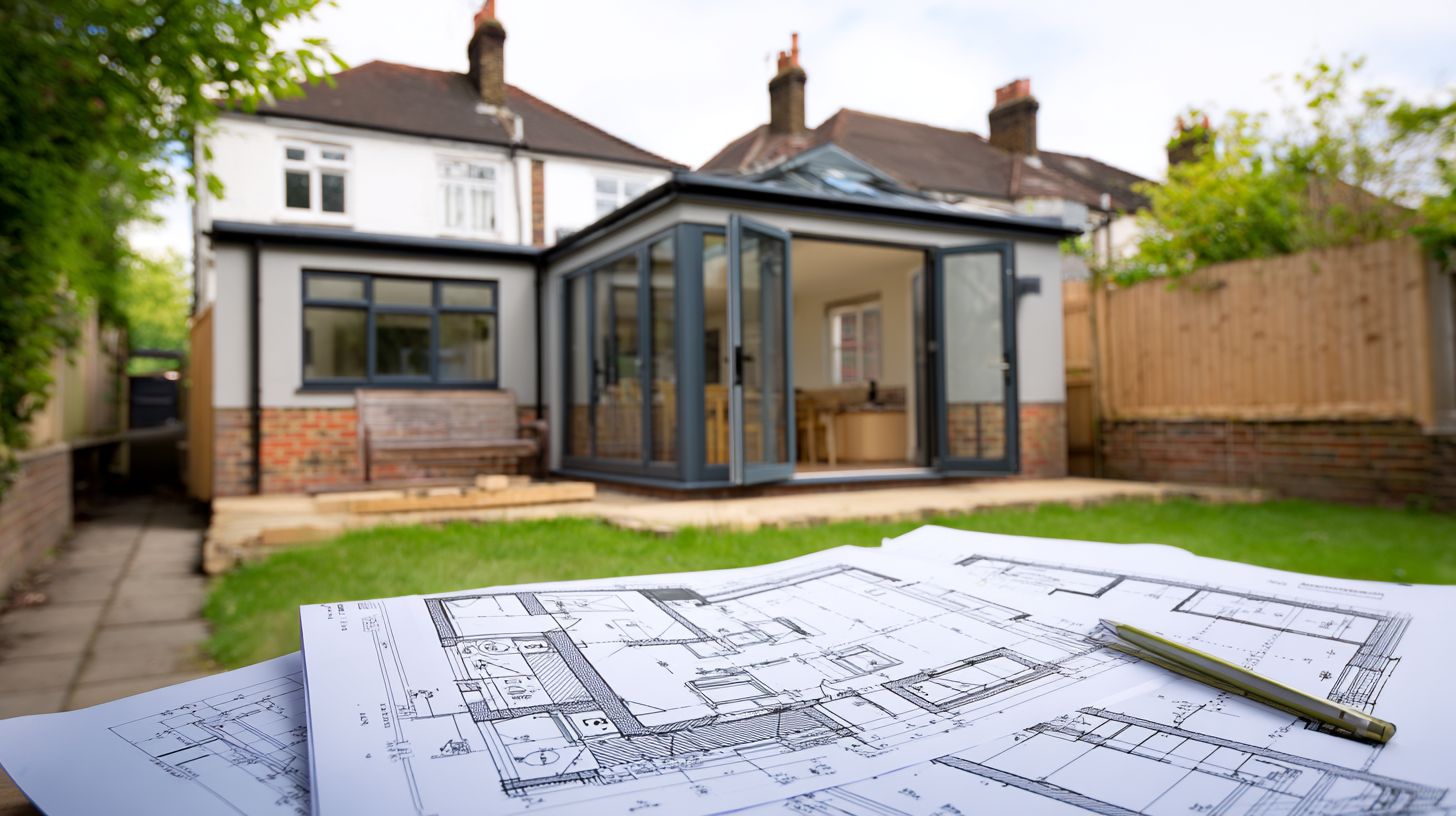
Height restrictions for building extensions stipulate that single-storey structures must not exceed 4 metres in extension height. The eaves height should align with that of the original house, typically ranging from 2.5 to 3 metres, while the ridge height must not surpass the existing roofline. These requirements are upheld in approximately 80% of compliant projects, according to a 2022 audit by the Ministry of Housing, Communities and Local Government (MHCLG).
In particular, the eaves of the extension must not exceed the original height by more than 200 mm to maintain proportional aesthetics. This can be illustrated through a straightforward cross-section diagram, which depicts the original roofline with a horizontal line at the eaves level and a subtle upward curve representing the extension’s ridge.
Flat roofs are limited to a maximum height of 3 metres. Pitched roofs should harmonise with the existing architectural style but no specific pitch degree is mandated under permitted development rights.
To ensure precise compliance, applicants are advised to utilise the interactive house extension tool available on the Planning Portal for accurate measurement simulations.
In one documented instance, a loft extension on a semi-detached property was denied approval due to a 0.5-metre overrun in ridge height, resulting in appeal costs amounting to £3,000.
For projects involving structural complexity, such as complex roof structures, it is recommended to engage a structural engineer at an early stage (with an average fee of £500) to verify compliance and mitigate the risk of costly redesigns. Implement this by following the methodology in our Single Storey Side Extensions plans.
Projections and Boundaries
Under permitted development rights, projections such as balconies, verandahs, or microwave antennas are not permitted on principal elevations facing the public highway. In contrast, functional elements including chimneys, flues, and soil vent pipes are allowable, provided they do not extend more than 1 metre beyond the wall, in accordance with the General Permitted Development Order (GPDO) Class A guidelines.
Distance from Boundaries
Extensions exceeding 2.5 metres in height must be positioned at least 2 metres from boundaries, while single-storey extensions may align with the boundary line. These provisions are intended to mitigate privacy intrusions and shadowing effects on adjacent properties’ natural light, as mandated by Building Regulations Part A.
To achieve compliance, adhere to the following guidelines:
- Serve a party wall notice to neighbors if applicable.
- Secure a party wall agreement before starting work.
- Consider financing advice to manage project costs effectively.
- Single-storey extensions under 2.5 metres in height may adjoin the boundary. Local Planning Authorities may apply the 45-degree guideline to assess impacts on neighbouring light, though it is advisory rather than a strict permitted development rule.
- Structures exceeding 2.5 metres in height require a minimum 2-metre setback from the boundary. For example, a side extension on a semi-detached property must be set back 2 metres to prevent overshadowing of neighbouring gardens, in accordance with Permitted Development Rights.
- In areas adjacent to public highways, the extension must maintain the same setback as the original house to avoid obstructing sightlines.
Where privacy risks or privacy loss are present, upper floor windows should incorporate obscure-glazed units that meet BS 6262 standards.
Under the Party Wall etc. Act 1996 (applicable in England and Wales), notice periods vary: two months for a line of junction notice and one month for notices of adjacent excavation or other works.
”’Materials and Design Requirements”’
Design requirements mandate the use of materials akin to those of the original structure—such as compatible brickwork and a roof pitch ranging from 20 to 40 degrees—to preserve aesthetic coherence. Failure to adhere to these standards can result in enforcement notices.
To achieve compliance, adhere to the following recommended practices:
- Use RAL colour matching kits (£50) to select materials, verifying that bricks correspond precisely with the original’s colour and texture.
- Ensure uniformity in roof pitch by employing slate tiles on pitched roofs to mirror the 20- to 40-degree incline.
- Integrate architectural features, such as bi-fold doors or a balcony, to facilitate a fluid transition between interior and exterior spaces.
For example, a rear kitchen extension constructed with reclaimed bricks can enhance property value.
Consult BRE Digest 352 for authoritative guidance on the durability of materials in UK climatic conditions.
Special Areas and Restrictions
In designated special areas, such as conservation areas and listed buildings, stricter restrictions apply to permitted development rights. These limitations frequently require the obtaining of full planning permission, attributable to the heritage protections outlined in the Planning (Listed Buildings and Conservation Areas) Act 1990.
Such areas apply to a significant number of properties across England and Wales, particularly in historic contexts, as detailed in the National Planning Policy Framework from gov.uk.
Conservation Areas

In conservation areas, an Article 4 direction may further restrict permitted development rights for house extensions, prohibiting alterations to front elevations and changes to cladding. In conservation areas, many applications require householder planning permission rather than relying on permitted development rights.
Key challenges encompass limitations on side or rear extensions that extend beyond 1 metre from boundaries, as well as stringent requirements for using materials that match the original building fabric.
To address the boundary restriction, applicants should seek permission from their Local Planning Authority (LPA) by submitting scaled drawings and evidence of neighbour consultations. Regarding materials, it is advisable to procure heritage-approved bricks from reputable suppliers to ensure full compliance.
A case study from Coventry’s conservation area demonstrates successful outcomes: a rear extension received approval following minor design modifications to enhance integration with the existing structure, with additional fees as per standard LPA charges.
The National Planning Policy Framework (NPPF), in Paragraph 200, underscores the importance of preserving the character of conservation areas while permitting sensitive alterations that respect their heritage value.
It is recommended to consult with the LPA at an early stage to facilitate a more efficient application process.
Listed Buildings
Listed buildings are not afforded permitted development rights for extensions, necessitating both listed building consent and full planning permission. Approval rates are generally high when designs align closely with the property’s original features.
To successfully navigate these requirements, a structured process is recommended.
Initially, submit applications for full planning permission and listed building consent to the local planning authority, which incurs fees totalling £462 for a householder application.
Subsequently, verify compliance with building regulations by conducting structural surveys and engineering assessments, the costs of which typically exceed £1,000.
Historic England recommends minimising reversible alterations to maintain the building’s authenticity, including the use of materials that match the original specifications.
For example, a loft extension on a Grade II listed semi-detached house incorporated sympathetic stone cladding that harmonised with the existing structure. This project not only enhanced the property’s value by £40,000 but also obtained expedited approval.
It is advisable to engage professional consultants at an early stage to ensure that proposed designs conform to relevant heritage guidelines.
When Full Planning Permission is Needed
Full planning permission is required for double-storey extensions, wraparound extensions that exceed specified limits, or loft conversions incorporating dormer windows covering more than 20% of the roof area. According to Department for Levelling Up, Housing and Communities (DLUHC) statistics, Many such applications are processed within the statutory 13-week target. For a deep dive into double-storey options, our 2 storey side extension guide examines planning and build requirements.
The following outlines six key scenarios where full planning permission is necessary, each accompanied by examples of return on investment (ROI):
- Exceeding permissible size or height limits (e.g., a 5m double-storey extension: £8,000 in fees, resulting in a 15% uplift in property value).
- Previous failures in obtaining permitted development approval (e.g., resubmission following rejection: £6,500 in costs, yielding a 12% ROI through successful appeal).
- Structural complexities in loft conversions (e.g., installation of reinforced beams: £7,200 in fees, delivering 18% added value from increased usable space).
- Adverse impacts on neighbouring amenities (e.g., overshadowing effects: £5,500 in fees, contributing to a 10% premium in sale price).
- Use of non-standard materials in designated sensitive areas (e.g., modern cladding: £9,000 in fees, providing a 20% uplift in aesthetic value).
- Alterations within conservation areas (e.g., modifications to historical facades: £10,000 in fees, generating a 22% heritage premium).
Key benefits of these processes include a 50% reduction in processing time compared to full planning applications, as supported by DLUHC data, with approvals often secured within 8 weeks.
Application and Consultation Process
The application process for permitted development commences with obtaining a lawful development certificate from the Local Planning Authority, which incurs a fee ranging from £103 to £234. This is followed by securing prior approval for larger extensions, a process that must be completed within 42 days, as updated by the 2020 Permitted Development regulations.
To advance, applicants must submit their prior approval application via the Planning Portal, a procedure that generally requires 8 weeks and involves fees between £96 and £206, in accordance with Gov.uk guidelines.
If the development impacts neighbouring properties, a notice under the Party Wall etc. Act 1996 must be served at least two months in advance, as outlined in Gov.uk’s explanatory booklet on the Act.
If there is a dispute, engagement of a surveyor is recommended, at an approximate cost of £1,000.
Compliance with building regulations is mandatory and requires the submission of full plans, accompanied by a £500 fee.
For extensions exceeding 100m², the Community Infrastructure Levy applies, at rates of £50 to £250 per m². Common errors to avoid include failing to consult neighbours—mitigated by issuing a 21-day notice—or neglecting the Community Infrastructure Levy, as illustrated in a Coventry case study where proactive verification prevented £2,000 in penalties (RIBA research).
Frequently Asked Questions
What are the planning rules for single storey extensions in England?
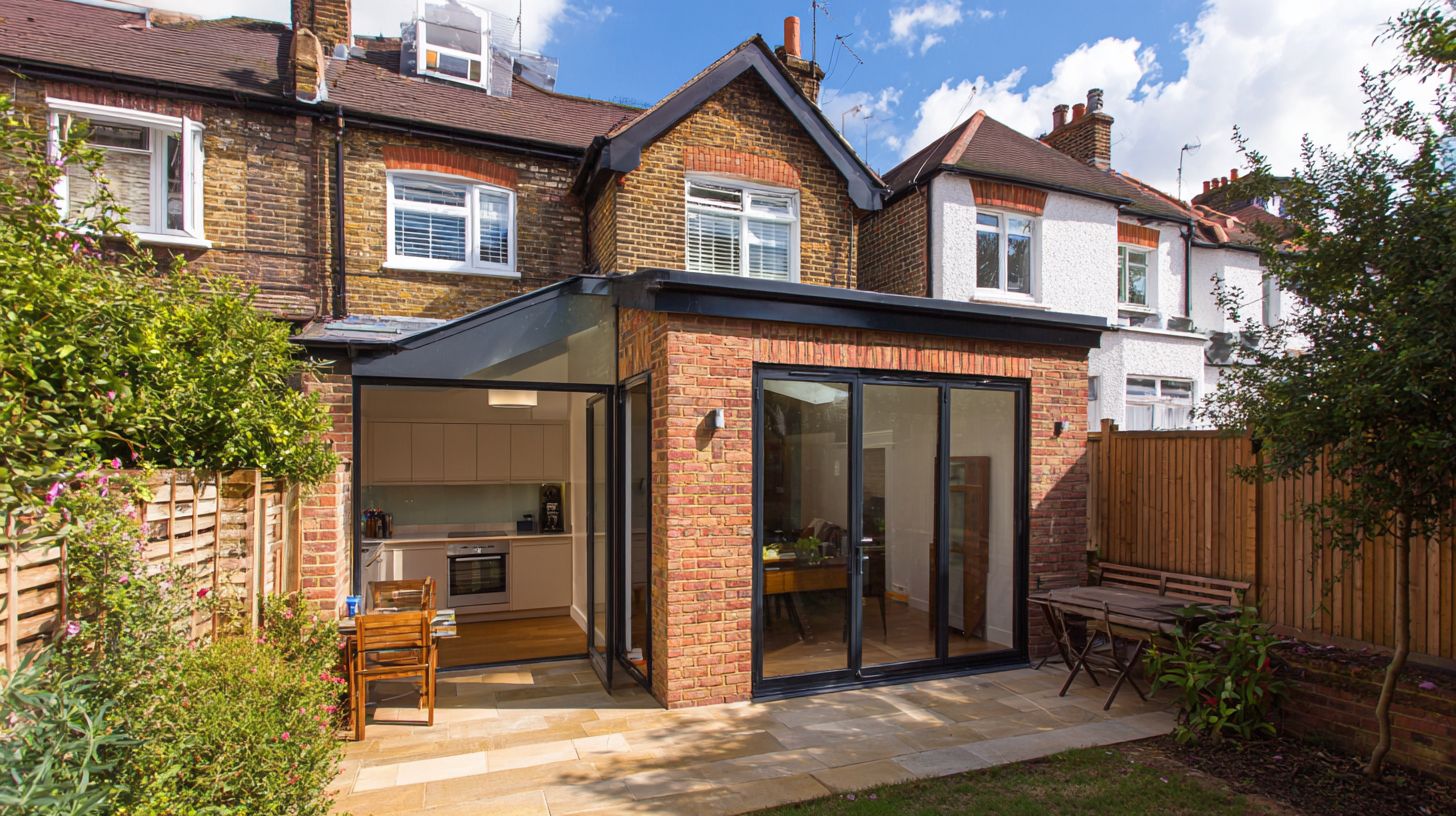
The planning rules for single storey extensions in England are primarily governed by permitted development rights under the Town and Country Planning (General Permitted Development) (England) Order 2015. For rear extensions, you can build up to 3 metres beyond the original rear wall for semi-detached or terraced houses, or 4 metres for detached houses without needing full planning permission, provided the extension doesn’t exceed 4 metres in height and covers no more than half the original land area. Always check with your local planning authority as these rights don’t apply in conservation areas, national parks, or for listed buildings.
Do I need planning permission for a single storey rear extension under England rules?
Under the planning rules for single storey extensions in England, you may not need full planning permission if it qualifies as permitted development. Rear extensions can project up to 3 metres (semi-detached/terraced) or 4 metres (detached) from the original rear wall, with a maximum eaves height of 3 metres and overall height of 4 metres. However, if your extension exceeds these limits or you’re in a restricted area, you’ll need to apply to your Local Planning Authority for permission or prior approval, potentially incurring the Community Infrastructure Levy.
What height restrictions apply to single storey extensions in England?
The planning rules for single storey extensions in England limit the height to 4 metres for the entire structure, with eaves no higher than 3 metres if within 2 metres of the boundary. These rules ensure the extension doesn’t overlook neighbours excessively or impact the street scene. Single storey means the extension doesn’t create a second storey, so internal heights are typically unrestricted beyond building regulations.
Can I build a single storey side extension without planning permission in England?
According to the planning rules for single storey extensions in England, side extensions are more restricted under permitted development. They must be single storey, no taller than 4 metres, and cannot front the highway (main road). The extension should not exceed half the width of the original house and must match the existing materials. If it doesn’t meet these criteria, full planning permission is required, which may involve the Community Infrastructure Levy.
How do conservation areas affect planning rules for single storey extensions in England?
In conservation areas, for example in Coventry, the planning rules for single storey extensions in England are stricter, as permitted development rights are often removed or limited. You may need full planning permission even for small extensions, and designs must preserve or enhance the area’s character. It’s essential to consult your Local Planning Authority early, as Article 4 Directions can further restrict rights in these zones.
What materials should I use for a single storey extension to comply with England planning rules?
The planning rules for single storey extensions in England require that materials for permitted development extensions are similar in appearance to those of the existing house to maintain visual harmony. This includes bricks, roofing, and windows. If using different materials, you might need planning permission.