
Key Takeaways:
- Many garden rooms qualify under permitted development rights without needing planning permission, provided they stay within size limits (e.g., under 2.5m high if within 2m of boundaries) and are not used as separate dwellings.
- Planning permission is typically required for larger garden rooms exceeding height or scale limits, or if located in conservation areas, near listed buildings, or on designated land.
- Always check local planning policies and consider professional advice before building to avoid fines; the application process involves fees, timelines of 8-13 weeks, and potential appeals.
Understanding Planning Permission Basics
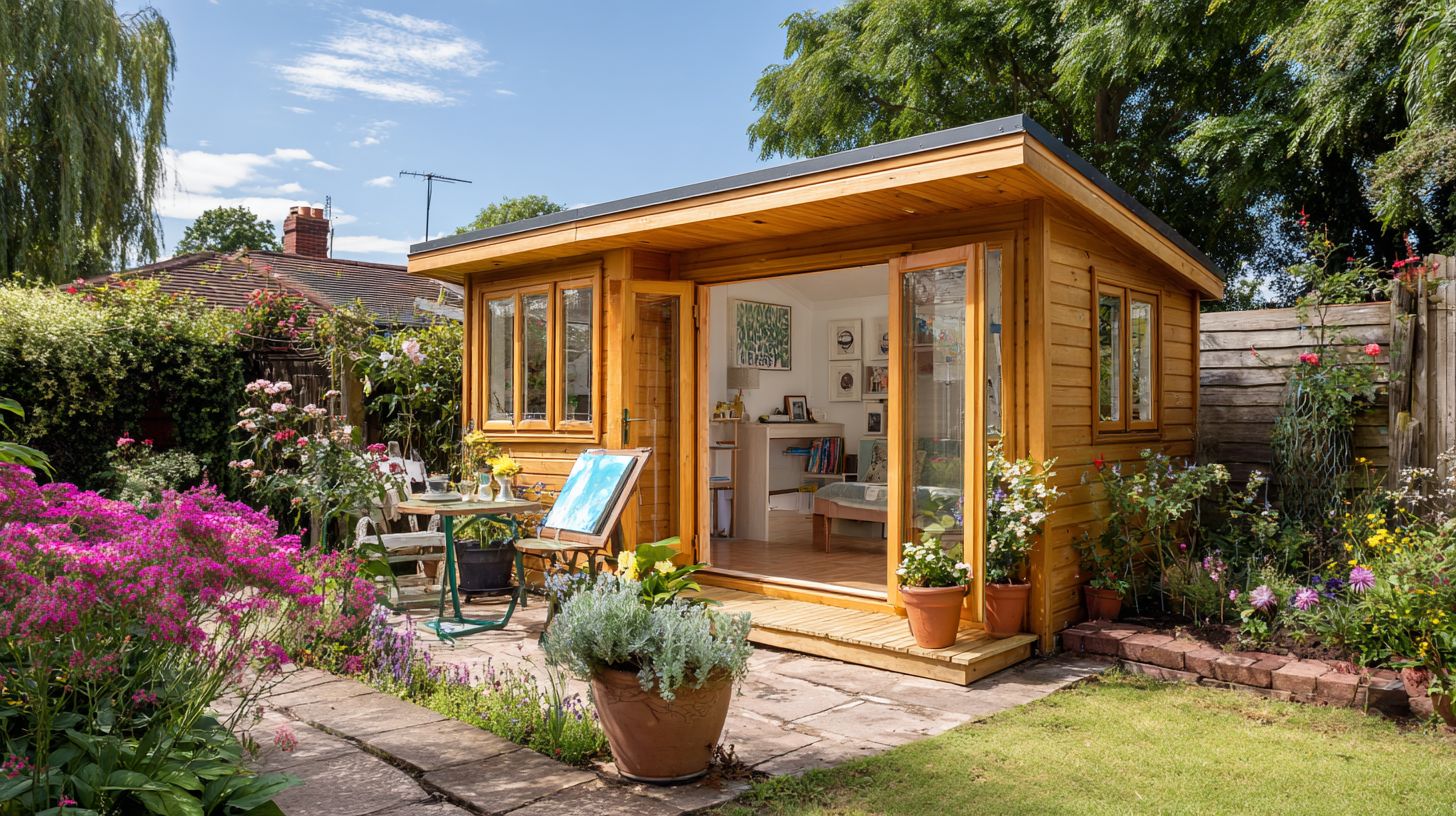
Planning permission in the United Kingdom, regulated under the Town and Country Planning Act since 1 July 1948, establishes whether proposed developments, such as garden rooms, necessitate formal approval from the local council or planning authority. This ensures alignment with both national and local planning standards.
Planning permission constitutes formal authorisation for construction activities that surpass the scope of permitted development rights, which permit certain minor projects without requiring an application—such as small extensions adhering to specified dimensional limits. By contrast, building regulations focus on ensuring safety and compliance with technical standards, including Part A regulations for structural integrity and Part L regulations for energy efficiency.
These are enforced independently through mandatory inspections.
Initial assessments should commence via the UK Government’s official guidance on when permission is required, a reliable and authoritative resource providing eligibility tools and comprehensive guidance.
For example, a garden room measuring 3 metres by 2 metres, with a height not exceeding 2.5 metres and positioned at a sufficient distance from property boundaries, qualified for permitted development in a suburban London residence. This obviated the need for full planning permission while satisfying fundamental spatial requirements; however, local verification is invariably recommended to confirm full compliance.
What Constitutes a Garden Room?
Under UK planning regulations, a garden room is categorised as an outbuilding and is generally intended for non-habitable uses, such as a garden office or studio. However, the inclusion of self-contained living accommodation or sleeping facilities, which may require plumbing installation including a hot water heater, waste water pipe, soil pipe, or macerator pump, may invoke additional regulatory requirements.
Common Types and Uses
Popular garden room configurations encompass the garden office, utilised by many homeowners for remote work; the garden studio, designed for creative endeavours; and the garden gym, dedicated to physical fitness activities. These structures frequently incorporate dual-pitched roofs to enhance insulation efficiency and meet insulation standards.
The following delineates four prevalent garden room types, each with designated applications:
- Garden Office: This configuration is particularly suitable for establishing a home office for remote work environments. It is imperative that any electrical installations adhere to Part P Regulations. For instance, suitable models are appropriate for spaces measuring 15-20 square metres.
- Garden Studio: Optimised for pursuits such as a craft room for crafting or artistic endeavours, this type emphasises expansive windows to maximise natural illumination, thereby fostering an environment conducive to creativity.
- Garden Gym: Tailored for accommodating fitness equipment, this option typically requires no plumbing infrastructure. Incorporating rubber flooring is advisable to ensure safety and mitigate noise levels.
- Multi-Use Spaces: These versatile areas serve various functions, including hobby rooms or lounges. However, to comply with permitted development rights under UK planning regulations, they should not be adapted for sleeping accommodation.
Under permitted development rights (England and Wales), single-storey garden rooms must adhere to specific height restrictions: the eaves height must not exceed 2.5 metres. The overall height must not exceed 2.5 metres if located within 2 metres of a boundary, or 4 metres for a dual-pitched roof (or 3 metres for other roofs) if located more than 2 metres from a boundary.
Permitted Development Rights Overview
Under permitted development rights, certain outbuildings, such as single-storey garden rooms, may be constructed without requiring planning permission, provided they comply with stringent size and height limitations relative to the original house, as detailed in the Permitted development rights for householders: technical guidance issued by the UK Government.
Size, Height, and Scale Limits
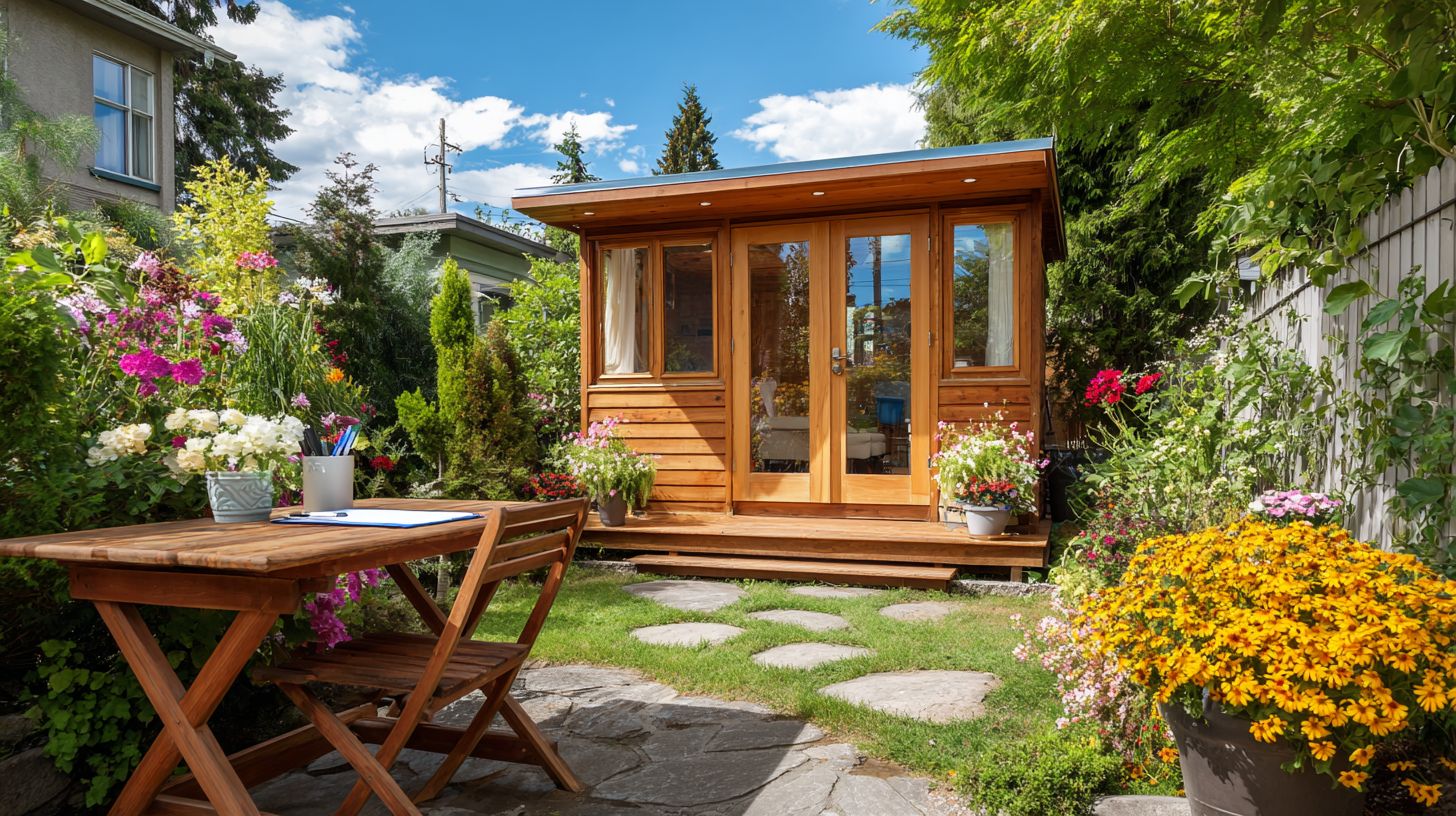
Regarding size, the total area of all such outbuildings must not exceed 50% of the net area of the curtilage (the land around the original house). There is no specific size reduction to 10 square metres for structures within 1 metre of the boundary.
Verandas and balconies are not permitted, as they would contravene the scale requirements outlined in the Town and Country Planning Act 1990.
Common errors, such as exceeding the 2.5-metre eaves height, can result in enforcement notices from local planning authorities. For instance, if the net curtilage area available (excluding the original house footprint) is 20 square metres, the total area for all outbuildings is limited to 10 square metres (50%) to ensure compliance.
Location and Positioning Rules
Garden rooms exceeding 2.5 metres in height must be situated at least 2 metres from site boundaries, and permitted development rights are not applicable on designated land, such as national parks, the Broads, or areas of outstanding natural beauty.
To ensure compliance with UK permitted development regulations under the Town and Country Planning Act, adhere to the following key positioning guidelines:
- Front gardens: Outbuildings are not permitted; any structures in this area require full planning permission.
- Rear and side gardens: There is no statutory minimum distance from boundaries for buildings under 2.5 metres in height, though a 1 metre distance is often advised to avoid disputes; however, height is limited to 2.5 metres if within 2 metres of a boundary, requiring a 2-metre setback for taller structures up to 4 metres.
- Designated areas: In locations such as the Lake District National Park or World Heritage Sites, all garden rooms necessitate council approval. For instance, a 15 square metre gym in such an area required comprehensive planning submission, as evidenced by a 2022 case study.
Verify the status of your land using the UK Government’s interactive Planning Portal maps (planningportal.co.uk).
Employ this checklist for due diligence:
- Measure height from the base of the structure;
- Prepare a site diagram illustrating boundaries (e.g., at a 1:50 scale);
- Confirm the absence of Article 4 restrictions.
It is recommended to consult the local planning authority for site-specific guidance to avoid the issuance of enforcement notices.
When Planning Permission is Required
Planning permission is required for garden rooms that exceed the permitted development thresholds or are subject to local Article 4 directions imposed by the relevant planning authority. I recently came across CAD Design & Drafting for AEC & Manufacturing that can help with preparing accurate plans to navigate these requirements.
Exceptions for Listed Buildings
For listed buildings, even modest garden rooms necessitate listed building consent in addition to planning permission, accompanied by more stringent building regulations, such as Part A, which emphasises structural integrity through the use of non-combustible materials to safeguard heritage value.
Challenges frequently emerge due to potential heritage impacts, as exemplified by a Grade II listed property in Bath, where full approval was required for a 10 sqm studio owing to concerns over visual alterations. Material specifications impose strict requirements to replicate original features, such as limestone façades, thereby preventing irreversible modifications. Applicants are advised to consult Historic England guidelines, as detailed in their respected publication A Guide for Owners of Listed Buildings, to ensure full compliance.
Actionable steps include:
- Conducting a heritage impact assessment that thoroughly documents the proposed design’s integration with the existing structure;
- Submitting applications through the local planning authority, while utilising LABC Building Control for technical evaluations;
- Engaging qualified architects at an early stage to facilitate necessary modifications.
A pertinent case study involves an annexe design for a Somerset manor, which received approval following a reduction in scale to 8 sqm and the incorporation of reclaimed oak materials, in accordance with Historic England’s 2022 advisory. This approach successfully balanced heritage preservation with the addition of tangible value, thereby increasing property value.
Rules in Conservation Areas
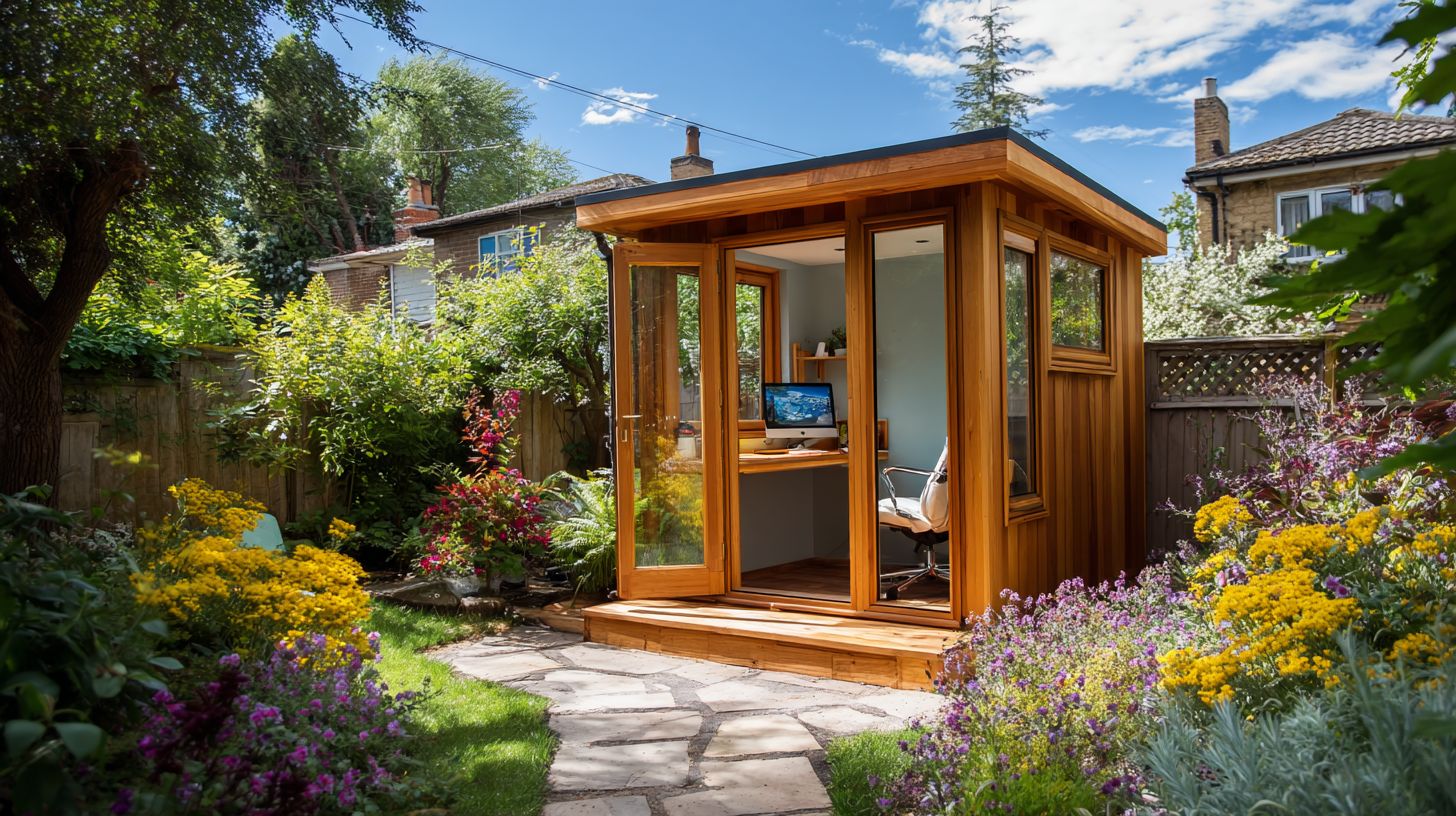
often removed or significantly restricted by Article 4 directions, meaning planning permission is typically required for any garden room or outbuilding, regardless of size, to preserve the aesthetic and historical integrity, in accordance with UK Government technical guidance established since 1 July 1948. Key rules include:
- Planning permission is usually required for all outbuildings to minimise visual impact;
- Design harmony, whereby materials must integrate seamlessly with the surrounding environment (for example, avoiding modern cladding on historic brickwork).
To facilitate the approval process, it is advisable to obtain pre-application advice from the local planning authority and consult the Planning Portal checklists to ensure full compliance.
A 2022 study by RTPI Consultants indicates that refusal rates in conservation areas are 30% higher, primarily attributable to designs that fail to harmonise with the local character.
For example, a garden room project in London was successfully modified by reducing its scale from 15 square metres to 9 square metres and incorporating reclaimed timber, thereby securing approval and contributing positively to the area’s heritage.
The Application Process
The process for obtaining planning permission requires the submission of detailed plans through the Planning Portal to the relevant local planning authority. Decisions on garden room proposals typically require 8 to 13 weeks.
To successfully navigate this process, adhere to the following steps:
- Verify eligibility using the Planning Portal’s interactive householder guide (approximately 1-2 hours). Many garden rooms qualify as permitted development, provided they do not exceed 2.5 metres in height.
- Compile necessary documentation, including site plans and elevations. It is advisable to engage a qualified surveyor, at a cost of £300-500, to prevent errors such as incomplete drawings.
- Submit the application online via the Planning Portal (£206 fee for householder applications).
- Address any consultations within 2-8 weeks.
- If there is refusal, lodge an appeal with the Planning Inspectorate (PINS), a process that may take up to 6 months.
For comprehensive regulations, consult GOV.UK to ensure full compliance.
Costs, Timelines, and Fees
Obtaining planning permission for a garden room involves application fees commencing at £206 for householder applications, with overall costs typically ranging from £1,000 to £2,500 when including professional fees. Building regulations approval incurs an additional £300 to £600 and may increase property value by 5-10%.
Following UK Government data, 90% of householder applications are determined within 8 weeks, whereas full planning applications may require up to 13 weeks. Variations among local councils and incomplete submissions frequently contribute to delays; it is advisable to consult the Planning Portal for pre-application advice, which costs £50 to £200.
The following table provides a comparison of application options:
| Application Type | Fee | Timeline | Additional Costs | |——————|——–|————-|———————-| | Householder | £206 | 8 weeks | £500 architect fees | | Full Planning | £462 | 13 weeks | £1,500 surveys | | Building Regs | £300 | 2-4 weeks | £200 inspections |Regarding return on investment, studies by the Royal Institution of Chartered Surveyors (RICS) indicate that a £10,000 investment in a garden room generally results in a £15,000 increase in property value, contingent upon location and adherence to design standards.
Seeking Professional Advice
It is advisable to consult qualified experts to ensure full compliance with Part P Regulations for electrical installations and Part L for insulation standards. This is particularly important for intricate garden room projects that incorporate plumbing elements, such as hot water heaters or macerator pumps.
To optimise your project and facilitate a smooth execution, adhere to the following best practices:
- Secure pre-application advice from your local planning authority (fees typically ranging from £50 to £200, with a standard turnaround of four weeks) to proactively identify potential issues.
- Engage specialised providers for prefabricated garden rooms, which facilitate the efficient integration of utility systems.
- For plumbing requirements, retain certified installers to handle wastewater and soil pipe installations, thereby mitigating the risk of non-compliance penalties.
The incorporation of expert consultation at an early stage can result in comprehensive plumbing approval within 10 weeks, yielding potential savings in retrofit expenses. Obtaining professional advice prior to the design phase can reduce the need for revisions by 20-30%.
Frequently Asked Questions
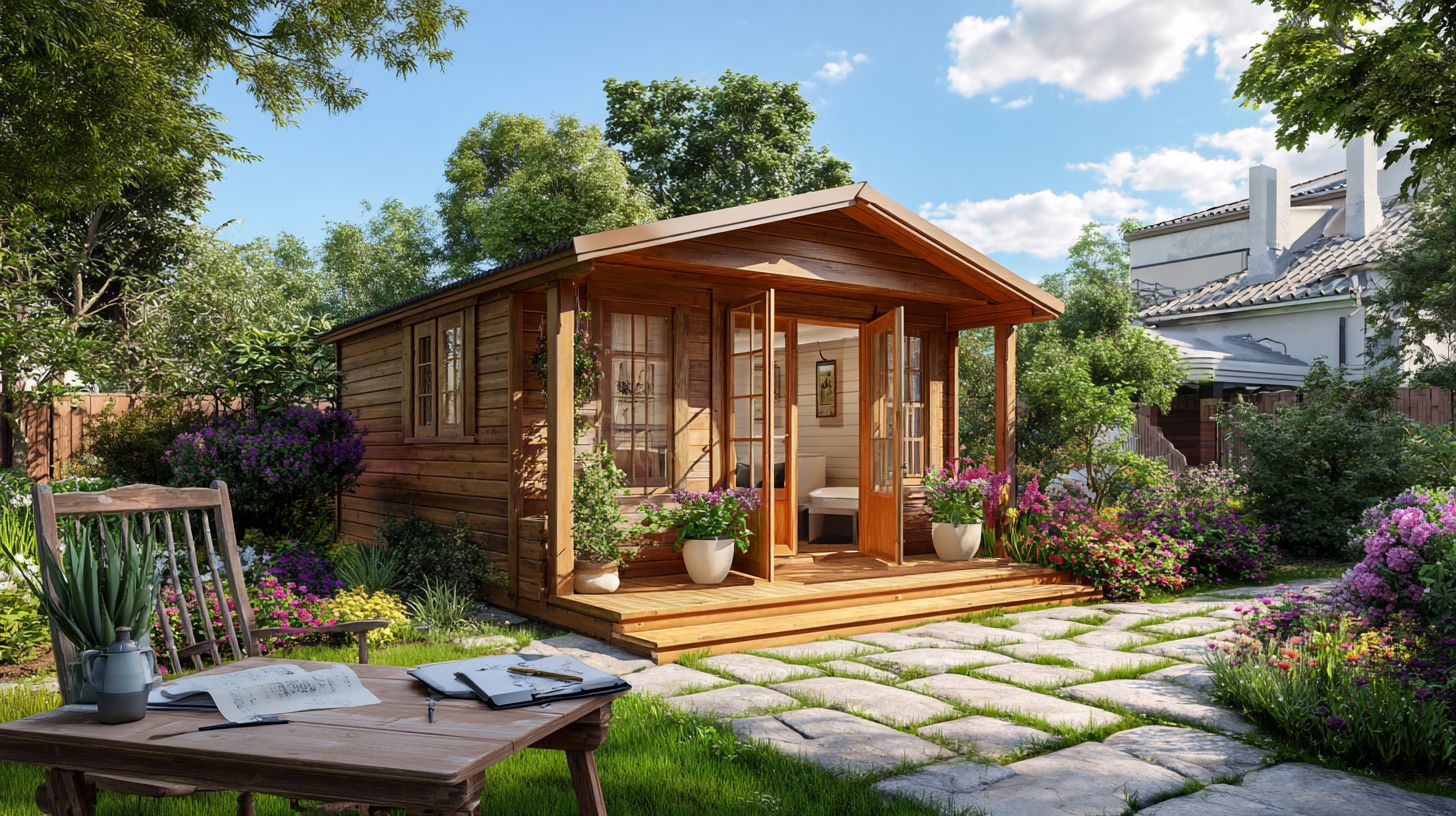
Do I need planning permission for a garden room?
In many cases, you may not need planning permission for a garden room if it falls under permitted development rights in England and Wales, such as being a single-storey structure no larger than 2.5 meters in height if within 2 meters of a boundary (or 4 meters for a dual pitched roof if more than 2 meters from a boundary). However, always check local council rules, as restrictions apply in conservation areas, national parks, Broads, World Heritage Sites, or if the garden room covers more than 50% of your garden space.
Do I need planning permission for a garden room used as an office?
Typically, no planning permission is required for a garden room used as a home office under permitted development, provided it meets size and height limits (e.g., under 2.5m high and not forward of the principal elevation of the house). But if it involves significant changes like plumbing or if it’s used for business with high traffic, you might need permission—consult your local authority to confirm.
Do I need planning permission for a garden room with a kitchen?
You might need planning permission for a garden room with a kitchen if it includes drainage or utility connections that alter its ancillary use, potentially classifying it as an extension rather than outbuilding. Under standard permitted development, basic garden rooms without full living facilities often don’t require it, but adding a kitchen could push it over limits—verify with your council to avoid issues.
Do I need planning permission for a garden room in a conservation area?
Yes, in conservation areas, Areas of Outstanding Natural Beauty, or listed buildings, you are more likely to need planning permission for a garden room due to stricter regulations on design, materials, and impact on the area’s character. Even small structures may require approval, so it’s essential to apply to your local planning authority before starting any work.
Do I need planning permission for a garden room larger than 10 square meters?
For garden rooms, planning permission is required if they exceed permitted development thresholds in England and Wales, such as covering more than half the garden, exceeding height limits, or being too close to boundaries. Always check with your local authority, as larger installations typically need formal approval to ensure compliance with building regulations and neighbor considerations.
Do I need planning permission for a garden room to live in full-time?
Using a garden room as full-time living accommodation usually requires planning permission, as it changes from ancillary to primary residential use, potentially needing change of use approval. Permitted development covers incidental use only (e.g., gym or playroom), so for habitable dwellings, you’ll need to apply and meet habitability standards like insulation and access.