
Are you planning to enhance your UK home with a stylish porch? Navigating the requirements for planning permission and building regulations can be tricky. Under Permitted Development Rights, many porches avoid full Planning Permission, but Building Regulations 2010 ensure structural safety and energy efficiency. This guide clarifies size limits, when approvals are needed, and the application process, empowering you to proceed confidently and avoid costly non-compliance issues.
Key Takeaways:
- Under Permitted Development Rights, you can build a porch up to 3 square meters without planning permission, as long as it’s no more than 3 meters high, and if any part is within 2 meters of a boundary, it must not exceed 2.5 meters in height, but check local rules.
- Planning permission is required if your porch exceeds size limits, is in a conservation area, or affects neighbors; always verify with your local council to avoid fines.
- Building regulations approval is typically required for porches with a floor area over 15 square meters, or those involving notifiable work such as electrical installations, drainage, or structural alterations to the house, ensuring compliance with safety, insulation, and accessibility standards under the Building Regulations 2010.
Overview of UK Porch Regulations
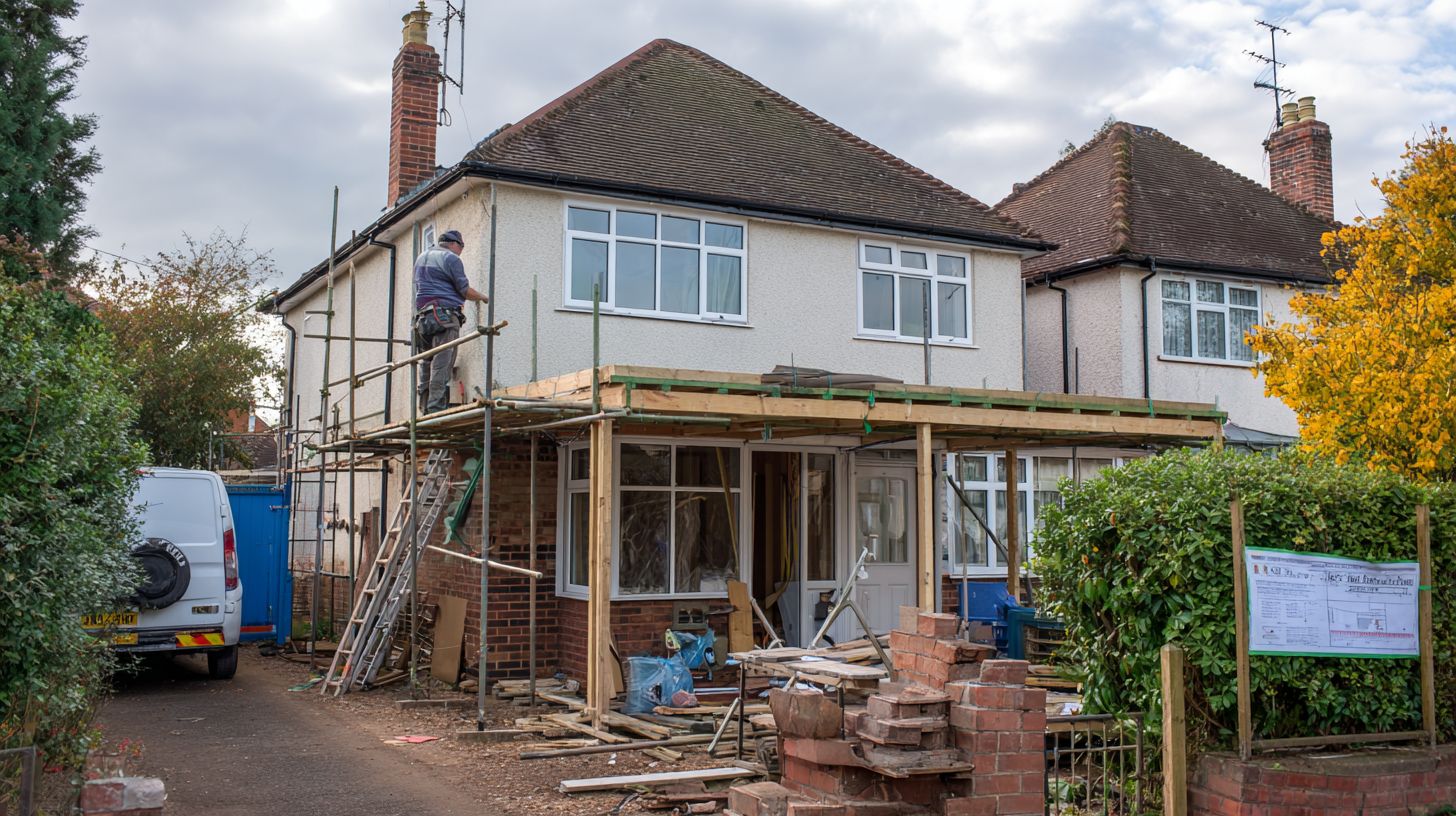
In the United Kingdom, regulations pertaining to porch construction are principally governed by the Town and Country Planning (General Permitted Development) (England) Order 2015 and the Building Regulations 2010.
These frameworks strike a balance between affording homeowners reasonable flexibility and upholding standards of public safety.
Under Permitted Development Rights, the erection of small porches not exceeding 3 square metres is permissible without the requirement for full planning permission, provided that all relevant conditions are met, as outlined in guidance from GOV.UK. This approach has significant implications for related home improvements— our guide to single storey side extensions demonstrates the practical application for slightly larger projects.
Planning Permission vs. Building Regulations
Planning permission primarily addresses land use and aesthetic considerations, necessitating approval from the local authority for porches exceeding 3 square metres. In contrast, the Building Regulations 2010 require adherence to safety standards, including structural integrity and electrical installations, for any porch construction.
| Aspect | Planning Permission | Building Regulations | Examples | Key Differences | Purpose | Aesthetic and community impact | Safety and health standards | Porch aesthetics versus electrical wiring compliance | Visual and environmental versus functional safety requirements | | Approval Body | Local Planning Authority | Building Control Body (e.g., LABC) | Local council review versus certified inspector evaluation | Pre-construction approval versus post-construction verification | | Exemptions | Permitted Development Rights for porches under 3 m² | No exemptions for electrical work under BS 7671 | Exemption for small-scale porches versus mandatory full electrical inspections | Size-based exemptions versus universal safety obligations | | Costs | £150–£500 application fee | £200–£1,000 for inspections | Potential fee waivers for exemptions versus fixed fees for safety compliance | One-time application costs versus ongoing verification expenses |
For example, a porch measuring 2.5 m² may qualify for exemption under Permitted Development Rights, requiring only Building Regulations compliance (no formal approval if ≤15m² and no notifiable works). However, a 4 m² porch necessitates planning permission and likely Building Regulations approval if involving controlled works, as dual permissions ensure full adherence.
Permitted Development Rights for Porches
Under the Permitted Development Rights established by the 2015 Order, homeowners are authorised to construct porches not exceeding 3 square metres at ground level without requiring planning permission. This allowance is subject to rigorous criteria concerning size and placement, intended to safeguard the aesthetic and communal character of the neighbourhood. Related insight: Planning Drawings for Planning Permission
Size and Dimension Limits
Under Permitted Development Rights for a standard dwellinghouse, the ground area of a porch is limited to 3 square metres, measured externally and including any projections such as steps. This restriction is designed to minimise the impact on the property’s overall footprint.
According to the guidelines outlined by the UK Planning Portal, this limit applies exclusively to porches at ground level. For instance, dimensions of 2 metres by 1.5 metres comfortably fall within the 3 m² threshold.
It is also important to note that any extensions must not exceed half the area of the original rear or side elevation of the house.
For illustrative purposes:
Compliant (maximum 3 m²): +———-+ | 2 m | | x 1.5 m | +———-+
Non-compliant (e.g., 4 m²): +————+ | 2.5 m | | x 1.6 m | +————+
To ensure compliance, the following checklist is recommended:
- Accurately measure the external area, incorporating any steps or projections.
- Verify that the property qualifies as a dwellinghouse (excluding flats, maisonettes or converted houses).
- Confirm that the total area of all extensions does not surpass 50% of the area of the original dwellinghouse.
In a recent case, a front porch measuring 2.8 m² received approval under permitted development exemptions, facilitating seamless integration with the property and obviating the need for full planning permission.
Height and Location Restrictions
The height of a porch must not exceed 3 metres or the height of the existing house, and it must not project forward of the principal elevation facing a highway in order to maintain unobstructed street views.
Under permitted development regulations in the United Kingdom, the height of the porch must not exceed 3 metres in total or the height of the existing house, whichever is lower, thereby promoting aesthetic harmony with adjacent properties.
Placements on the side or rear elevations are preferable, ensuring no forward extension beyond the front wall, particularly for non-principal elevations.
To ensure full compliance, adhere to the following best practices:
- Position the porch adjacent to a side door or entrance for optimal access, especially for disabled people; dedicate 1 to 2 hours to conducting precise measurements.
- Employ laser levels to verify height accuracy, while taking care to account for any ground slope variations—a frequent oversight that can lead to inaccuracies.
For glazing requirements, comply with British Standard 6206 and a suitable Window Energy Rating, as exemplified by a 2.8-metre side porch design, which successfully underwent local authority scrutiny without any complications.
When Planning Permission is Required
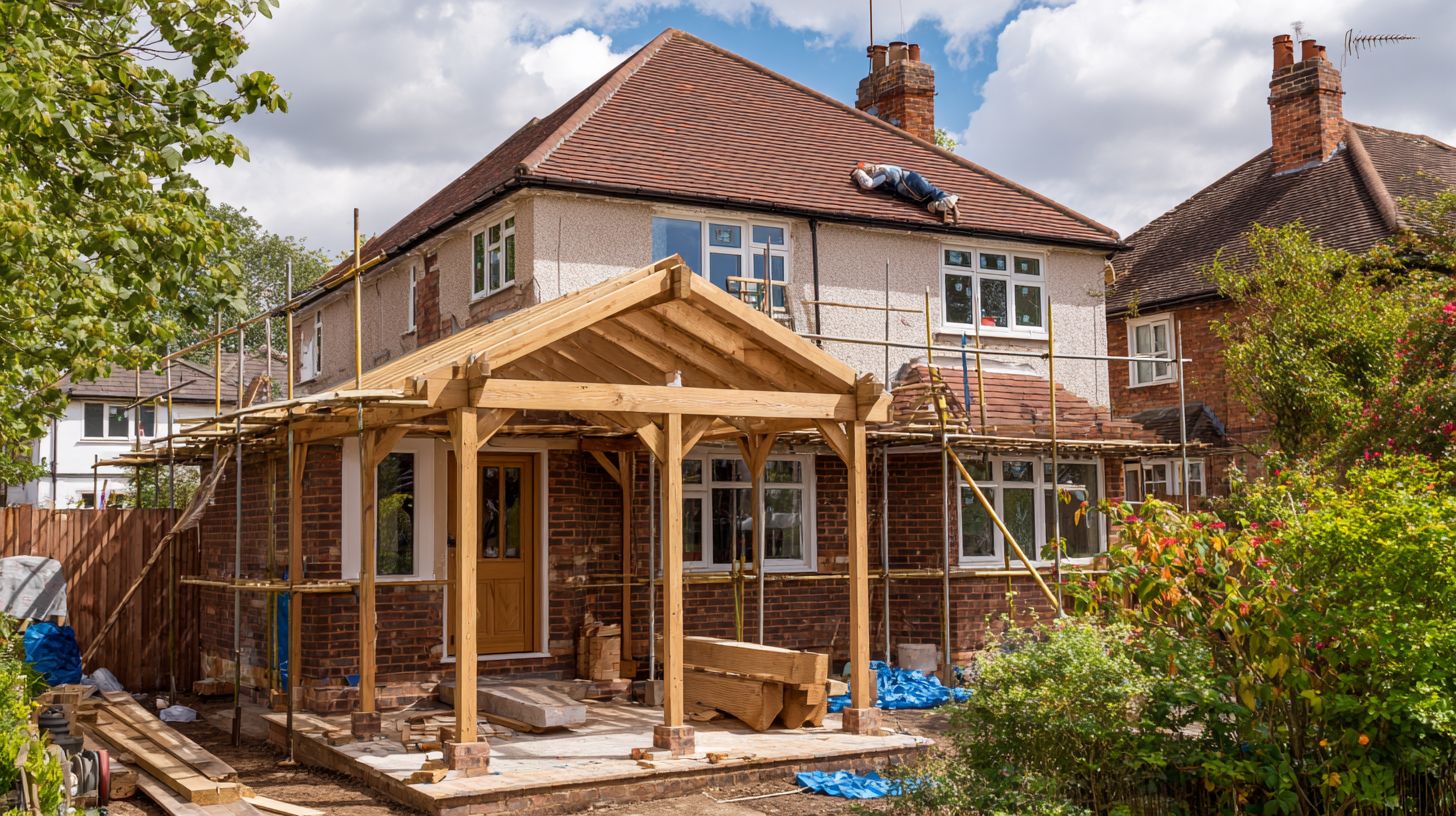
Planning permission is required for the construction of porches that exceed the thresholds of Permitted Development rights or are situated on designated land. This requirement applies to approximately 20% of properties in the United Kingdom located within sensitive zones, as indicated by data from the Planning Portal.
Exceeding Permitted Limits
Any porch exceeding 3 square metres in area, surpassing 3 metres in height, or where the total area of extensions would exceed half the area of the original dwellinghouse necessitates full planning permission. Applications are typically processed within 8 weeks by 90% of local authorities.
Common pitfalls include the erroneous assumption of exemptions for semi-detached properties. For instance, a 4 m² front porch in Leeds exceeded permissible limits, leading to enforcement action by the local council and subsequent rework costs of £1,000.
To effectively navigate these requirements, adhere to the following steps:
- Prepare scaled drawings utilising tools such as SketchUp (a free version is available) and submit the application through the Planning Portal. Preparation generally requires 2-4 weeks, with an application fee of £206 for householders.
- For extensions exceeding 3 metres, seek prior approval to circumvent delays associated with full planning permission.
- Obtain pre-application advice from the local authority or consult professional consultants and experts (typically costing £50-£100) to verify compliance.
According to studies by the Local Authority Building Control (LABC), obtaining planning permission can enhance property value by 5-10%, thereby providing a substantial return on investment for compliant construction projects.
Properties in Designated Areas
In designated areas such as Conservation Areas, National Parks, Areas of Outstanding Natural Beauty, or World Heritage Sites, planning permission is required even for modest additions like small Porches, due to stringent aesthetic controls. According to research and guidance from Historic England on designating and managing conservation areas, these protections ensure the preservation of historic character. This is supported by Historic England data.
Certain scenarios further elevate these risks, such as listed buildings requiring Listed Building Consent, an Article 4 Direction imposing further restriction, or Restrictive Covenants limiting changes of use.
- For listed buildings, Listed Building Consent must be obtained in conjunction with planning permission. For example, the addition of a porch to a Grade II listed building in Bath required meticulous matching of materials to ensure compatibility.
- Article 4 Directions, often applicable in conservation areas, National Parks, and Areas of Outstanding Natural Beauty, remove permitted development rights and necessitate the submission of full planning applications.
- Properties such as flats, maisonettes, and converted houses require approval regardless of the scale of the proposed development.
To address these complexities, consult Historic England’s guidelines at historicengland.org.uk and submit a heritage impact assessment, with costs typically ranging from £500 to £2,000.
In one instance involving a World Heritage Site in York, an initial porch application was rejected but subsequently approved following expert input; however, this process extended the overall timeline by eight weeks.
Proactive consultation can help prevent such delays.
Building Regulations Approval Essentials
All porches, including those constructed under Permitted Development rights, must adhere to the Building Regulations 2010 to ensure safety standards are met. This compliance encompasses critical elements such as foundations, electrical installations, and accessibility provisions.
Non-compliance with these regulations may result in substantial fines of up to £5,000. Worth exploring: Garden Rooms
Key Safety and Structural Standards
Part A of the Building Regulations 2010 mandates that porches incorporate stable foundations—at least 1 metre deep in clay soil—and robust load-bearing structures. Part M, in turn, requires level access for individuals with disabilities, achieved through ramps with a maximum gradient of 1:20.
To ensure compliance, strip foundations reinforced with concrete, in accordance with current standards such as BS EN 1992-1-1 (Eurocode 2), should be poured to a depth of 1 metre in clay soil and verified by a qualified structural engineer. The associated costs typically range from £500 to £800.
For adherence to Part M, ramps must feature non-slip surfacing, such as resin-bound gravel, with a minimum width of 1.2 metres and handrails at a height of 900 mm to 1000 mm.
In cases involving electrical installations, compliance with British Standard 7671 (BS 7671) is required for outdoor sockets protected by residual current devices (RCDs). A standard inspection, conducted by qualified electricians, incurs a cost of approximately £150.
For any glazed components, safety glass meeting the requirements of British Standard 6206 (BS 6206)—demonstrating impact resistance exceeding 150 kg—and achieving an appropriate Window Energy Rating must be utilised.
Reference the Local Authority Building Control (LABC) approved installers list for verification purposes. Furthermore, the Building Research Establishment (BRE) 2019 study indicates that achieving 95% compliance with these regulations can reduce structural failures by up to 40%.
Application Process for Permissions
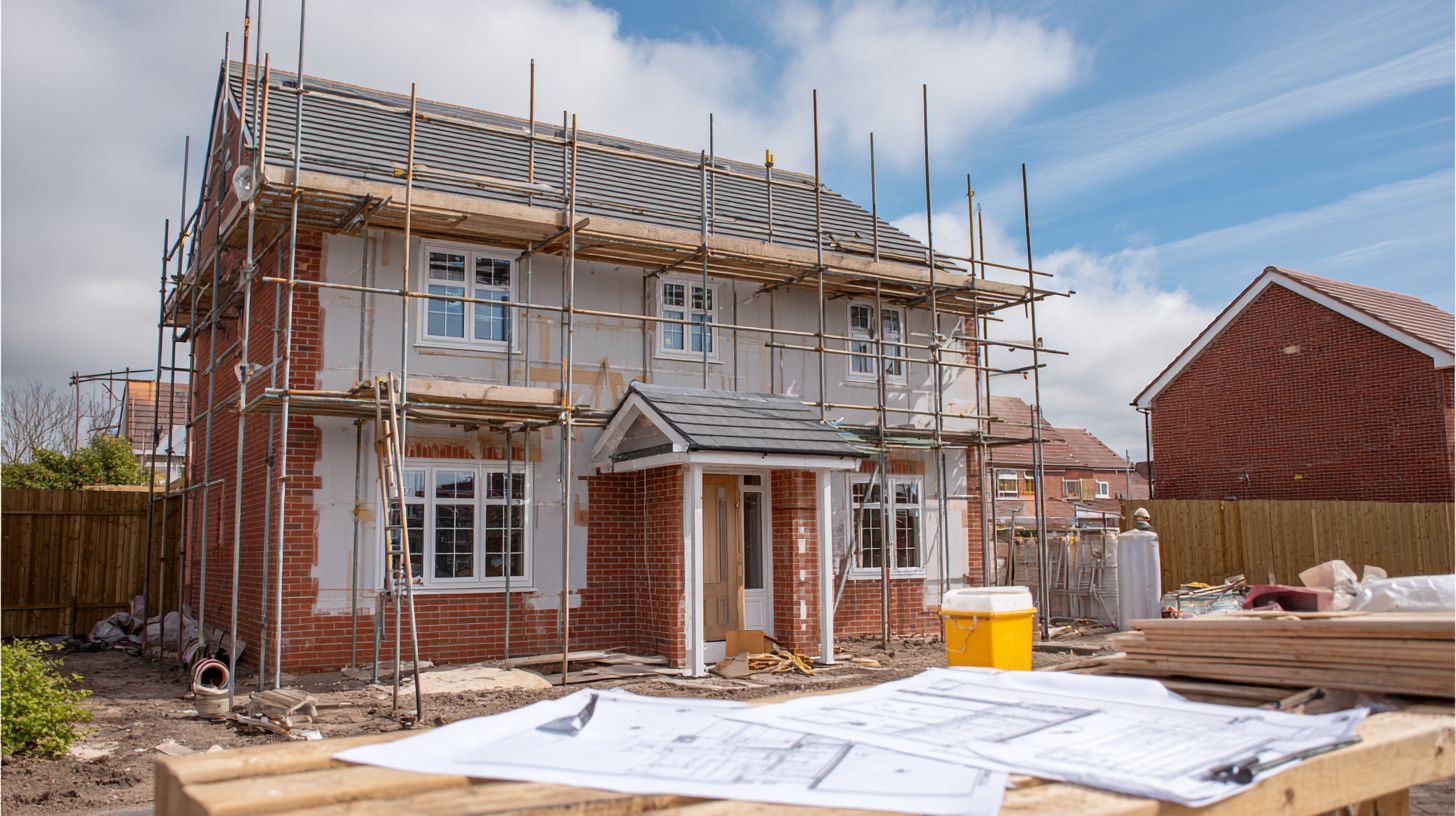
The application process commences with a fee of £258 for householder planning applications submitted via the Planning Portal, which generally requires 8 to 13 weeks for processing (as detailed in the UK Government’s Planning Applications in England report for April to June 2025). In parallel, approval under Building Regulations for full plans submission incurs costs ranging from £300 to £600 and involves formal submissions to the local building control authority.
To manage this process effectively, follow the outlined steps below, incorporating the recommended tools:
- Assess eligibility using the Planning Portal’s interactive householder tool (approximately 30 minutes) to determine if the project qualifies as permitted development.
- Compile the required drawings utilising professional software such as AutoCAD (£50 per month) or the free alternative, SketchUp; mitigate common errors, such as inaccurate scales, by incorporating precise on-site measurements.
- Submit the application electronically through the portal, ensuring inclusion of any necessary certificates, including an ecological survey if applicable (e.g., for protected species) (preparation time: 1 to 2 weeks).
- Effect payment of the requisite fees and monitor progress via the local authority’s dedicated portal.
- Should the application be refused, lodge an appeal within six months; the success rate for such appeals is approximately 30%, based on data from the Royal Town Planning Institute (RTPI).
The process timeline may be represented as a simple bar chart: Weeks 1–2 for preparation and submission, followed by Weeks 3–12 for review. As an illustrative example, certain homeowners secured approval in 10 weeks for a compliant porch extension.
Consequences of Non-Compliance
Non-compliant porches may result in enforcement notices mandating demolition within 28 days, accompanied by fines of up to £20,000 in magistrates’ court. These measures result in over 5,000 enforcement notices issued annually by local authorities, according to government statistics.
To mitigate such risks, it is essential to identify key compliance pitfalls at an early stage.
Notable examples include:
- unauthorised constructions in conservation areas, which can incur fines of £15,000 and require demolition, as illustrated in a Historic England case study;
- electrical violations under BS 7671 that pose fire hazards, with the Local Authority Building Control (LABC) reporting approximately 200 incidents each year;
- and breaches of restrictive covenants in flats or maisonettes, which often lead to neighbour disputes and protracted legal proceedings.
Recommended solutions include:
- submitting retrospective planning applications, which achieve success in 60% of cases based on Planning Portal data,
- or engaging certified consultants to conduct pre-build compliance audits at a cost of £500 to £1,500.
Adopting these proactive measures can prevent average penalties exceeding £10,000, thereby yielding a substantial return on investment through the avoidance of enforcement expenses.
Seeking Professional Advice
It is advisable to engage RTPI-chartered planning consultants or LABC-approved surveyors at an early stage, with fees typically ranging from £500 to £2,000, to effectively address complexities such as Article 4 Directions or changes of use in converted properties.
Adhere to the following best practices to facilitate a seamless process:
- Utilise the Planning Portal’s find-a-planner tool (planningportal.co.uk) during the pre-design phase to identify suitable local professionals.
- For listed buildings, consult experts from Historic England to obtain pre-application advice (£100 per hour; historicengland.org.uk).
- Engage solicitors at an early juncture to verify any Restrictive Covenants and mitigate potential legal risks.
In one instance, a maisonette owner in London circumvented an £8,000 penalty by involving consultants from the outset, thereby obtaining approval within a mere six weeks—refer to the relevant guidance on gov.uk for comparable scenarios (gov.uk/planning-applications). Such a proactive strategy demonstrably reduces both time and expenditure, as evidenced by research from the RTPI.
Frequently Asked Questions
Do I need planning building regs approval for a porch in England and Wales?
Whether you need planning and building regulations approval for a porch in England and Wales depends on its size and location. Under permitted development rights, you can build a porch without planning permission if it’s under 3 square meters in floor area, no more than 3 meters high, and at least 2 meters from the boundary. Building regulations approval is generally required for structural safety, but small porches might be exempt if they don’t involve complex work.
What size porch requires planning building regs approval in England and Wales?
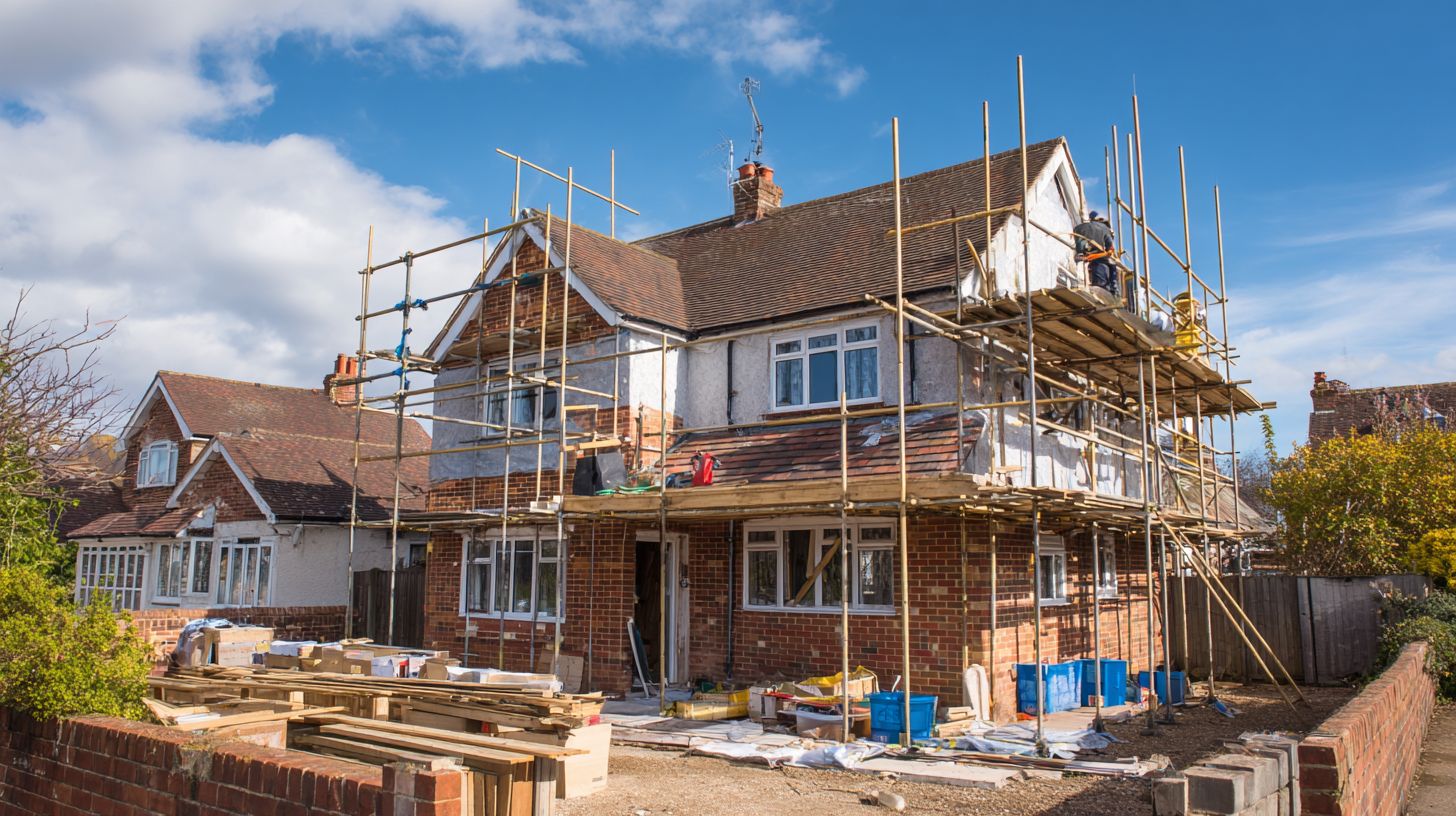
In England and Wales, porches larger than 3 square meters in floor area typically require planning permission, and building regulations approval is needed for aspects like foundations, drainage, and electrics. If your porch exceeds these limits or is in a conservation area, you’ll need to apply for both to ensure compliance with local standards.
Do I need planning building regs approval for a porch in England and Wales if it’s in a conservation area?
Yes, in conservation areas in England and Wales, most porches require planning permission regardless of size, and building regulations approval is still necessary for safety. Permitted development rights are often restricted, so check with your local council to avoid enforcement actions.
When is building regs approval needed for a porch even without planning in England and Wales?
Even if your porch qualifies for permitted development and doesn’t need planning permission in England and Wales, building regulations approval is required if it involves glazing, electrical installations, or structural changes affecting the home’s integrity. Always consult a professional to confirm.
How do I apply for planning building regs approval for a porch in England and Wales?
To get planning and building regulations approval for a porch in England and Wales, submit an application to your local planning authority with drawings and details. For building regs, use a building control body; fees apply, and approval can take 8 weeks for planning, ensuring your project meets all safety and aesthetic standards.
What are the fines for not getting planning building regs approval for a porch in England and Wales?
Building a porch without required planning or building regulations approval in England and Wales can lead to enforcement notices, fines up to £20,000, or even demolition orders. It’s crucial to seek approval first to avoid costly retrospective applications or legal issues.