
Key Takeaways:
Understanding SAP Calculations
Standard Assessment Procedure (SAP) calculations, as required under Part L of the United Kingdom’s Building Regulations, assess a building’s energy performance through key metrics such as U-values and carbon emissions. This evaluation ensures regulatory compliance while promoting reductions in energy consumption and associated costs.
What is SAP?
The Standard Assessment Procedure (SAP) is a methodology approved by the UK government and developed by the Building Research Establishment (BRE). It employs detailed inputs, such as floor area, insulation levels, heating systems, and considerations for notional extension, to generate a Dwelling Emission Rate (DER), the proposed report, and an overall energy rating.
In SAP version 10.2, the total floor area is determined by summing the conditioned habitable spaces, while excluding unheated areas such as garages. This calculation also accounts for solar gains from roof lights or sky lanterns, based on their glazing area and orientation factors, which can yield up to a 10% efficiency improvement in optimally designed installations.
The DER is calculated using the simplified formula: DER = (CO₂ emissions from heating + CO₂ emissions from lighting + CO₂ emissions from hot water) / floor area (kg/m²/year).
According to the 2021 Approved Document L1B, compliance is assessed by benchmarking the building against notional dwellings.
For instance, in a 100 m² extension, enhancing insulation from 0.18 to 0.13 W/m²K elevates the SAP score from 65 to 85, thereby reducing emissions by 20%.
Purpose in UK Building Regulations
Under Part L of the Building Regulations 2010 (as amended in 2021), as detailed in the Conservation of fuel and power: Approved Document L from the UK Government, Standard Assessment Procedure (SAP) calculations are essential for ensuring that new extensions comply with energy efficiency standards. These calculations help ensure carbon emissions comply with the regulatory targets for dwellings, thereby contributing to long-term resilience against escalating energy costs.
The UK Government’s 2022 consultation on the Future Homes Standard underscores the potential of SAP-compliant designs to reduce CO₂ emissions by up to 80% in comparison to older constructions. For example, a homeowner in Crouch End or Cory who retrofitted their extension using SAP assessments achieved an 18% improvement in insulation performance, resulting in annual energy bill savings of £500.
To facilitate implementation, it is recommended to engage an accredited SAP assessor for an initial calculation, which typically costs between £400 and £600. This process can deliver efficiency improvements of 15-20%, with costs recouped within 1-2 years. Achieving an Energy Performance Certificate (EPC) rating of C or higher ensures regulatory compliance and optimises eligibility for rebates under initiatives like the Energy Company Obligation (ECO4).
Bifold Doors in Home Extensions
Bifold doors offer significant advantages for home extensions by optimising natural light ingress and enhancing spatial connectivity. However, their expansive glazing surfaces—frequently accounting for up to 25% of the total floor area within the permissible 25% allowance for existing glazing—necessitate a careful equilibrium between aesthetic appeal and energy performance to ensure adherence to Building Regulations in England and Wales.
Key Features and Energy Implications
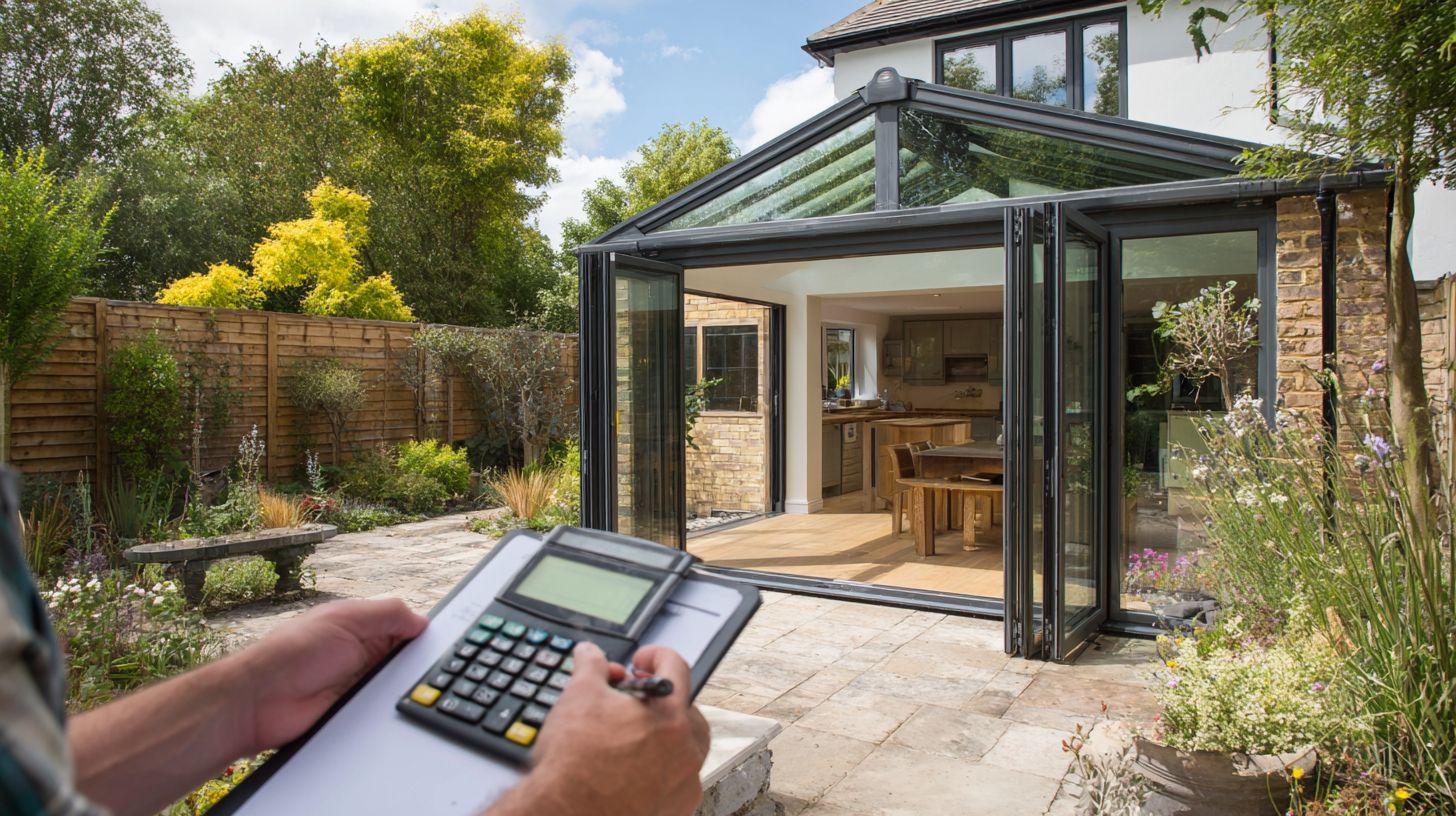
Contemporary bi-fold doors from leading manufacturers utilise aluminium frames with integrated thermal breaks and triple glazing options, achieving U-values as low as 0.8 W/m²K. This construction effectively reduces heat loss by up to 40% relative to conventional double glazing.
| Type | Price Range | U-Value | Glazing Type | Best For | Pros/Cons |
|---|---|---|---|---|---|
| Standard Double Glazed | £2,000-£4,000 | 1.8 W/m²K | Double | Budget Extensions | Affordable but higher heat loss |
| uPVC Double Glazed | £1,500-£3,000 | 1.6 W/m²K | Double | Cost-Effective Renovations | Lightweight, low maintenance vs. limited insulation |
| Timber Framed | £3,000-£5,500 | 1.4 W/m²K | Double | Traditional Homes | Natural aesthetic, good insulation but needs upkeep |
| Triple Glazed | £4,500-£7,000 | 0.8 W/m²K | Triple | Energy-Efficient Homes | Superior insulation but heavier installation |
| Premium Aluminium Triple | £6,000-£9,000 | 0.6 W/m²K | Triple | Luxury Builds | Top performance, sleek design but high cost |
For extensions exceeding 25m² and within the 25% glazing allowance, triple glazing is recommended to satisfy UK Part L compliance requirements, which stipulate U-values below 1.4 W/m²K to promote enhanced energy efficiency under the current Building Regulations (Part L, as updated in 2021).
Building Regulations for Extensions
Under Part L of the UK Building Regulations, extensions must adopt a whole-dwelling approach, whereby the energy performance of the entire property is evaluated. This methodology permits the application of compensatory measures, such as enhanced insulation, to mitigate heat loss associated with new glazing installations.
To ensure compliance, adhere to the following structured steps, incorporating the specified recommendations:
- Submit comprehensive construction plans and construction drawings to the local building control authority and building officer; the approval process typically requires 2-4 weeks. To minimise delays, verify that all drawings are complete and devoid of any omissions.
- For minor alterations not exceeding 50m², undertake a desktop assessment employing accredited SAP software (typical fee: £200), which computes U-values and overall energy efficiency.
- Where glazing constitutes more than 25% of the floor area, introduce compensatory measures, including roof insulation with a low U-value (e.g., 0.13 W/m²K). A prevalent error is the oversight of solar orientation, which may contribute to overheating risks.
The complete approval timeline generally spans 8-12 weeks. For authoritative guidance, refer to Approved Document L1B (2021), issued by the UK government.
As an illustrative case, an extension project in the Midlands attained compliance by incorporating air-source heat pumps, thereby achieving a 15% reduction in the property’s overall carbon emissions.
When SAP Assessments Are Required
In the United Kingdom, Standard Assessment Procedure (SAP) assessments may be required for home extensions like conservatories when the additional floor area exceeds 30 square metres or involves material alterations to the thermal envelope without qualifying exemptions, in accordance with Part L of the building regulations as mandated by building control authorities.
Triggers for New Extensions
For larger extensions that significantly increase the floor area or incorporate bi-fold doors exceeding the 25% glazing allowance under notional specifications, a full SAP calculation is typically required to produce the SAP report. This necessitates the preparation of a proposed report benchmarked against a notional extension standard.
To ensure compliance with UK Building Regulations, it is advisable to address these common triggers proactively.
Key triggers and corresponding solutions include the following:
- Extensions exceeding 15 m² (e.g., orangeries): Employ desktop SAP software, such as Design SAP, for the assessment, which can typically be completed within one week. It is essential to notify building control authorities to prevent potential fines.
- Glazing surpassing 25% of the floor area (e.g., bi-fold doors): Adopt compensatory measures, including mechanical ventilation systems, to mitigate heat loss.
- Modifications to heating systems (e.g., integration of heat pumps): Perform accurate calculations of solar gains; a frequent error is underestimation, which may result in non-compliance.
Refer to Part L1B of the Building Regulations for exemptions applicable to minor alterations where heat loss is below 0.16 m³/m².
Impact of Bifold Doors on Compliance
Bifold doors present significant challenges to compliance with Part L regulations, primarily due to increased heat loss from their extensive glazing areas. Without appropriate mitigation measures, such as the incorporation of low U-value materials, this can elevate the Dwelling Fabric Energy Efficiency Rate (DFEE) by 10-15%.
Thermal Efficiency and U-Values
To achieve thermal efficiency in bi-fold doors, U-values must be maintained below 1.4 W/m²K for frames and 1.2 W/m²K for glazing, in accordance with Part L regulations. This ensures minimised heat loss and mitigates the risk of overheating, particularly in south-facing extensions.
The calculation of U-values is performed using the formula U = 1 / R-value, where the R-value represents the total thermal resistance. For bi-fold doors, the total R-value is derived by summing the individual components: R_total = R_glass (for example, 1.25 m²K/W for triple glazing) + R_frame (0.3 m²K/W for aluminium frames incorporating thermal breaks). This results in a U-value of approximately 0.7 W/m²K.
Recommended measures to enhance performance include the installation of low-emissivity triple glazing, which incurs an additional cost of £1,000 but offers a return on investment within three years through approximately 20% energy savings, as well as the implementation of airtight seals to prevent draughts.
According to a 2023 study by the Energy Saving Trust, bi-fold doors meeting these standards can reduce CO2 emissions by 12%.
In a recent project in Crouch End, a redesign of the frame structure successfully lowered U-values from 2.0 W/m²K to 1.0 W/m²K, thereby reducing annual heating costs by £200.
Assessing Your Specific Project
To assess an extension project, begin by measuring the total floor area and solar orientation. Employ tools such as the free SAP Design SAP calculator to model energy performance and identify necessary design adjustments at an early stage.
Next, adhere to the following numbered steps for a comprehensive assessment:
- Gather construction drawings and service details (estimated time: 1-2 days). Utilise AutoCAD for precision; avoid vague sketches to ensure accurate energy modelling.
- Input the data into SAP software, such as BRE’s DEM (£300 licence). This estimates CO2 emissions based on insulation, heating systems, and glazing—key considerations for extensions.
- Apply a whole-dwelling approach for existing glazing. A common oversight is neglecting the 25% allowance for solar gains; simulate scenarios with roof lights using the calculator.
Projects assessed at an early stage, such as those involving conservatories or orangeries, can save 15% on revisions, as evidenced in a case study in the Midlands, where integrating solar panels improved SAP scores by 20%.
Seeking Professional Advice
It is advisable to engage a certified SAP assessor from reputable firms at the outset of your project to obtain a compliant EPC and effectively manage associated complexities. Assessment costs typically range from £400 for desktop evaluations to £800 for comprehensive on-site assessments, which may incorporate renewable technologies such as solar panels.
To achieve seamless compliance with Part L regulations, adhere to the following best practices:
- Engage accredited assessors, scheduling the assessment 4-6 weeks prior to submission to ensure alignment with project timelines.
- Evaluate options for heat pumps and solar panels during the design phase, utilising software such as PV*SOL for precise energy modelling.
- Prepare for building officer approval by submitting the SAP report alongside comprehensive construction plans; ensure all service details are complete to avoid common oversights.
In practical case studies, including projects completed in areas like Crouch End in 2023, and similar efforts, successfully attained compliance under the guidance of an assessor. The implementation of compensatory measures resulted in significant reductions in energy costs, as corroborated by BRE reports on energy efficiencies in building projects.
Frequently Asked Questions

Will I need SAP calculations for putting bifolding doors in my extension?
Yes, you may need a SAP calculation if your extension project falls under UK Building Regulations, particularly Part L for conservation of fuel and power. Bifold doors can impact the overall energy efficiency of the extension, so SAP (Standard Assessment Procedure) calculations help ensure compliance by assessing thermal performance, U-values, and airtightness. Consult a building control officer or energy assessor to confirm based on your specific project.
What are SAP calculations and why do they matter for bifold doors in extensions?
A SAP calculation refers to the Standard Assessment Procedure used to evaluate a dwelling’s energy efficiency. For putting bifolding doors in your extension, they matter because these doors can significantly affect heat loss and glazing areas. If your extension alters the thermal envelope, SAP ensures your design meets minimum energy standards, potentially avoiding costly revisions or rejected planning permissions.
Do all bifold door installations in extensions require SAP calculations?
Not all installations do, but many will. If you’re putting bifolding doors in your extension and the project is notifiable under Building Regulations (e.g., increasing the floor area or changing the building fabric), SAP calculations are typically required. Exemptions might apply for very minor works, but it’s best to check with local authorities to avoid non-compliance issues.
How do bifold doors impact SAP calculations for my home extension?
Bifold doors often have large glass areas, which can lower the U-value of your extension and increase heat loss, directly influencing SAP calculations. When putting bifolding doors in your extension, you’ll need to factor in their thermal efficiency ratings (like low-E glazing) to achieve a compliant SAP score. Poorly chosen doors might require additional insulation measures to pass the calculations.
What steps should I take before installing bifold doors to ensure SAP compliance?
Start by engaging an accredited energy assessor early in the planning stage for putting bifolding doors in your extension. They’ll perform preliminary SAP calculations to model the energy performance. Submit these with your building regulations application, and ensure your bifold doors meet or exceed the required U-values (typically 1.4 W/m²K or better) to streamline approval.
Can I avoid SAP calculations when adding bifold doors to an existing extension?
Avoiding SAP calculations is unlikely if you’re putting bifolding doors in your extension and altering the structure or envelope, as this triggers a full reassessment under Building Regulations. However, if the extension already has a valid SAP certificate and the doors are a like-for-like replacement without expanding the area, you might not need new calculations—always verify with a professional to prevent regulatory penalties.