
A Homeowner's Guide To Garage Conversions
The Ultimate Guide to Garage Conversions: Planning, Building Regs, Structure, Insulation, Plumbing & More
Converting a garage is one of the quickest ways to unlock liveable space without a major extension. Done right, you can turn a cold, underused box into a warm home office, playroom, studio, bedroom with shower room, or even a self-contained annexe (with the right permissions). Done badly, you inherit condensation, cold floors, dodgy drainage and a room estate agents won’t call “habitable.” This guide is your roadmap from first thought to completion — what to upgrade, how to meet Building Regulations, when you need planning, and how to choose the right construction details so the room feels like it’s always been part of the house.
First principles: what’s different about a garage?
Most garages were never designed for people. They’re typically uninsulated (or barely insulated), have thin walls (single skin or lightweight cavity), cold slabs without a damp-proof membrane suitable for habitable use, leaky doors, minimal ventilation, and bridges where cold and moisture track from outside to in. A good conversion removes those weaknesses:
Warm, dry construction with continuous insulation in floors, walls and roof/ceiling.
Moisture management: damp-proof courses (DPC), damp-proof membranes (DPM), cavity trays, ventilation paths, and breathable build-ups where appropriate.
Structure checked and upgraded where loads change (e.g., infilling the garage door opening or removing piers).
Services: proper electrics, heating, ventilation, and (if adding a WC/shower) compliant drainage and waterproofing.
Approvals: Building Regulations always apply to a garage conversion; planning permission may or may not be needed depending on what you change and whether Article 4 has removed PD rights on your street.
If you remember one thing: a garage conversion should perform like any other room in the house — not “almost”.
Planning permission vs Permitted Development — and Article 4 traps
Integral garage to habitable room (same footprint):
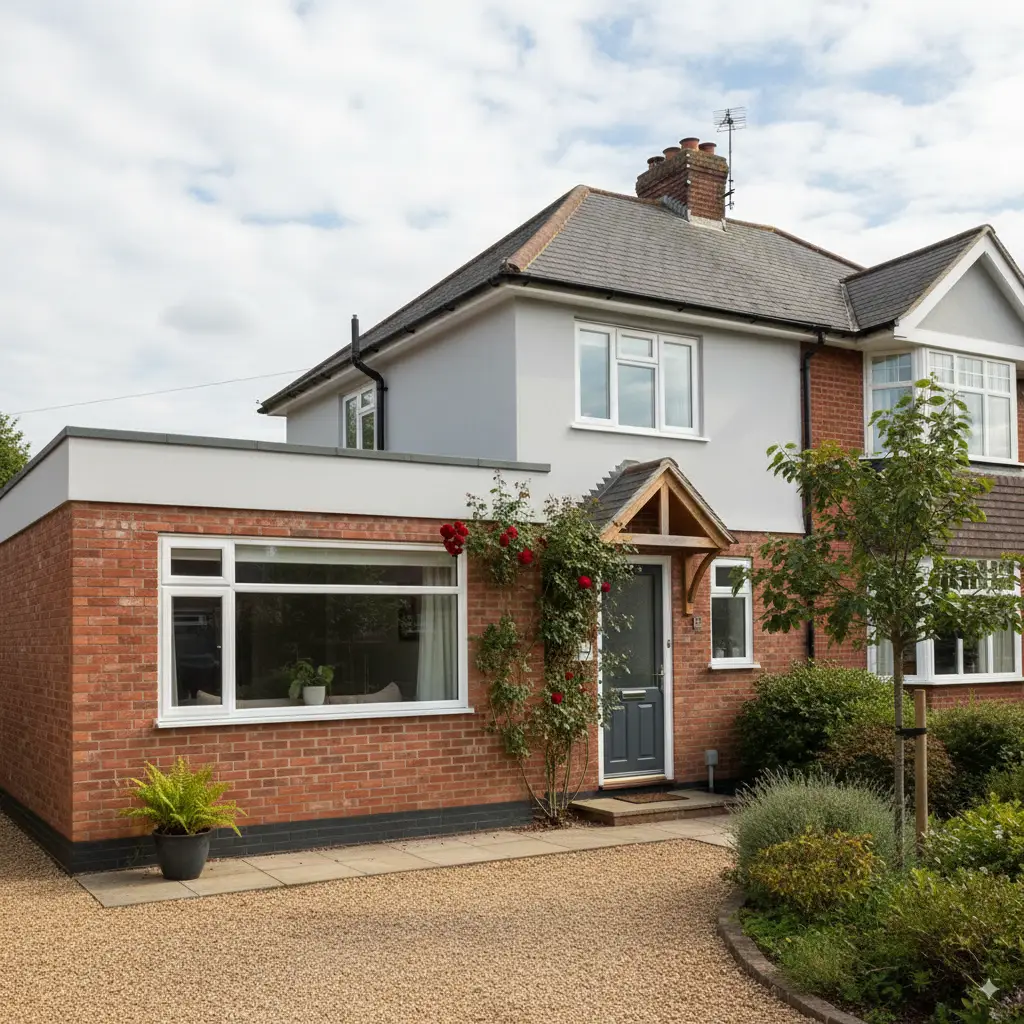
Many simple conversions fall under householder permitted development (PD) because you’re not “extending” the building — you’re changing internal use and altering the front elevation modestly (replacing the garage door with a wall and window).
However, PD can be removed by an Article 4 direction (common on estates with parking pressure or design codes). Where Article 4 applies, planning permission is required even for a straightforward door-to-window infill.
Even where PD is intact, material changes to the front (appearance, streetscape, parking loss) can tip the balance. Some councils are relaxed; others expect a full application to consider on-street parking stress and character. Always check your property’s constraints and recent decisions locally.
Detached garage conversion:
Turning a detached garage into a separate habitable building is not usually PD. Outbuildings can be used for incidental purposes (gym, store, hobby room) under PD; but once you add a bedroom, bathroom, or kitchen for everyday living, that’s habitable accommodation — you’ll need planning permission and the council will consider amenity, overlooking, highways/parking, and sometimes flood or design issues.
Annexe vs separate dwelling:
A granny annexe that remains ancillary to the main house (shared services, family occupancy, not rented independently) may be approved as an annexe via planning or sometimes via flexible PD routes for outbuildings when use stays truly incidental.
A self-contained dwelling (its own address/letterbox/council tax, separate occupants, no reliance on the main house) is a new dwelling — that requires full planning permission. Garage → independent flat is not achievable under PD.
Mortgage, insurance and resale: lenders care about whether it’s a separate dwelling. Keep paperwork crystal clear.
Practical tip: Before you spend on drawings, do a policy sense-check: on-plot parking numbers, any Article 4, conservation area, previous conditions that require the garage to remain for parking, and the council’s stance on “loss of garage”. If a past planning permission for your house conditioned the garage to remain as parking, you’ll need a new permission to vary/remove that condition.
Building Regulations: what applies to garage conversions?
Even when planning says “fine”, Building Regulations always apply. Expect Building Control to check:
Structure (Part A): infill wall stability, lintels/RSJs, floor build-up weight, any roof load changes; ensuring the converted walls/roof can support new finishes.
Fire safety (Part B): safe escape windows where needed, smoke/heat alarms, and fire separation where conversion adjoins integral risk areas.
Moisture & contamination (Part C): damp-proofing, radon measures where relevant, detailing to stop moisture tracking from old slab or single-skin walls.
Toxic substances (Part C): cavity fill management during works (relevant if adding insulation).
Resistance to sound (Part E): if you share walls/ceilings with neighbours or there’s a room above; airborne and impact performance comes into play.
Ventilation (Part F): background/purge ventilation rates; extract ventilation for any new bathroom/utility.
Sanitation & drainage (Part G/H): proper connections, traps, falls, rodding access, and waste ventilation for WCs/showers/utility appliances.
Conservation of fuel & power (Part L): U-value targets for floor/walls/roof, thermal bridge control at junctions, airtightness details.
Protection from falling/impact (Part K): stairs or floor level changes, safety glazing.
Electrical safety (Part P): notifiable works by a competent person; certification is part of the completion pack.
Bottom line: if it’s going to be called a “room”, it has to behave like one — warm, dry, ventilated, safe, and robust.
Upgrading the garage walls — make them warm, dry and robust
Garages present three main wall types. Your detailing will follow the worst-performing element.
A) Single-skin masonry wall (common on detached or older garages)
Moisture risk: single leaf = no cavity; rain drives through and condenses internally if you just batten and plasterboard.
Upgrade approach:
Independent, ventilated lining: build a treated timber or metal stud frame 25–50 mm off the wall, maintain a ventilated cavity, add vapour-controlled insulation (e.g., PIR or mineral wool with VCL), then plasterboard. Include DPM upstands where the frame meets the slab.
Internal block/brick leaf: in some conversions (especially where structure or fire rating matters), add a new lightweight block inner leaf to form a true cavity wall with insulation, leaving a drained cavity between old and new. This eats floor area but yields premium performance and moisture control.
Bridging & edges: continue insulation past returns, around openings, and at the new door/window infill to avoid cold corners.
B) Existing cavity wall (common on integral garages)
Audit it first: check cavity width, whether it’s insulated, condition of ties, and the DPC height relative to proposed floor level.
Upgrade approach: often a partial fill in the cavity plus a service-zone lining internally with insulated plasterboard or batten + insulation. Keep the VCL continuous and tie into the ceiling and floor membranes.
Cavity trays & DPCs: when you infilling the garage door opening, you’ll create new junctions. Add cavity trays over openings, DPCs under sills and at thresholds, and make sure ties/straps meet spec.
C) Timber-frame garage walls
Check the frame: moisture content, structural condition, sheathing integrity, membrane presence.
Upgrade approach: improve breather membrane externally (if accessible), add insulation between studs plus a continuous insulation layer internally, then VCL and plasterboard. Maintain ventilated cavities where required by the build-up.
Windows & doors: modern units help, but the weak point is often the interface. Use proprietary cavity closers, insulated DPCs, and sealant systems that allow movement. Don’t forget trickle vents and purge ventilation (openable area).
Blocking up the garage door opening — two credible methods
The old garage door opening is the most visible change. You’ve got two primary approaches; both are valid when detailed correctly.
Option 1: Build a new wall on a standard strip footing
What it is: Excavate a new trench across the opening; pour a strip foundation to match adjacent wall standards. Build a proper cavity wall up to DPC and above: outer brick to match the house, full-fill or partial-fill insulation, inner blockwork.
Pros:
Structurally independent and robust.
Easy to achieve target U-values with a full cavity.
Simplest to tie into existing masonry and install cavity trays above new openings.
Cons:
More excavation and spoil; watch for services in the old threshold.
Program impact if access is tight.
Option 2: Build a dwarf wall sitting on a lintel (“over-sailing” the opening)
What it is: Install one or more structural lintels (steel or concrete) spanning the old garage opening, supported on the existing piers/returns. Build the new wall (often just the inner leaf or a cavity dwarf wall) off the lintel rather than new foundations.
Pros:
Faster; less digging; avoids undermining adjacent foundations.
Useful where services or drains cross the opening.
Cons:
Requires careful load path design and proof that existing returns are adequate; sometimes you’ll need padstones or local strengthening.
Thermal detailing can be trickier at the base and sides; you must maintain DPCs/DPM upstands, avoid cold bridging, and ensure cavity trays manage any water that gets into the outer leaf.
Building Control will expect calcs or a standard detail appropriate to the span/load.
Either route, match the outer brickwork bond, colour, mortar; keep joints crisp. Inside, continue insulation continuity right through the reveal, and plan the window position in the cavity so you don’t create deep, cold reveals. Always show a DPC under cills, vertical DPCs at jambs, and weeps above with a cavity tray.
Floors that feel like part of the house — two main upgrade paths
Garage slabs are usually cold, sometimes damp, and nearly always lower than the house floor. You need a warm, level, dry floor with headroom to spare. Two main routes:
Route A: Insulated screed/floating floor on the existing slab
Build-up (typical):
DPM over the slab (lapped to wall DPCs or upstand),
Insulation boards (compressive-grade PIR or EPS),
Screed (traditional or flowing) or a floating board system with a loading layer,
Final finish (LVT, wood, tile, carpet).
Pros:
Solid feel; great for UFH (pipes in screed) or electric underfloor where suitable.
Simple services routing in a shallow service zone above insulation if planned.
Cons:
Adds build-up height; mind headroom.
Wet trades and drying time; program management needed.
Route B: Suspended timber floor above the slab
Build-up (typical): treated joists on DPM isolators or adjustable pedestals, vented void if designed as a true suspended construction, between-joist insulation, VCL, deck (e.g., 22 mm P5 or ply), then finish.
Pros:
Lightweight; fast install; easy to run services.
Can finesse finished floor level to match the house precisely with less build-up.
Cons:
Needs careful moisture strategy: don’t trap damp between slab and timber. If the slab has no DPM, consider liquid DPM or vented detail.
Acoustic performance requires attention (resilient layers/strips) if rooms adjoin or above.
Thresholds: align levels to the main house for step-free access. Continue DPM upstands at edges, wrap around posts/frames, and avoid puncturing membranes with rawlplugs; use sleeves or resin anchors where necessary.
.
The ceiling and roof above the garage
Integral garage with room above: the existing ceiling may be uninsulated; you’ll need to upgrade for thermal and acoustic performance. Consider between-joist insulation plus a continuous insulated lining to cut thermal bridges.
Pitched roof over a garage: often under-insulated. If accessible, choose between-rafter insulation with a ventilated void or go for an insulated plasterboard underdraw with appropriate vapour control. Ensure eaves are ventilated and soffit vents aren’t blocked.
Flat roof over a garage: strongly consider a warm roof (insulation above deck) rather than a “cold roof”. It reduces condensation risk and performs better. Check falls, outlets and parapet details.
Ventilation, heating and electrics — comfort and compliance
Ventilation (Part F): provide background ventilation (trickle vents) and purge ventilation (openable windows/doors). If you add a shower room or utility, you’ll need mechanical extract with the right airflow rates and a good duct route. Keep ducts short and straight; avoid terminating in roof voids.
Heating: tie into the existing system or add UFH in the new floor. Zoning and controls matter: a small space with lots of glazing warms quickly then cools; good control avoids energy waste. Electric heating is possible but think about running costs vs heat pump/boiler circuits.
Electrics (Part P): new circuits are notifiable. Use a registered contractor and keep certificates for Building Control. Plan data points early if the space is an office or studio.
Lighting: garages often have low ceilings. Use slim downlights or surface fittings with appropriate fire hoods/ratings where required. Daylight strategy is crucial — a well-placed front window (in the old door opening) plus a side window or rooflight can transform usability.
Plumbing & drainage — adding a WC, shower or utility
Adding plumbing turns a “nice room” into “super useful”. Get it right first time:
Foul drainage route: identify the nearest soil stack or foul drain run. Short, gravity-fall connections are best. Maintain falls, use swept bends, and include rodding access.
Avoid boxing nightmares: plan the pipe path before building up walls/floors. Consider a slightly raised floor to conceal wastes if levels are tight.
Macerators: useful when gravity falls aren’t possible, but they’re noisy and need power; use only where unavoidable and choose good access for maintenance.
Showers on slabs: former garage slabs may be low. If you want a flush shower, plan the floor build-up to create depth for traps or consider shower formers.
Ventilation & AAVs: you can use air admittance valves (AAVs) on internal stacks, but at least one point on the system should be open vent; check the whole-house drainage strategy.
Water supplies: lag pipes, keep out of cold voids, and route compactly to avoid pressure drops.
Utilities & meters in the garage? If your gas/electric meter lives in the garage and will end up in a habitable room, plan relocations or compliant cupboards. Coordinate ventilation clearances for boilers and fire separation where relevant.
Sound, fire and safety — the “feel” of a real room
Sound (Part E): if you share walls with neighbours or there’s a bedroom above, treat sound early. Mineral wool between studs/joists, resilient bars, and heavier boards can markedly improve results. Avoid rigid connections that create flanking paths.
Fire (Part B): smoke alarms on the house circuit, sensible escape windows to habitable rooms, and attention to fire-stopping at new penetrations. If your conversion adjoins a retained garage (e.g., double garage where you convert half), you’ll need fire-resisting partitions/doors between them.
Stairs/steps (Part K): if level changes are unavoidable, keep risers consistent, add handrails where needed, and maintain headroom under any new beams.
Using the space as an annexe or a separate dwelling
Annexe (ancillary):
Designed for a family member; shares utilities and services; occupiers rely on the main house. You’ll normally need planning permission (unless your council accepts a narrow form of ancillary use under PD for internal conversion — varies by authority). Expect the council to condition that it remains ancillary (no separate sale/letting).
Building Regulations apply as for any habitable space. Pay extra attention to sound, privacy, cooking ventilation, and escape.
Separate dwelling:
A flat or independent house created from a garage is a new dwelling — full planning permission is required, with all the trimmings: amenity standards, private outdoor space (policy dependent), parking provision, potential EV charging, refuse storage, access, and all building regulations to new-dwelling standards.
Utilities, metering, and separate postal address follow. It’s a different proposition to a simple conversion; plan it as a mini-development.
Key warning: Many estates have planning conditions stating “the garage shall be retained for the parking of vehicles”. Converting without removing that condition leads to enforcement risk and mortgage/sale complications. Always check decision notices for your plot.
Step-by-step workflow (what we recommend)
Feasibility call & constraints check
Article 4? Conservation area? Past conditions about retaining the garage for parking? On-plot parking count?
What’s the target room (office/bedroom/studio)? Any WC/shower?
Measured survey
Capture accurate dimensions, levels, slab height, lintels, services, meters, and any signs of damp.
Concept & options
Two or three layout options; window positions; storage; services routes.
Decide door infill method (strip footing vs lintel-supported dwarf wall).
Pick floor strategy (screed vs suspended timber) based on headroom and services.
Planning route
If PD is safe, we can assemble a Lawful Development Certificate for reassurance.
If planning is required (Article 4 or streetscape/parking issues), we package a short design statement with drawings.
Technical design (Building Regs)
Walls: insulation continuity, moisture control, cavity trays/DPCs.
Floor: DPM/DPC tie-ins, insulation, thresholds, UFH if any.
Roof/ceiling: insulation, ventilation, vapour control.
Services: electrics, heating, ventilation, drainage layouts for any sanitaryware.
Structure: lintels/RSJ calcs for door infill or any piers removed.
Fire & sound: alarms, escape, acoustic build-ups.
Build & sign-off
Notify Building Control, book key inspections, photograph concealed works (membranes, insulation, lintels).
Keep a tidy O&M pack: certificates, manuals, warranties, as-built drawings.
Common pitfalls (and how to dodge them)
Article 4 surprise: client assumes PD, council pulled PD on that estate years ago. Check Article 4 first.
Cold corners & condensation: lining stuck straight onto single-skin walls without a ventilated cavity or VCL. Use a ventilated or proper cavity solution.
Floor build-up too tall: headroom lost. Model levels early; consider suspended timber or thinner high-performance build-ups.
Services afterthought: nowhere to run wastes or ducting. Plan routes at concept stage and allow floor/ceiling zones.
Thermal bridges at the old door opening: no insulated closers, missing DPCs, no cavity tray. Detail the junctions.
Acoustics ignored: office over clattering pipes or next to teenager’s drums. Add resilient layers and mineral wool.
Certificates missing: electrics un-notified, no completion certificate. Use competent persons and keep paperwork.
Costs & timelines — realistic expectations
Design & approvals: a few weeks for survey + drawings; 8 weeks if a planning application is needed (varies); Building Control plan check in 1–3 weeks.
Build duration: a straightforward integral garage conversion is often 3–6 weeks on site depending on scope, weather, and lead times (windows, doors, screed drying, etc.).
Cost drivers: door infill method, floor strategy, plumbing (adding a bathroom costs more than a study), electrics/data, window/door quality, and finishes.
Remember: cutting corners on membranes, insulation, and ventilation is a false economy. Comfort and compliance are where the value is.
Next steps — make it effortless
Send us your address and a quick brief: “Integral single garage; want a home office with shower room; keep front elevation smart; PD in place; no Article 4; tie into existing heating.” We’ll:
Confirm planning route and any Article 4 or prior conditions.
Survey the space (we can laser scan/LiDAR where beneficial).
Propose layout + construction options (door infill method, floor build-up).
Produce Building Regulations drawings with the right details for membranes, insulation, ventilation, structure and drainage.
Support you through Building Control to completion.
With the right design choices, your converted garage will be warm, dry, quiet and genuinely useful — not just a rebadged storage room.

Quick Links
Get In Touch
Building 13, Thames Enterprise Centre, Princess Margaret Road, East Tilbury, Essex, RM18 8RH
- Phone: 0800 494 7023
- Hours: Mon-Fri 8:30AM - 5:30PM
Get In Touch
Building 13, Thames Enterprise Centre, Princess Margaret Road, East Tilbury, Essex, RM18 8RH
- Phone: 0800 494 7023
- Hours: Mon-Fri 8:30AM - 5:30PM