
Key Takeaways:
Understanding Building Regulations
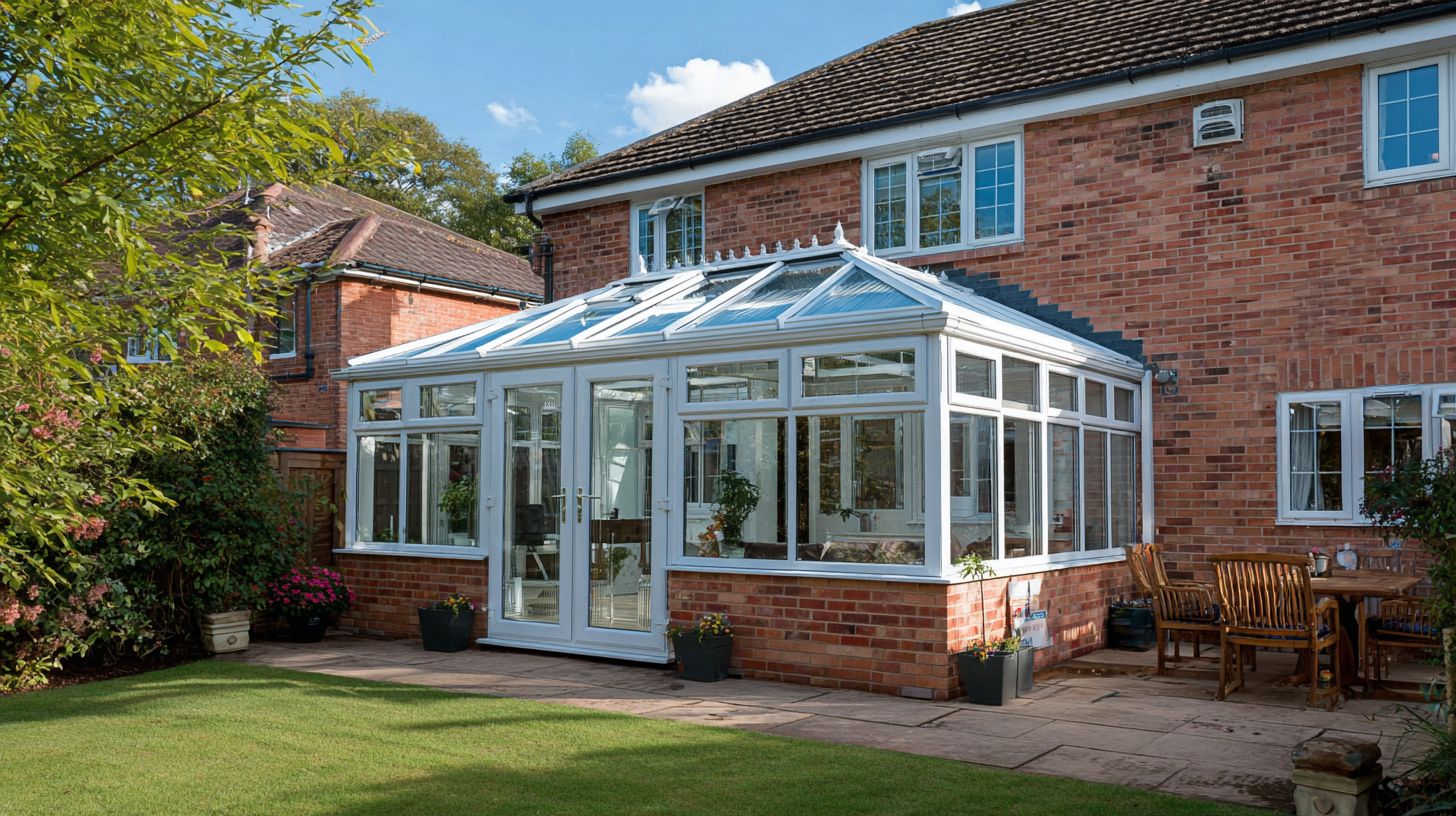
The Building Regulations 2010, enforced by local authorities throughout England and Wales, establish mandatory standards for construction safety, health, and energy efficiency. Approved Documents provide comprehensive guidance on achieving compliance for various projects, including conservatory extensions.
For conservatories, the key Approved Documents encompass the following:
- Part A (Structure): Ensures that load-bearing walls and roofs can withstand wind and snow loads of up to 1.4 kN/m².
- Part F (Ventilation): Requires mechanical ventilation systems capable of delivering 0.3 l/s per m³ to prevent condensation.
- Part L (Energy Efficiency): Mandates U-values of less than 0.18 W/m²K for insulated glazing.
- Part O (Overheating): Limits solar gains through measures such as shading or the use of low-g-value glass.
- Part P (Electrical): Requires electrical installations to be performed by certified professionals in accordance with British Standard 7671 to ensure safety.
Regulation 9 stipulates that structures must be “fit for purpose.” For instance, in a 2019 case in Essex, a conservatory was ordered demolished due to inadequate insulation, which resulted in 30% heat loss and fines totalling £20,000.
Worth exploring: Planning & Building Regulations For Conservatories in UK
What Qualifies as a Conservatory?
A conservatory is defined as a glazed single-storey extension situated at ground level, generally featuring a minimum of 50% glazing in the roof and 75% glazing in the walls. This configuration sets it apart from conventional extensions under the provisions of Permitted Development Rights.
”’Key Definitions and Features”’
A conservatory is defined as a structure featuring a transparent or translucent material roof and walls, directly connected to the primary dwelling, with suitable frames for external doors and a minimum of 0.5 m² of operable ventilation, in line with UK building standards.
To ensure compliance and optimal functionality, the following key features must be considered:
- The glazing ratio mandates that at least 50% of the roof area be glazed, using suitable self-cleaning glass to facilitate low-maintenance performance.
- Floor area restrictions permit up to 30 m², which may qualify for exemptions from building regulations approval under certain conditions, distinct from planning permission requirements.
- Heating integration is limited to radiators operating at a maximum of 25°C, in accordance with Part L regulations, to mitigate overheating risks.
- Physical separation from the main house through a removable internal wall may exempt the structure from building control requirements.
- Materials, such as uPVC or timber, must attain U-values of at least 1.6 W/m²K, as specified in Approved Document L1B, to meet insulation standards.
For illustrative purposes, a cross-sectional diagram depicting the glazed roof, separating wall, and ventilation openings is recommended (as referenced in the BS 8529 illustrations).
When Approval is Required
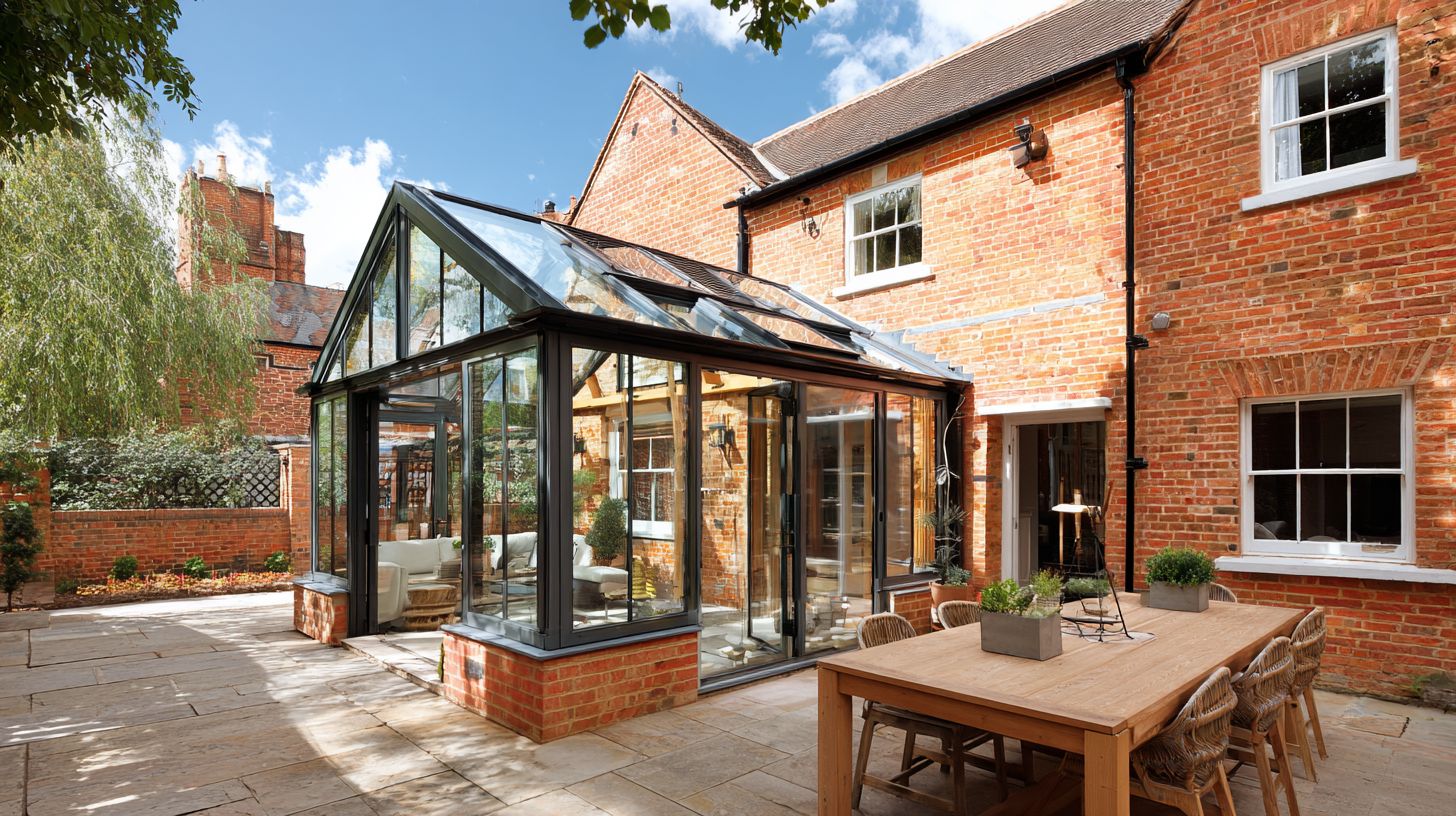
Prior approval is required for conservatories that exceed the thresholds outlined in Permitted Development Rights, or for those situated in designated sensitive areas such as conservation areas or listed buildings. In these locations, local authorities may implement Article 4 directions, which revoke automatic exemptions and may affect many such projects—our detailed overview of conservatories highlights key considerations for compliance.
Size, Location, and Height Limits
For single-storey conservatories constructed at ground level, Permitted Development rights permit a maximum height of 3 metres (or 4 metres in the case of dual-pitched roofs) and a depth of 3 to 4 metres from the rear of the house, provided that the total floor area does not exceed 50% of the footprint of the original dwelling.
To ensure compliance with these regulations, the following verification steps are recommended:
- Verify that the total area of the conservatory and any other extensions does not exceed 50% of the footprint of the original dwelling (a laser measure is advised, with an estimated time of 1 hour).
- Evaluate the location (extensions must not project forward of the principal elevation and should be at least 2 metres from any boundaries).
- Verify the height (must not exceed 2.5 metres if located within 2 metres of a boundary).
A frequent oversight involves neglecting build-over agreement for sewers, which requires an application to the local authority (typically costing £150). For further details, refer to the UK Planning Portal guidelines.
| Limit Type | Measurement | Example Scenario |
|---|---|---|
| Floor Area | Total extensions ≤50% of original dwelling footprint | Conservatory addition ensuring overall extensions do not exceed 50% of original house footprint |
| Depth | 3-4m from house | 3.5m lean-to structure on a semi-detached property |
| Height | ≤2.5m near boundary | 2.4m ridge height on a plot 1.8m from boundary |
Structural and Glazing Standards
Conservatory glazing shall incorporate safety glass that complies with British Standard BS EN 12600 (minimum Class 2B2). Structural openings must be supported by lintels designed to accommodate a load of 3 kN/m², while foundations in clay soils require a minimum depth of 1 m.
To achieve structural stability, foundations should typically utilise strip footings measuring 450 mm in width, in accordance with Approved Document A. For a base measuring 4 m by 3 m, strip footings would require approximately 6.3 m³ of concrete (based on perimeter of 14 m, 450 mm width, and 1 m depth), calculated using standard strip footing volume formulas.
The 2019 BRE study highlights a 10% failure rate attributable to inadequate foundations, underscoring the importance of sufficient depth in expansive clay soils (as further explored in a study on strengthening building foundations for storey extensions published on ResearchGate).
For optimal energy efficiency, glazing must achieve U-values of no greater than 1.2 W/m²K. For example, low-emissivity glass provides a Window Energy Rating of C+ while fully satisfying relevant safety standards.
From a structural perspective, wind loads should be assessed in accordance with BS EN 1991-1-4 (0.5 kPa in urban areas). Lintels shall be specified as 150 mm by 100 mm steel sections, capable of spanning 2.4 m to support uniformly distributed loads of 3 kN/m².
Exemptions Under Permitted Development

Under Permitted Development Rights, many conservatories are exempt from requiring planning permission, provided they comply with rigorous criteria and unlike a porch which may have different rules. This framework, which the Permitted development rights for householders: technical guidance from GOV.UK details comprehensively, permits single-storey rear extensions of up to 4 metres in depth for detached houses or new build properties, without the need for prior approval from the local authority.
Specific Conservatory Exemptions
Conservatories qualify for exemption under UK building regulations provided they lack any heating system connected to the main dwelling, incorporate at least 50% translucent roofing, and permit self-certification by a competent person for glazing and electrical installations in accordance with Part P.
To achieve compliance and secure exemptions, adhere to the following six best practices outlined under UK building regulations:
- Size: Ensure the conservatory complies with Permitted Development size limits (e.g., depth of 3-4 m and total extensions ≤50% of original dwelling footprint); confirm measurements using Ordnance Survey maps.
- Glazing: Use safety glass throughout and use the FENSA scheme for self-certification of windows and doors.
- Separation: Erect an internal insulated wall, ensuring no shared heating or plumbing systems with the main structure.
- Ventilation: Conform to Part F requirements by providing a minimum equivalent area of 8000mm² in openings, including roof vents.
- Electrical: Comply with Part P standards, engaging a NICEIC-registered installer for all wiring installations.
- Access: Eliminate balconies or elevated platforms that necessitate ladder access and ensure adequate fire escape provisions.
For structural components, consult Approved Document A to facilitate self-certification by a competent person, ensuring compliance with restrictive covenants. Upon completion, notify the local authority within 30 days to finalise the exemption procedure.
This configuration circumvents the need for full planning permission, thereby reducing both time and expenditure—typically amounting to less than £5,000 for standard constructions.
The Approval Application Process
The approval process for conservatories entails the submission of applications through the Planning Portal to the relevant local authority. This procedure generally requires up to eight weeks for the granting of planning permission and typically 2-5 weeks for building regulation assessments under a building notice, or 5-8 weeks for full plans. For an extensive analysis of this process, our comprehensive guide on Planning & Building Regulations For Conservatories in UK examines key requirements and timelines in detail.
Full Plans vs Building Notice Options

Submitting full plans ensures pre-approval certainty for complex single storey conservatory projects that involve structural openings, whereas a building notice is suitable for simpler undertakings, such as basic glazing installations using uPVC frames.
| Option | Description | Submission Requirements | Timeline | Cost | Best For | Pros/Cons |
|---|---|---|---|---|---|---|
| Full Plans | Comprehensive drawings and calculations to verify structural integrity | Full engineering specifications and site plans | 5-8 weeks | £300-£500 | Structural modifications, such as load-bearing openings | Advantage: Pre-approval prior to construction mitigates risks; Disadvantage: Extended processing time |
| Building Notice | Basic outline of the proposed works | Simple project description; no detailed plans required | 2-5 weeks | £150-£250 | Straightforward extensions without significant alterations | Advantage: Expedited approval facilitates prompt commencement; Disadvantage: Dependent solely on site inspections |
For a 20m² conservatory incorporating Part P electrical installations in accordance with British Standard 7671, submitting full plans guarantees compliance with the Building Regulations 2010, permitting self-certification by registered electricians and thereby averting potential post-construction complications.
Costs, Fees, and Timelines
Fees for conservatory approvals typically range from £200 to £600, varying by local authority and the floor area of the structure. Planning permission for extensions under 40m² averages £258, according to GOV.UK’s guidance on fees for planning applications, while building regulation inspections incur additional costs of £250 to £400 over a period of 6 to 12 weeks.
According to data from the Planning Portal (2023), the average processing timeline comprises 8 weeks for planning permission and an additional 4 weeks for building regulations. For a detailed cost breakdown, the following table provides a comparison based on a 20m² conservatory:
| Fee Type | Base Cost | Per m² | Example (20m² Conservatory) |
|---|---|---|---|
| Planning | £258 flat | N/A | £258 |
| Building Notice | £200 | +£5 | £300 (+£100 inspection) |
| Full Plans | £400 + VAT | +£10 | £600 |
Approval fees generally account for 2-5% of a total build cost ranging from £10,000 to £20,000, which can be recouped through an approximate 10% increase in property value, as indicated by Royal Institution of Chartered Surveyors (RICS) data. To mitigate common delays, such as those caused by incomplete documentation (which may extend timelines by 2 weeks), it is advisable to submit comprehensive drawings at the outset and utilise pre-application consultation services offered by the local authority.
Consequences of Non-Compliance
Failure to comply with building regulations may result in enforcement notices issued by local authorities. In England and Wales, non-compliance can lead to demolition orders or fines, potentially up to £5,000 in magistrates’ court or unlimited in Crown Court under the Building Act 1984, particularly for structures deemed unsafe.
To mitigate such penalties, it is advisable to proactively address the following common violations:
- Safety glass deficiency: A fractured pane of glass poses a significant risk of severe injury, as evidenced by incidents in residential settings. Recommended remedial action: Retrofit the installation with laminated glass compliant with British Standard BS EN 12600 standards, at an estimated cost of £500 per pane, in accordance with Health and Safety Executive (HSE) guidelines.
- Inadequate ventilation leading to condensation: This contravenes Building Regulations Part F (England and Wales) and can facilitate the development of mould. Recommended remedial action: Install mechanical ventilation extractors (for example, models rated at 15 litres per second), at a cost of approximately £300, followed by airflow testing to verify compliance.
- Unpermitted thermal bridging or heat loss: U-values exceeding 2.0 W/m²K or poor Window Energy Rating violate Part L of the Building Regulations (England and Wales). Recommended remedial action: Incorporate cavity wall insulation, such as 100mm mineral wool, and submit notification to the building control authority for retrospective approval.
- Absence of adequate fire escape provisions: Obstructed access to ladders contravenes Approved Document B (England and Wales). Recommended remedial action: Redesign the escape route to include compliant external staircases or hatches, with consultation from a qualified fire safety engineer.
A notable case illustrating these risks occurred in 2021 in Manchester, where a conservatory was ordered demolished following a neighbour’s complaint regarding heat loss. The incident resulted in costs exceeding £15,000, along with substantial delays, as documented by the Local Government Association.
Seeking Professional Advice
Engaging a member of government-approved competent person schemes or architect at an early stage can address up to 80% of conservatory compliance challenges, especially in listed buildings or conservation areas where Article 4 directions restrict Permitted Development Rights and standard exemptions are not applicable.
For example, in a new-build porch project situated within a conservation area, the engagement of a RIBA-registered architect accelerated the approval process from 12 weeks to 6 weeks, incurring a cost of £800 while averting potential fines of £2,000. In a comparable scenario involving a listed building extension, a structural engineer verified compliance with U-value 1.0 standards in the foundations, resulting in a 15% increase in property value.
It is recommended to begin by utilising the free Planning Portal interactive guide to evaluate project requirements, followed by accessing local authority pre-application services (£50–£100) to obtain preliminary feedback.
Essential best practices encompass:
- consulting professionals prior to design to realise 20% cost savings;
- verifying credentials through the Competent Person Register;
- and submitting comprehensive heritage impact assessments at the outset to mitigate delays.
Frequently Asked Questions
Do I need building regulations approval for a conservatory?
Yes, in most cases, you do need building regulations approval for a conservatory if it exceeds certain size limits or is not thermally separated from your home. Building regulations ensure safety, energy efficiency, and structural integrity. However, small conservatories under 30 square meters that are separated by external-quality uPVC doors and walls may be exempt. Always check with your local building control authority to confirm if you need building regulations approval for a conservatory in your specific situation.
When do I need building regulations approval for a conservatory attached to my house?
You typically need building regulations approval for a conservatory when it’s larger than 30 square meters, not separated from the main house by external walls and doors, or if it involves structural changes like removing internal walls. Even if exempt in size, aspects like glazing safety, electrical installations, and drainage must comply. To determine if you need building regulations approval for a conservatory, consult the regulations in your area, such as those from the UK’s Building Regulations Part L (England and Wales) for conservation of fuel and power and Part O for protection from overheating.
Are there exemptions from needing building regulations approval for a conservatory?
Yes, there are exemptions if your conservatory is under 30 square meters, at ground level, and fully separated from the house with external-standard doors and windows to prevent heat loss. It must also have its own heating system independent of the main house. If these conditions aren’t met, you will need building regulations approval for a conservatory to ensure it meets fire safety, ventilation, and structural standards. Verify with local authorities to avoid fines.
### What happens if I build a conservatory without building regulations approval when required?If you proceed without obtaining necessary building regulations approval for a conservatory, you could face enforcement notices, substantial fines, potentially up to £50,000 or more depending on the circumstances and court, or even a requirement to dismantle the structure. Retrospective approval might be possible but often involves costly modifications. It’s crucial to apply for building regulations approval for a conservatory upfront to comply with laws on safety, accessibility, and energy performance, preventing legal and financial issues down the line.
### How do I apply for building regulations approval for a conservatory?To apply for building regulations approval for a conservatory, submit detailed plans including dimensions, materials, structural calculations, and electrical layouts to your local building control body. The process usually costs between £200-£500 and takes 5-8 weeks for full plans approval. You can opt for a building notice for simpler projects. Remember, obtaining building regulations approval for a conservatory ensures it adheres to standards for insulation, escape routes, and durability—start early in your planning phase.
### Does the size of my conservatory affect whether I need building regulations approval?Absolutely, the size is a key factor: conservatories up to 30 square meters often may be exempt from building regulations approval under the Building Regulations 2010 (as amended for England and Wales) if they meet separation rules and glazing rules, such as those complying with Approved Document F (ventilation) and Approved Document O (overheating protection), using uPVC frames with appropriate U-values and Window Energy Rating. Larger ones always do, regardless of design, to cover increased structural and safety demands, including requirements under Part P for electrical safety, British Standard 7671 for wiring regulations. If you’re unsure about your project’s size, assess whether you need building regulations approval, possibly through self certification, for a conservatory by measuring the footprint and reviewing local guidelines on the Planning Portal, such as Permitted Development Rights or Article 4 directions.