
A Homeowner's Guide To Conservatories
Conservatories: Planning Permission, Building Regulations, Party Wall, Build-Over Agreements & Trees — A Complete Homeowner Guide
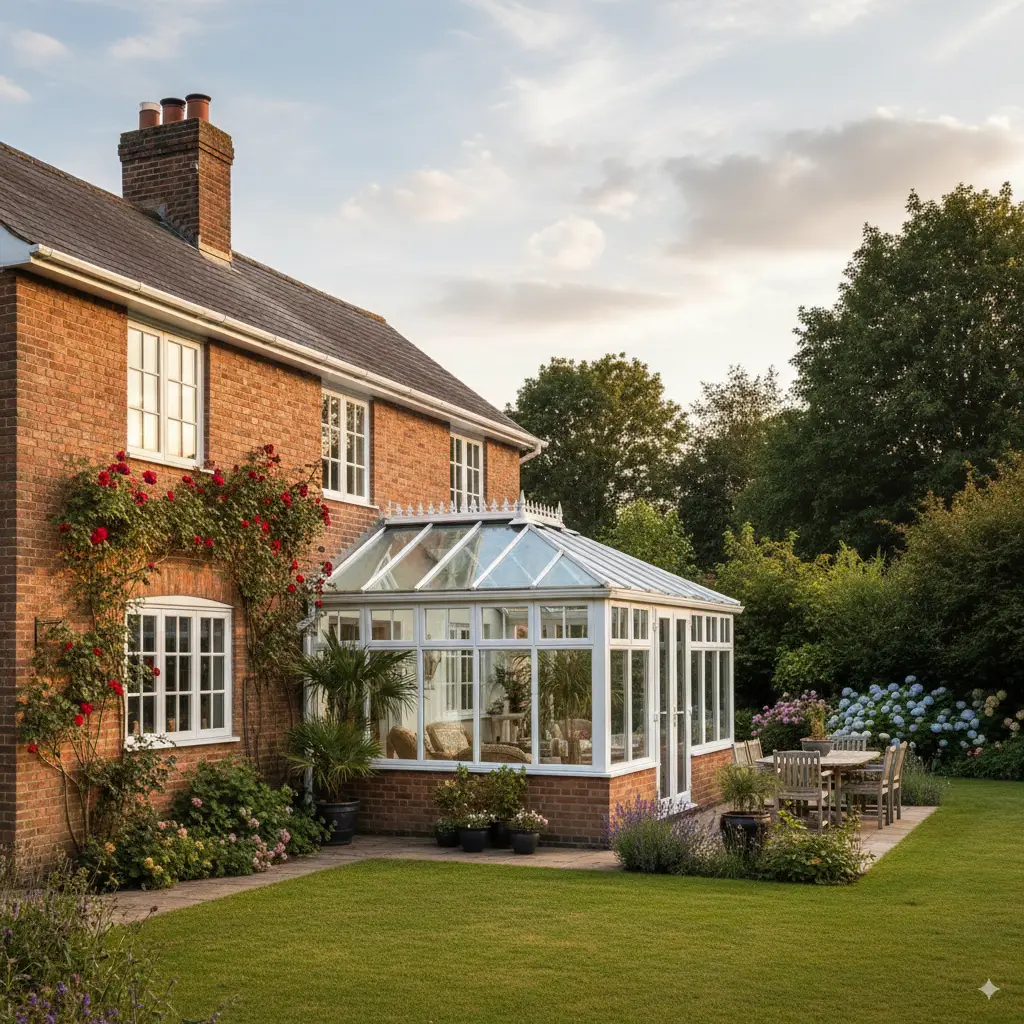
Adding a conservatory is one of the simplest ways to bring light, garden views and extra living space into your home. When it’s designed and specified well, a conservatory can feel like a natural extension of your kitchen or living area, offering a comfortable spot for dining, relaxing or working year-round. When the approvals and technical details are overlooked, the same project can end up delayed, uncomfortable to use in extreme seasons, or tangled in compliance issues.
This guide explains everything you should know before you start. You’ll learn when a conservatory may be built under permitted development, what building regulations might still apply, how the Party Wall etc. Act 1996 could affect your neighbour relations, when a build-over agreement is needed for public sewers, and how trees and soil conditions influence foundation design. Use this as a practical roadmap from first idea to stress-free completion.
Planning Permission for Conservatories
In most cases, a conservatory is treated like a single-storey rear extension. Many houses can build a conservatory without a full planning application if it meets the national limits and conditions for householder permitted development. This route is popular because it can be quicker and simpler than a formal application—provided the design fits the rules and no local restrictions remove permitted development rights.
Permitted development is not a blanket free-for-all. It is a carefully defined set of allowances. The key idea is that small, proportionate changes to a home can go ahead automatically if they meet standard criteria around size, height and position. If your conservatory exceeds any of the limits—or if your home falls into a designation where permitted development is restricted—you may need to apply for planning permission before building.
Common permitted development considerations include the depth added beyond the original rear wall, the overall height and the eaves height near boundaries, the relationship to the principal elevation and any highway, and the expectation that materials will be similar in appearance to the existing house. Flats and maisonettes do not benefit from the same householder rights. Properties in conservation areas, National Parks, Areas of Outstanding Natural Beauty and certain other designations can be subject to tighter controls or Article 4 directions that remove permitted development.
A frequent source of confusion is what counts as the “original” house. For the purposes of measuring extensions, “original” usually means the house as it was first built or as it stood on a defined base date. If your property has already been extended, the permitted development allowance may be partly or wholly used up by earlier additions. That is why accurate baseline drawings and measurements matter before you commit to a design.
If you are confident your design is within permitted development, it can still be sensible to apply for a Lawful Development Certificate. This is not a planning permission; it is an official confirmation that the proposal is lawful. It provides peace of mind for lenders, buyers and solicitors in future transactions and acts as a safeguard if planning policies change later.
If your conservatory will have features that fall outside the permitted development limits—such as an unusual roof form, a larger mass, or a position that affects a principal elevation—then a straightforward householder planning application is typically the right route. Clear, scaled drawings and a concise design statement focusing on appearance, neighbour amenity and garden character usually help the case.
Building Regulations for Conservatories
You’ll often hear that conservatories are “exempt” from building regulations. In practice, that exemption is conditional. It applies to small, thermally separated conservatories that meet a set of criteria around size, doors to the dwelling, heating, glazing and structure. The moment you remove the separation doors, open the space into the main house, or treat the conservatory as fully conditioned internal space, the exemption no longer applies and the relevant parts of the Building Regulations will come into play.
When controlled, the main Parts to expect are structure (foundation capacity and stability), fire safety (means of escape and fire-resisting construction where required), energy (insulation, thermal bridging and overall performance), ventilation (background and purge ventilation), protection from falling and impact (safety glazing where people could collide with panes), and electrical safety for any new circuits or special-location work. The design goal is a space that is safe, durable, and efficient to heat and cool.
Glazing deserves special attention. Safety glass in critical zones, thermal performance of the roof and walls, and the detailing of frames and junctions all matter to comfort and compliance. Large areas of south- or west-facing glazing can lead to summer overheating if you don’t combine solar control glass, opening lights and sensible shading. Conversely, draughts and cold bridging can make a conservatory feel gloomy and chilly in winter. Good drawings should spell out glass type, ventilation targets and construction notes so the builder knows exactly what is expected.
If you are replacing an old glass roof with a solid insulated roof, expect Building Regulations to apply. The structural implications of changing load paths, the condensation risk at junctions and the need for controlled ventilation have to be addressed. A quick swap without proper design can lead to long-term moisture and movement problems that cost far more to remedy than a compliant design would have done.
Party Wall Considerations for Conservatories
The Party Wall etc. Act 1996 is a neighbourly framework designed to prevent and manage disputes. It applies to certain types of work on or near a boundary. For conservatories, the most common trigger is excavation for foundations close to your neighbour’s building. If you excavate within three metres of a neighbouring structure and your new foundation will go deeper than theirs, you may need to serve notice. There is also a six-metre rule in specific cases where deeper excavations fall within a defined angle from the bottom of the neighbour’s foundation.
Working directly on a party wall—cutting into it to insert flashing, raising its height, or building a new wall astride the boundary—can also trigger the Act. Each type of work has its own notice period and information requirements. Serving notice in good time avoids last-minute delays and shows your neighbour that you are approaching the project professionally.
From a practical perspective, even where the Act does not strictly apply, early conversation with neighbours is invaluable. Conservatory sites are often accessed through side passages and gardens, which can raise temporary issues with privacy, storage of materials, or noise. A simple site plan, builder contact details and a mutually agreed schedule for noisy operations can go a long way to keeping relations cordial.
If notice is required and your neighbour consents in writing, the process can be quick. If they dissent, surveyors are appointed to agree an award that sets out how the work will proceed safely, often including a schedule of condition to record the neighbour’s property before work starts. Your designer can prepare suitable drawings and sections for the notice and help answer technical questions that neighbours commonly raise.
Build-Over and Build-Near Agreements (Public Sewers)
Rear gardens are a common route for public sewers and lateral drains. Because conservatories typically sit at the back of the house, your project might be directly above or close to a public sewer. Water companies want to protect access to these pipes and ensure that building loads are not transferred onto the pipework. If your new foundations are over or within a typical three-metre corridor of a public sewer, you will likely need consent before construction.
A build-over or build-near agreement usually requires you to submit drawings showing the location of the sewer relative to your foundations, the depth of the pipe, and the proposed method of protecting it. In many cases, manholes or inspection chambers cannot be enclosed within the conservatory footprint. Where that happens, the design often changes to relocate the chamber outside the new footprint, or a suitable diversion is agreed with the utility.
The foundation solution next to a sewer is often either a bridging detail—such as lintels or a short span beam that carries the load clear of the pipe—or a suspended slab that avoids placing weight above the corridor. For larger diameter sewers, building over may be prohibited and a diversion becomes the only option. Early checks, ideally before you submit planning or commit to a contractor, will save time and prevent redesign.
A sensible workflow is to mark the sewer route on your measured survey drawings, set the conservatory footprint accordingly, and show a typical protective section on the Building Regulations or technical drawings. Water companies may also ask for a pre-construction CCTV survey to confirm the condition of the pipe and connections, especially if you are spanning above or altering nearby levels.
Building Close to Trees (Including NHBC-Style Guidance)
Trees influence soil moisture and can cause seasonal ground movement in shrinkable clays. Their roots draw water in summer, shrinking the clay; when a large or thirsty tree is removed, the soil can rehydrate and swell, causing heave. Both effects risk cracking and distortion to shallow foundations. That is why many insurers and warranty providers publish guidance on foundation depths relative to tree species, maturity, height and distance from the proposed foundation.
As a rule of thumb, foundation design near trees is based on the soil type and the water demand of the species. Oaks, willows and poplars tend to have higher water demand; smaller ornamental species may have lower demand. The closer a high-demand tree stands to the new foundation, the deeper or more specialist that foundation may need to be. Options range from deeper trench-fill concrete to reinforced ground beams on piles. Where a mature tree is due for removal, the designer may also consider heave precautions.
If your property is within a conservation area or a Tree Preservation Order applies, you will need the appropriate consent to prune or remove trees. Beyond consents, think about practicalities: roots can be shallow and widespread, so trenching close to a tree may not be feasible without damaging stability. In some cases a pile-and-beam solution avoids major root cutting and offers a more robust long-term outcome.
The safest approach is to get a measured survey, note tree positions and species, and discuss them with your designer or engineer at concept stage. Where soil type is uncertain, a simple site investigation—hand-dug trial pit and a basic classification of the clay—provides invaluable information. Good drawings should record assumed soil type, foundation depth or type, and any tree-related notes so everyone is clear on the design intent.
Comfort, Performance and Year-Round Use
Regulations are about minimum standards. To make a conservatory feel like part of your home in every season, you’ll want to think about comfort and performance from the outset. Glazing is the first lever: choose a specification that balances thermal insulation with solar control. Roof design has a big impact on summer temperatures—larger glazed roofs look dramatic but need more shading and ventilation than solid or partially solid designs.
Ventilation strategy is your second lever. Combine background ventilation through trickle vents with controllable purge ventilation via opening lights or roof vents. Cross-ventilation is more effective than a single opening on one elevation, so it’s worth planning how air will actually move through the space. If you’re leaning toward a solid roof, consider rooflights to bring light deep into the plan without excessive heat gain.
How the conservatory connects to the house matters just as much. A wider opening improves flow but often means removing structural wall, which requires proper lintel or steel design and generally removes any Building Regulations exemption. It can be entirely worthwhile—just plan for the structural design, thermal detailing at the opening, and any temporary support during construction.
Floor levels and thresholds affect usability every day. Aim for flush or near-flush thresholds to the garden where drainage allows. Coordinate external levels so door sills are protected from standing water, and confirm any step-free access needs early so the builder can set the correct floor build-ups. If you are using underfloor heating, remember that conservatory glazing will change heat-up times; careful zoning and controls help avoid swings in temperature.
.
Step-by-Step: From Idea to Approved Drawings
Start with a clear brief. Write down how you plan to use the space—dining, playroom, home office, garden lounge—and what times of day matter most. This will influence glazing orientation, shading and heating choices. Sketch rough dimensions and think about roof form and materials so your designer understands the look and feel you want.
Next, check constraints. Look at permitted development limits, any designations such as conservation areas, and whether previous extensions used up your allowance. Ask whether there’s a public sewer within a few metres of the footprint; if there is, a build-over or build-near application may be needed. Note any mature trees or hedges near the proposed foundation line and consider soil conditions if you live in a clay area.
Commission a measured survey. Accurate base information saves time and avoids the subtle dimensional errors that creep in when you rely on estate-agent plans or rough sketches. If the geometry is complex, a laser scan provides a detailed point cloud that can be converted to precise CAD drawings for tracing elevations and setting accurate levels.
With a survey in hand, your designer can develop the planning or permitted development set. If you are using the permitted development route, request a tidy drawing package that demonstrates compliance and consider applying for a Lawful Development Certificate as proof. If householder planning is required, a concise, policy-aware statement that explains appearance, neighbour amenity and garden character helps the case.
In parallel, plan your technical route. If the conservatory will be thermally separated and modest in size, the Building Regulations exemption may apply; if it is open to the house, assume Building Regulations and prepare a technical set covering structure, insulation, ventilation and glazing. Where a build-over agreement is required, submit drawings and any CCTV survey to the water company. If the Party Wall Act is triggered, serve notice in good time so any award can be agreed before the contractor starts.
Costs, Timelines and Common Pitfalls
Every site and specification is different, but the process has typical timeframes. Drawings for a straightforward conservatory can be prepared in a week or two once the survey is complete. Lawful Development Certificates and householder planning applications generally target an eight-week decision period from validation. Building Control plan checks can take a couple of weeks, and site inspections happen during the build. Build-over agreements vary by utility, so it is smart to apply early.
The most common pitfalls are entirely avoidable with early checks. Designing first and discovering a public sewer later is a classic cause of redesign, cost and delay. Assuming the project is exempt from Building Regulations only to remove the separating doors during construction leads to compliance headaches and rework. Overlooking Party Wall triggers until the week the builder is ready to dig foundations causes friction with neighbours and programme slippage. Failing to consider tree influence on clay soils can result in cracking months or years after completion.
Budget for thermal comfort and details, not just headline size and glass area. Solar control glass, shading strategies, well-detailed thresholds and good ventilation cost far less than retrofitting fixes after the first hot summer or cold winter. If you intend to use the conservatory as a true living space all year, design it like a living space from the beginning.
.
Frequently Asked Questions
Are conservatories still allowed under current rules?
Yes. Conservatories remain a permitted form of development for many houses, provided size and position limits are met and local restrictions do not remove permitted development rights. When a design goes beyond those limits, a householder planning application is the normal route. Building Regulations may apply depending on how the space is separated, heated and constructed.
If my conservatory is “exempt,” do any building standards still apply?
Yes. Even where the exemption applies, you still need to use safety glazing in critical locations and build soundly. If you open the space to the main house, remove the external-quality doors, or integrate it with central heating, assume Building Regulations will apply and plan accordingly.
Do I always need a party wall agreement for a small conservatory?
Not always. It depends on the distance to your neighbour’s foundations and the depth of your own. Excavations within three metres and deeper than the neighbour’s foundations can trigger the Act, as can specific six-metre cases. Your designer or engineer can advise after reviewing your foundation design and the neighbour’s likely foundation depth.
Can I build a conservatory over a manhole?
Generally no. Manholes provide essential access to public sewers and are not meant to be enclosed within a building. The usual approach is to relocate the chamber outside the new footprint or to reconfigure the layout so it remains accessible. Where you are close to a sewer, expect to submit a build-over or build-near application.
What if there’s a large tree near the proposed footprint?
On shrinkable clay, trees can influence foundation design. You may need deeper trench-fill concrete, a piled solution with ground beams, or specific heave precautions depending on species, size and distance. If the tree is protected, you’ll also need consent for any pruning or removal. Early assessment saves cost and risk later.
How do I keep a conservatory comfortable all year?
Specify glazing that balances insulation and solar control, plan for effective background and purge ventilation, consider shading, and manage thermal bridges at junctions. If you open the conservatory to the main house, design it as a fully conditioned room rather than a bolt-on—your comfort will repay the effort.
What a Good Drawing Pack Includes
A complete conservatory drawing pack typically includes existing and proposed plans, elevations and sections at appropriate scales; a roof plan; a site plan with boundaries and access; and concise materials notes. For Building Regulations, add general arrangement drawings with structural notes, insulation build-ups, glazing specifications, ventilation targets, and any fire and access notes required by the design.
If the Party Wall Act is engaged, foundation sections and clear setting-out dimensions help the neighbour’s surveyor understand the proposal. If a build-over or build-near application is needed, provide plans that show the sewer route and protective details, along with a section demonstrating how loads are kept off the pipe and how access will be maintained.
Where trees are a factor, include notes on soil type (if known), any recommended foundation depth or type, and a clear statement of assumptions. If an arboricultural input is needed, flag that early so the programme reflects it. The better your drawings, the fewer queries from approvals bodies and contractors, and the smoother your build will be.
.
Pre-Build Checklist
Confirm whether your design qualifies for permitted development or whether you will submit a householder planning application or Lawful Development Certificate. Make sure you understand any local restrictions that might limit design freedom.
Decide whether the conservatory will be thermally separated from the house or fully open. If it will be open, assume Building Regulations and plan insulation, ventilation and structural support accordingly. If separated, confirm that the exemption criteria are met, including doors, heating and glazing.
Identify any public sewer or lateral drain within a few metres of the footprint. If present, plan foundations and chamber positions to maintain access and apply for a build-over or build-near consent early. This will prevent last-minute redesigns on site.
Consider whether the Party Wall Act is triggered by your excavation depth or by any work on a shared wall. If notices are required, serve them in good time and keep the tone cooperative. A clear, professional drawing set reassures neighbours and surveyors.
Assess tree influence, especially on clay. Decide whether deeper foundations or a different foundation type are prudent. If the tree is protected, factor in the consent process to your overall timeline.
Lock down specification details that will affect comfort—glass type, opening lights, trickle vents, shading, thresholds and heating approach. Agree a realistic programme with your contractor, including lead times for glazing and any structural components.
Pre-Build Checklist
A conservatory project moves swiftly when the approvals and technical pieces are addressed upfront. Start with a measured survey, confirm the planning route, and decide early on the Building Regulations position. If sewers or trees are a factor, design the foundations accordingly rather than leaving them to be discovered on site. Engage neighbours in good time where the Party Wall Act applies, and keep the communication friendly and factual.
When you’re ready, we can prepare policy-aligned planning drawings or permitted development packs, develop Building Regulations plans where required, assemble build-over application drawings, and provide clear sections for any party wall notices. If you don’t have measured information, we can undertake a survey and produce accurate CAD drawings to base the design on. With proper preparation, your conservatory can be comfortable, compliant and ready to enjoy in all seasons.

Quick Links
Get In Touch
Building 13, Thames Enterprise Centre, Princess Margaret Road, East Tilbury, Essex, RM18 8RH
- Phone: 0800 494 7023
- Hours: Mon-Fri 8:30AM - 5:30PM
Get In Touch
Building 13, Thames Enterprise Centre, Princess Margaret Road, East Tilbury, Essex, RM18 8RH
- Phone: 0800 494 7023
- Hours: Mon-Fri 8:30AM - 5:30PM