
Key Takeaways (Pros and Cons):
Vertical Expansion: Adding Upward

Vertical expansion, which entails constructing an additional storey atop a single story residence, affords considerable design flexibility, particularly for aging in place. Nevertheless, it demands substantial structural reinforcement to ensure stability. This methodology is illustrated in bungalow extension projects where the removal of the existing roof enabled the addition of 75 square metres at a rate of £2,000 per square metre—for a deep dive into planning and execution.
Structural and Engineering Needs
Evaluating the structural integrity of a home’s foundation constitutes the initial phase in pursuing vertical expansion. Structural engineers advocate for reinforcement through the installation of steel beams, with costs ranging from £8,000 to £16,000 for a standard 90 square metre second-storey addition, ensuring compliance with UK accessibility standards where applicable.
To establish a secure framework, adhere to the following enumerated procedures:
- Engage a design build team or structural engineer via ICE- or RIBA-registered professionals (for instance, through the ICE.org.uk or RIBA.org directories), where fees typically range from £1,500 to £4,000, and the initial evaluation process spans 2 to 4 weeks.
- Conduct a load-bearing analysis utilising specialised software such as ETABS; for beam calculations, employ the formula: Load = (Dead Load + Live Load) × Area, while ensuring adherence to UK Building Regulations (Approved Document A).
- Develop plans for roof removal or attic conversion, incorporating temporary wall supports at an estimated cost of $5,000 to mitigate the risk of structural collapse during construction.
Prevalent errors encompass the neglect of wind loading and foundation regulations in regions such as England and Wales, as outlined in UK Building Regulations and BS EN standards. A pertinent case study illustrates the failure of a cantilever addition due to inadequate reinforcement, necessitating £12,000 in emergency repairs (as documented in a UK building journal, 2022).
Key Cost Drivers
In vertical expansions, a staircase addition alone can increase costs by 15-20 per cent, with an average range of £12,000 to £24,000, according to BCIS 2023 construction data for a standard straight-run staircase in a second-story build. According to the Federation of Master Builders (FMB), vertical additions typically average £1,500 to £2,500 per square metre.
Key cost drivers include:
- Engineering fees, which account for approximately 10 per cent of the budget (e.g., £16,000 for a 90-square-metre project), to ensure structural integrity and provide a 15-20 per cent return on investment through compliance with safety standards.
- Roof modifications, ranging from £12,000 to £32,000, which can enhance property value by 8 per cent, as indicated by RICS studies.
- Foundation reinforcement, costing £8,000 to £20,000, contributing an additional 5-10 per cent to resale value.
- Planning permissions and building regulations, where requirements in England and Wales can elevate costs by 5-10 per cent due to height restrictions under the Town and Country Planning Act.
To mitigate these expenses, it is advisable to allocate a 20 per cent contingency budget for unforeseen issues, such as soil testing, and to engage local engineers early in the process for accurate cost estimates.
Horizontal Expansion: Adding Outward
Horizontal expansion, which entails constructing additions on the first floor, enables the maximisation of outdoor living spaces, such as sunrooms and California rooms, or indoor spaces like a family room, hobby room, exercise room, living room, bump out, mudroom, playroom, home office, kitchen expansion, in-law suite, or basement addition. However, this method is limited by the constraints of lot size and setback requirements.
For example, in England and Wales, projects involving 56-square-metre garage additions average £150 per square metre.
Foundation and Site Preparation
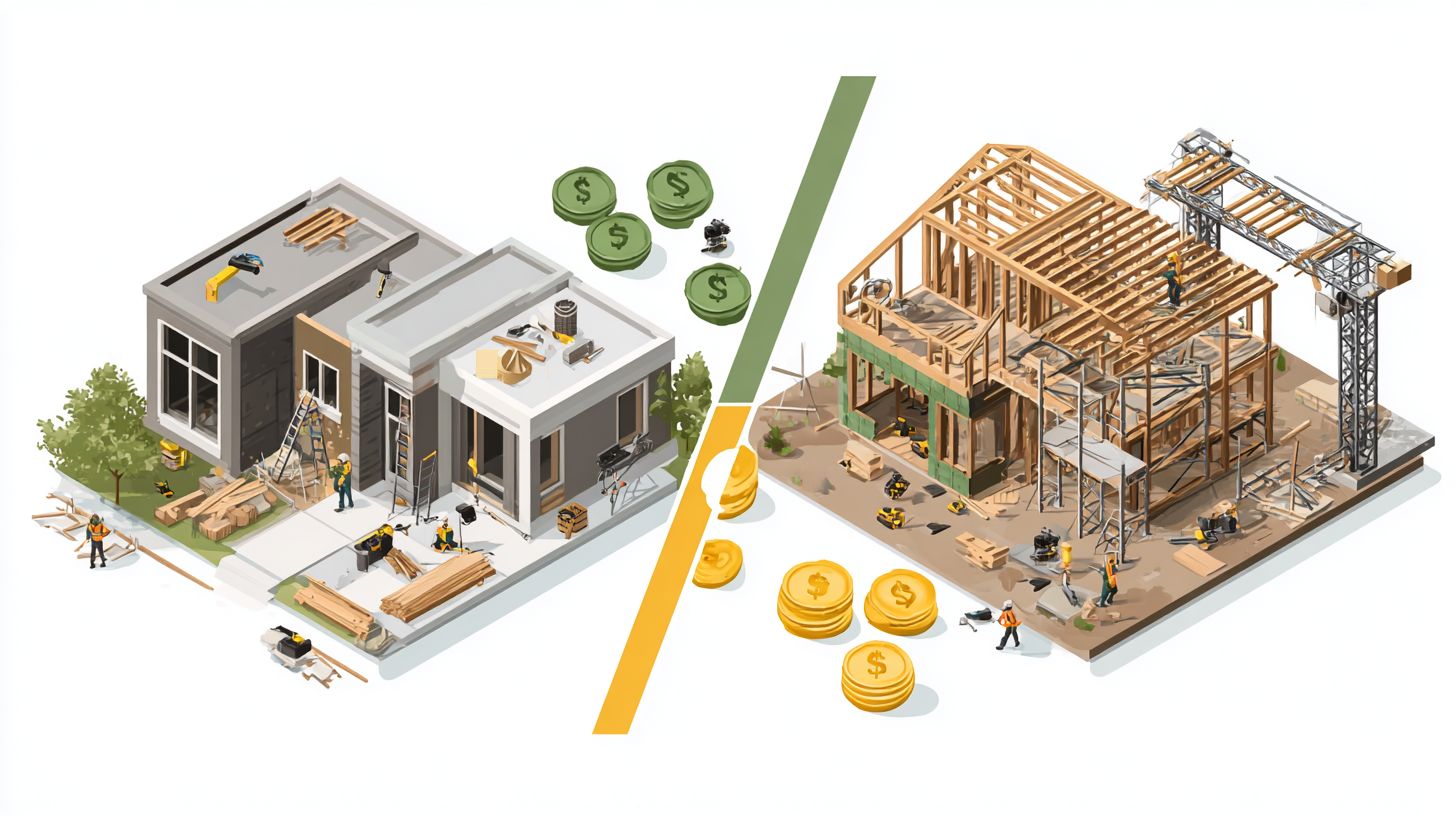
The preparation of a site for horizontal additions commences with foundation work, such as the excavation of a crawlspace at an estimated cost of $8,000 to $15,000, whilst ensuring strict compliance with local setback requirements to mitigate potential property line disputes.
To achieve effective site preparation, adhere to the following structured steps:
- Conduct a comprehensive plot survey (typically requiring 1-2 weeks and costing £400 to £1,200, utilising advanced tools such as Trimble GPS) to accurately map topography and underground services, whilst verifying planning compliance in accordance with local building regulations, including amendments to the UK Building Regulations as applied in England and Wales.
- Prepare the foundation (for example, pouring a concrete slab at $4 to $6 per square foot, over 3-5 days), engaging qualified contractors to level the ground properly and incorporate reinforcing bars for improved structural stability.
- Install appropriate drainage systems (such as French drains at $20 to $50 per linear foot, completed in 2-4 days) to prevent water pooling and related issues effectively.
Common pitfalls in this process include inadequate integration of landscaping, which can lead to soil erosion. In England and Wales, such transformations can cost £40,000, resulting in a 20% return on investment in property value, as documented in a 2022 study by the Royal Institution of Chartered Surveyors (RICS).
Key Cost Drivers
The costs associated with horizontal extensions are significantly influenced by site-specific factors. For instance, installations of drainage systems on sloping plots in England and Wales can add £8,000 to £20,000, as reported in the Institution of Civil Engineers (ICE)’ 2023 infrastructure report.
Overall, these projects average £80 to £200 per square metre, according to data from the Royal Institution of Chartered Surveyors (RICS) for 2023, with key budget considerations for square footage. The primary cost drivers unique to horizontal constructions include:
- Site preparation, which typically accounts for 15% of the total budget (for example, £9,600 for levelling a 46-square-metre plot to ensure structural stability).
- Foundation selections, where a crawl space foundation incurs an additional $5 to $10 per square foot compared to slab options, particularly on uneven terrain.
- Utility extensions, such as the rerouting of plumbing lines, ranging from $4,000 to $15,000 depending on the distance involved.
- Post-construction landscaping restoration, estimated at $3,000 to $8,000 for replanting and levelling affected garden areas.
To effectively manage these expenses, implement phased budgeting by allocating 40% of the budget upfront to site preparation activities. Regarding return on investment, a £32,000 kitchen extension frequently results in a 12% annual increase in property value, based on RICS studies.
Direct Cost Comparison
The direct costs associated with vertical and horizontal additions exhibit notable differences, wherein horizontal constructions are typically 20-30% more economical, at approximately £120 per square metre, compared with £200 per square metre for vertical additions. These figures are derived from the 2023 estimates published by the Royal Institution of Chartered Surveyors (RICS) for projects encompassing 93 square metres (as referenced in the UK Government’s Rating Cost Guide 2023).
Material and Labour Breakdown
Material costs for a 37-square-metre kitchen extension in a horizontal extension amount to £32,000, representing 40% of the total budget. In contrast, labour expenses for a vertical master suite extension reach £48,000, primarily due to the challenges associated with working at height, as indicated by data from the Royal Institution of Chartered Surveyors (RICS).
| Category | Vertical Cost | Horizontal Cost | Example | |—————|—————|—————–|———————————————-| | Materials | $24,000 | $20,000 | $100/sq ft for timber/insulation vs. $80/sq ft for slabs | | Labour | $60,000 | $45,000 | $150/hr for scaffolding vs. $120/hr for ground-level; garage extension 25% less for horizontal | | Permits/Fees | $5,000 | $3,000 | Zoning variances for height add 50% extra | | Equipment | $10,000 | $6,000 | Cranes/scaffolding vs. basic tools | | Total (400 sq ft) | $120,000 | $90,000 | Per RSMeans 2023 averages |In practical applications, Legal Eagle Contractors provided a quote of $120,000 for a vertical master suite extension, compared to $90,000 for a comparable horizontal garage addition, achieving a 25% reduction in labour costs through ground-level operations while considering construction disruption.
Homeowners frequently opt for horizontal extensions when budgets are constrained to under $100,000, thereby avoiding the additional requirements for safety equipment associated with vertical construction.
Considering budget considerations and construction disruption, it is advisable to consult RSMeans data for site-specific modifications to accurately optimise project costs.
Permitting and Regulatory Fees
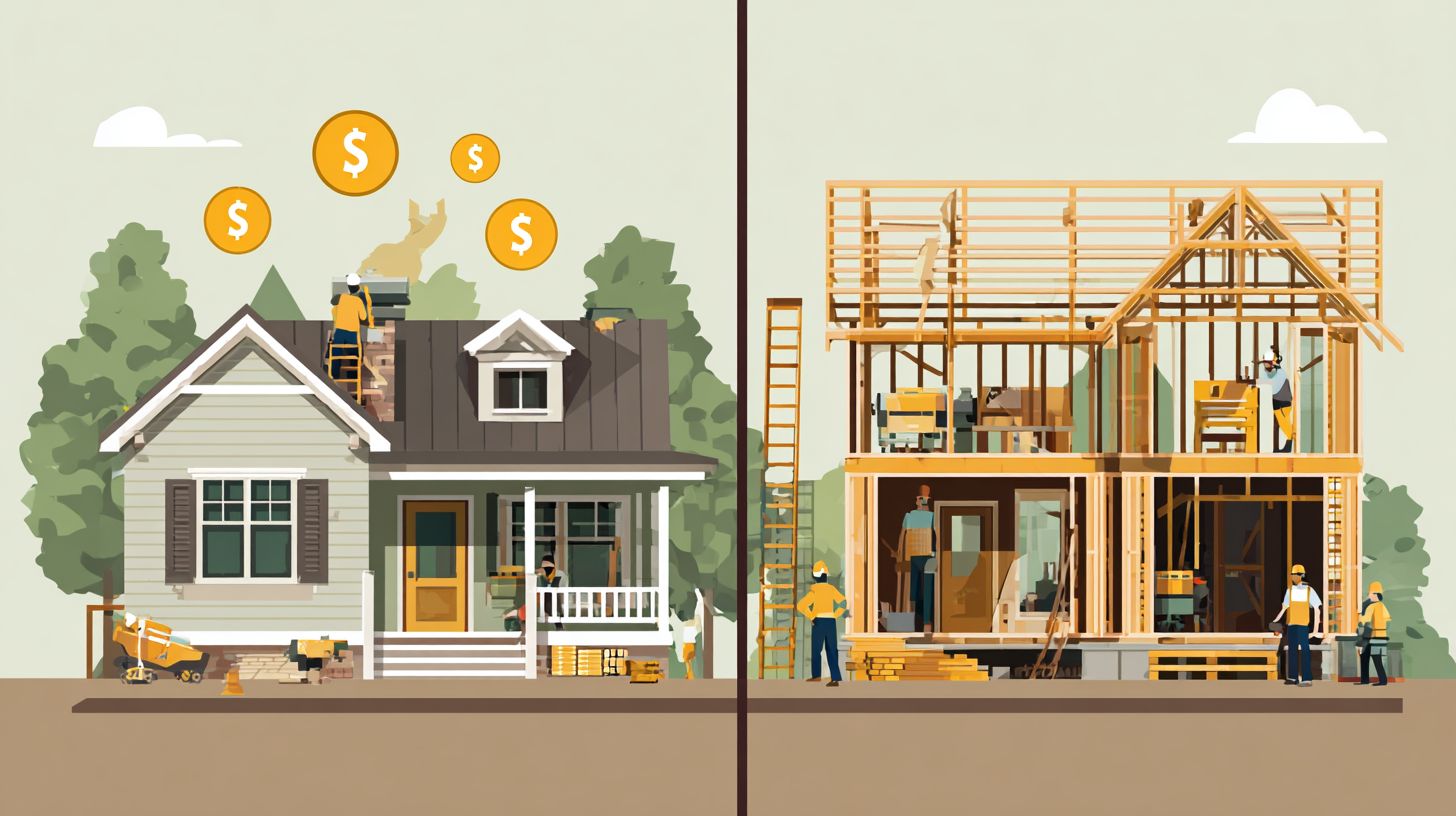
Permitting fees for vertical home additions in Houston typically range from $5,000 to $10,000, attributable to more stringent neighborhood zoning regulations, in contrast to $2,000 to $5,000 for horizontal additions, as specified in the city’s 2022 building code updates. Vertical expansions necessitate comprehensive height reviews and structural engineering certifications, which frequently incur an additional 20% in fees—for instance, $3,000 for required certifications—pursuant to Texas Local Government Code Chapter 214.
In comparison, horizontal additions primarily involve site plan submissions to ensure compliance with setback requirements, generally requiring land surveys costing approximately $1,500.
A notable 2023 case in Meyerland illustrated the potential impact of zoning delays, which resulted in an additional $4,000 in extended consultant fees.
To initiate the process:
- Verify applicable homeowners’ association (HOA) rules through their online portal, allowing approximately one week for completion.
- Submit permit applications via the Houston Permitting Centre’s ePlan portal, accompanied by scaled architectural drawings.
It is advisable to engage a local architect at an early stage to minimise the need for revisions.
Indirect and Long-Term Costs
Indirect costs, such as construction disruptions, can prolong the project timeline by 4 to 6 months for vertical additions, resulting in a 15% increase in utility bills. In contrast, horizontal constructions reduce this disruption to 2 to 3 months, according to a 2021 study published in the Journal of Construction Engineering.
Key challenges associated with vertical expansions include the following:
- Disruptions arising from staircase installations, which can lead to 30% additional downtime. These can be mitigated by installing a $2,000 temporary wall to isolate work areas.
- Increased maintenance expenses, such as $5,000 annual adjustments to HVAC systems following roof removal. To address this, incorporate ADA-compliant ramps to facilitate seamless ageing-in-place access.
- Potential cost overruns of up to 25% due to unforeseen structural reinforcements. Employ phased permitting processes to control and limit expenditures.
- Energy inefficiencies that elevate long-term utility bills by 10%. Consider horizontal designs featuring NAHB-recommended flexible layouts, which improve insulation performance.
Horizontal outdoor living spaces can achieve a 15% higher resale value, as reported in the National Association of Home Builders’ (NAHB) 2022 Cost of Doing Business Study, with a return on investment realised within 5 to 7 years.
Factors Influencing Which is Cheaper
Plot size represents the primary consideration in determining the most cost-effective approach, with horizontal additions proving 25% less expensive on plots exceeding 0.25 acres, whereas vertical expansions are preferable for smaller properties under 0.1 acres, as outlined in a 2023 Urban Institute report on Houston suburbs.
Several additional factors influence this decision and their pros cons, encompassing five principal elements, each accompanied by practical recommendations.
- Existing Subfloor Space: The presence of an existing subfloor space can reduce horizontal foundation costs by approximately £8,000, according to estimates from the Federation of Master Builders (FMB), making it particularly suitable for ground-level extensions.
- Management Company Requirements: Vertical constructions frequently encounter restrictions that increase associated fees by 10%; it is advisable to review leasehold covenants through local authority records to prevent project delays.
- Soil Stability: A 2022 study by the Institution of Civil Engineers (ICE) advocates for vertical methods in areas with clay-heavy soils, thereby avoiding up to £12,000 in necessary reinforcements —a conclusion supported by an extensive review in the Journal of Rock Mechanics and Geotechnical Engineering on emerging trends in expansive soil stabilisation.
- Budget Allocation: Horizontal expansions are more advantageous for plots greater than 465 square metres, offering potential savings of 20% on excavation expenses.
- Planning Compliance: Consulting local planning regulations early—such as those in London’s building regulations—can minimise cost overruns by 15%.
For illustrative purposes, a basement addition on a 0.12-hectare plot typically incurs costs of £95 per square metre, compared with £65 per square metre for an attic conversion on a 0.02-hectare plot, thereby balancing spatial expansion with permitting requirements.
Recommendations for Homeowners
For families requiring a granny flat, it is recommended to prioritise horizontal expansion when plot size permits, with a budget of approximately £80,000 for a 74 square metre addition, including boot room integration, as advised by industry experts.
Adhere to the following five best practices to achieve successful home additions:
- Engage with qualified professionals during the early pre-design phase (allowing one month lead time and a £800 consultation fee) to evaluate planning requirements and obtain necessary permissions.
- Utilise design software, such as SketchUp (£80), to visualise layouts, which is particularly effective for integrating features like playrooms or home offices.
- Select vertical expansions in urban environments for compact home office additions, thereby optimising space utilisation without encroaching on garden areas.
- Opt for horizontal layouts when incorporating conservatories or family rooms to maximise natural light and improve overall flow.
- Plan construction during off-peak seasons to reduce disruptions, and consider modular construction methods to expedite project timelines.
Recently, a homeowner in London completed a horizontal exercise room addition as part of a home renovation for £60,000, yielding an 18% return on investment according to Federation of Master Builders (FMB) data. This success was attributed to the inclusion of budget contingencies and a phased construction approach that minimised impact on family activities.
Frequently Asked Questions

Is it cheaper to expand a house up or out? What factors should I consider?
Determining if it is cheaper to expand a house up or out depends on several factors, including your property’s foundation strength, local zoning laws, and the existing roof structure. Expanding out often costs less upfront because it avoids major structural reinforcements needed for adding a second story, but vertical expansions can be more cost-effective long-term by preserving yard space and potentially increasing property value more significantly. Always consult a structural engineer for a site-specific assessment.
Is it cheaper to expand a house up or out in terms of foundation work?
When asking if it is cheaper to expand a house up or out, foundation considerations play a key role. Expanding outward typically requires extending the existing foundation, which can be straightforward and less expensive—around £4,000 to £12,000 depending on soil conditions. However, going up demands reinforcing the current foundation to support additional weight, potentially costing £16,000 or more, making outward expansion cheaper in most cases unless your foundation is already robust.
Is it cheaper to expand a house up or out for small lots?
For homeowners wondering if it is cheaper to expand a house up or out on a small lot, vertical expansion is often the more practical and sometimes cheaper option. Outward additions might be limited by boundary restrictions under building regulations and garden space, leading to higher planning permission and landscaping costs. Upward builds, while involving roof removal (about £8,000–£24,000), can save on site preparation and maximise usable land, potentially reducing overall expenses by 10–20% compared to constrained horizontal expansions.
Is it cheaper to expand a house up or out regarding roofing and utilities?
Addressing if it is cheaper to expand a house up or out, roofing and utility rerouting are critical. Outward expansions usually involve simpler roof extensions, costing £4,000–£8,000, and minimal plumbing/electrical adjustments. Upward expansions require a full roof removal and rebuild (up to £40,000) plus extensive utility modifications through floors, making horizontal growth cheaper by 30–50% in these areas, though energy-efficient vertical designs might offset costs over time.
Is it cheaper to expand a house up or out in urban vs. rural areas?
If you’re evaluating if it is cheaper to expand a house up or out, location matters: in urban areas with height limits and premium lot values, going up can be cheaper by avoiding expensive land adjustments, with costs around £120–£200 per square metre. In rural settings, outward expansions are often more affordable due to fewer restrictions and lower labour rates (£80–£160 per square metre), but always factor in local building regulations which could tip the scales.
Is it cheaper to expand a house up or out for resale value impact?
Considering if it is cheaper to expand a house up or out from a resale perspective, outward additions generally provide better short-term ROI at lower initial costs (£80–£160 per square metre) by increasing ground-level living space, which appeals to families. Vertical expansions, costing £160–£320 per square metre due to complexity, can boost value more (up to 70% return) in dense neighbourhoods by adding bedrooms without sacrificing outdoor areas, so the “cheaper” choice depends on your market and long-term goals.