
Other aspects of permitted development include loft conversions, porches, and the installation of chimneys, flues, soil vent pipes, and antennas.
Key Takeaways:
Understanding Permitted Development Rights
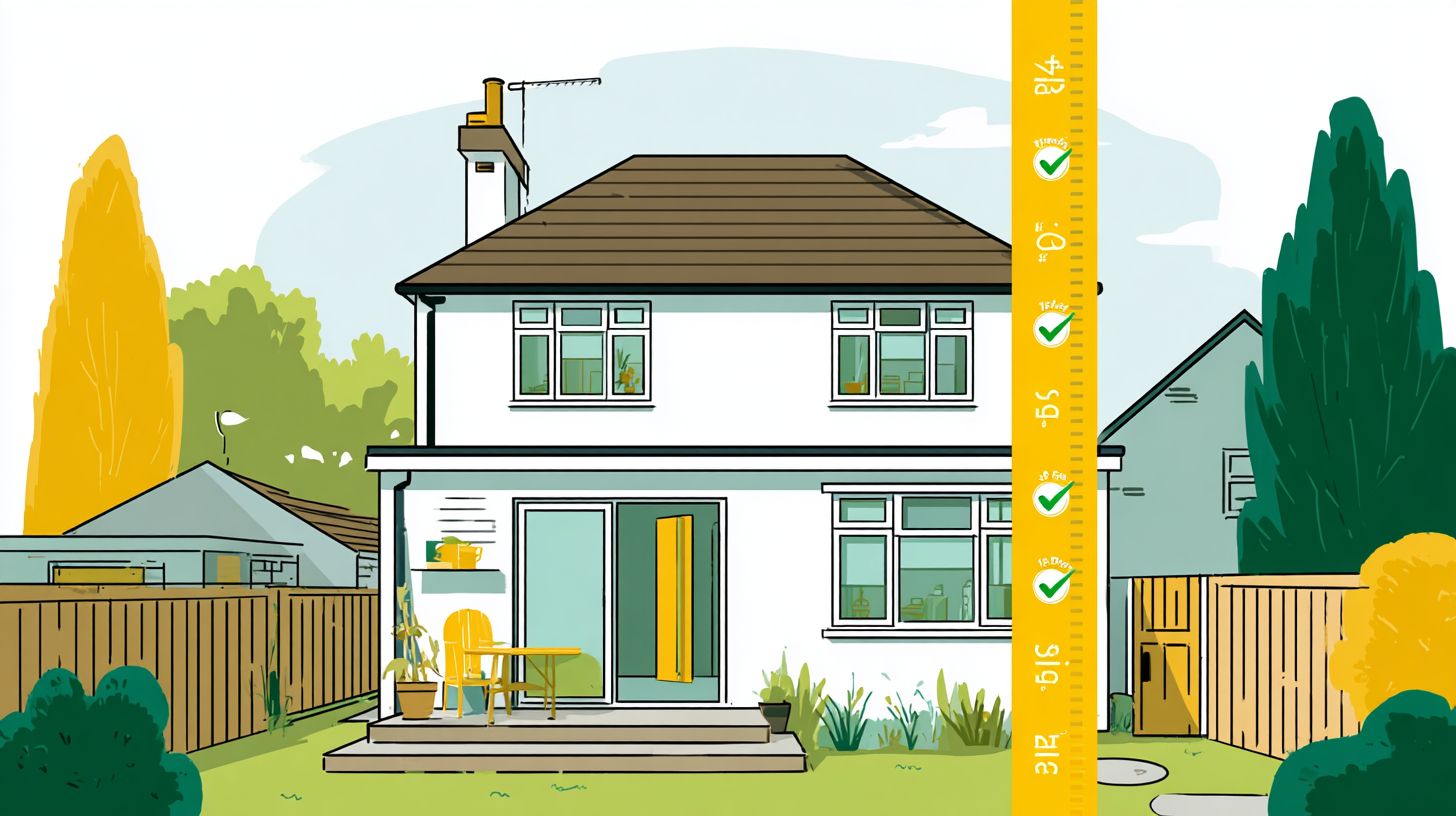
Permitted development rights in England, as outlined in the Town and Country Planning (General Permitted Development) (England) Order 2015, enable homeowners to extend their original house with added volume up to 50 cubic metres for semi-detached or terraced houses (or 70 cubic metres for detached houses) without requiring full planning permission, in line with guidance from GOV.UK. This provision results in average savings of £1,200 in application fees, according to data from the Planning Portal.
These rights encompass approximately 70% of minor home improvements, in line with reports from the Royal Town Planning Institute (RTPI), thereby facilitating cost-effective property enhancements. For example, the addition of a 3-metre single-storey rear extension to a detached house—classified under Article 2(3) as structures on land, excluding flats or designated areas—can generate a £15,000 return on investment by increasing the property’s value. [Learn more about single storey rear extensions](https://www.survdesign.co.uk/architectural-services/extension-plans/single-storey-rear-extensions/) and their planning details to maximise your home’s potential.
Guidelines from the Ministry of Housing, Communities and Local Government define the ‘original house’ as the building in its state as of 1 July 1948, or at the date of its construction if subsequent. This ensures eligibility for established properties.
Homeowners are advised to confirm boundaries through prior approval applications to prevent potential disputes.
Key Factors Affecting Extension Size Limits
The size limits for extensions under permitted development rights differ considerably depending on the property type and location. In designated land, such as national parks, these restrictions can reduce permissible projections by up to 50%, in accordance with the provisions of the Town and Country Planning (General Permitted Development) Order 2015. Those interested in practical examples for specific projects like 2 storey side extensions might find our 2 Storey Side Extension Guide | Planning & Build helpful for navigating these rules.
Property Type (House vs Flat)
Detached houses benefit from more extensive permitted development rights, permitting rear projections of up to 4 metres for single-storey extensions, whereas flats and maisonettes are generally excluded from these provisions under Class A of the Town and Country Planning (General Permitted Development) Order 2015.
To effectively navigate these regulations, it is advisable to compare property types based on the permitted development limits outlined in the Town and Country Planning (General Permitted Development) Order 2015. It is essential to consult local planning authorities for verification, as Article 4 directions may impose restrictions on these rights.
| Property Type | Max Single-Storey Projection | Max Two-Storey Projection | Applicability | Examples |
|---|---|---|---|---|
| Detached House | 4m rear, 3m side | 3m rear (total 7m) | Full rights | 1930s semi in suburb |
| Terrace House | 3m rear, no side at ground | 3m rear (total 7m, restrictions) | Partial | Victorian row in city |
| Flats/Maisonettes | 0m | N/A | None | 1960s block requiring full permission |
In terms of return on investment, extending a terrace house may increase its value by £20,000, according to Royal Institution of Chartered Surveyors (RICS) data; however, non-compliance, especially in listed buildings or involving change of use, carries the risk of enforcement action, including fines up to £20,000 or more. It is recommended to engage a qualified surveyor and comply with the party wall act prior to commencing any work to ensure full compliance and optimise potential returns.
Location and Conservation Areas
Properties in Conservation Areas or National Parks may have their permitted development rights removed or restricted by Article 4 Directions, which can limit or prohibit certain extensions without full planning permission. According to Historic England, many applications in these areas require full planning permission due to local restrictions.
Effectively navigating these restrictions necessitates a thorough understanding of the associated challenges.
- In some World Heritage Sites such as Bath, specific local rules may restrict eaves heights, for example to a maximum of 3 metres. To confirm compliance, applicants should submit an application for a Lawful Development Certificate to the relevant Local Planning Authority.
- Areas designated as Outstanding Natural Beauty, including the Cotswolds, impose bans on certain materials such as uPVC. Instead, authentic finishes like oak cladding or lime render are required to maintain historical and aesthetic integrity.
- In the Broads, boundary projections are limited to a maximum of 2.5 metres. Applicants are advised to consult the Royal Town Planning Institute (RTPI) guidelines for accurate measurements.
- The Community Infrastructure Levy, ranging from £50 to £200 per square metre, is applicable. To manage associated costs, it is recommended to incorporate budgeting considerations during the prior approval process.
In a notable case within a York Conservation Area, a proposed 4-metre extension was revised to 2.5 metres following neighbour consultation, ultimately securing approval without the need for appeals through the preparation of detailed planning drawings, as documented in the Historic England 2022 report.
Single-Storey Rear Extensions
Single-storey rear extensions represent the most flexible permitted development option available, allowing for projections of up to 4 metres from the original rear wall on detached houses. According to data from the Ministry of Housing, this type of extension accounts for 40% of all home extensions undertaken (Source: MHCLG Statistics).
Maximum Dimensions

Regarding single-storey rear extensions, the maximum projection permitted is 3 metres from the rear wall for terraced or semi-detached houses and 4 metres for detached houses. The total ground area covered by the enlargement, together with previous permitted enlargements, must not exceed 50% of the total area of land surrounding the original house.
To ensure compliance with the Town and Country Planning (General Permitted Development) Order 2015, the following steps should be followed:
- Determine the position of the original rear wall by consulting 1948 Ordnance Survey plans available through the Planning Portal. This process typically requires approximately 30 minutes. To prevent inaccuracies, exclude any pre-existing extensions from the assessment.
- Measure the projection using a precise tool, such as the Bosch GLM50 laser measure (approximately £100). Projections must be limited to 3 metres for terraced or semi-detached properties and 4 metres for detached properties.
- Evaluate the total enlargement with the aid of planning software (estimated time: 1 hour). The ground area covered must not exceed 50% of the total area of land surrounding the original house.
For instance, in the case of a terraced house in England where a 2.5-metre by 4-metre extension is proposed, the development remains compliant, as confirmed by local planning authorities.
Height and Eaves Restrictions
Single-storey rear extensions are required to maintain an eaves height that does not exceed the eaves height of the original house, with a total height limited to under 4 metres. For pitched roofs, the pitch must align with the original roof pitch, which typically ranges from 20 to 40 degrees.
Eaves are the lowest point where the roof meets the wall and must not exceed the height of the original house’s eaves from ground level. To ensure compliance, it is advisable to measure the original eaves height using a precise laser distance tool, such as the Bosch GLM 20 (available for under £50).
For instance, if the original eaves height is 2.5 metres, the extension’s eaves must remain at or below this level; flat roofs are permitted a maximum total height of 4 metres. For pitched extensions, the new roof pitch must precisely match the original—for example, if the original pitch is 25 degrees, the extension must adhere to this to prevent rejection.
In designated conservation areas, such as National Parks or Areas of Outstanding Natural Beauty, enforcement is more stringent. A notable case from the Cotswolds in 2022 demonstrates this, where approval was granted for a 25-degree pitch extension, thereby avoiding a £1,000 planning enforcement fine. It is recommended to seek pre-application advice from the local authority and to prepare simple sketches for visualization: extend the original eaves line horizontally and cap the new roof peak at no more than 4 metres.
Two-Storey Rear Extensions
Pursuant to Class A.1(e) of the 2015 Order, two-storey rear extensions are permitted solely for detached houses, with a maximum projection of 3 metres from the original rear wall of the dwelling, provided that the extension does not cover more than 50% of the curtilage of the original building.
Size and Projection Limits
Two-storey extensions must not project more than 3 metres from the rear wall of the original house, with a minimum separation of 7 metres to the rear boundary or any highway. The total volume of the enlargement must not exceed 70 cubic metres for detached houses.
These parameters are governed by UK permitted development rights for houses (excluding flats maisonettes), as outlined by the Planning Portal (2023) and Ministry of Housing,Communities and Local Government, and may vary depending on the type of house. Two-storey extensions face greater restrictions for semi-detached or terraced properties.
| House Type | Max Projection | Min Boundary Gap | Volume Limit | Best For |
|---|---|---|---|---|
| Detached | 3m | 7m | 70m³ | Family homes |
| Semi/Terrace | N/A | N/A | Not permitted under standard PD rights | Urban rows |
For planning purposes, applicants may utilise Google Earth, a free tool, to conduct preliminary boundary assessments, which typically require approximately 15 minutes. A frequent error involves overlooking proximity to highways, resulting in approximately 20% of applications being rejected, according to Planning Portal data.
It is advisable to consult the local planning authority for guidance tailored to specific site conditions.
Side Extensions
Side extensions under permitted development rights are restricted to single-storey constructions with a maximum height of 4 metres and must be positioned at least 2 metres from the boundary. These provisions are particularly suitable for detached houses seeking to incorporate additional garage space without requiring formal planning permission.
To ensure full compliance, adhere to the following best practices:
- Align the roof pitch with that of the original structure (between 20 and 40 degrees), using a free smartphone app for measuring angles (approximately 20 minutes).
- Omit balconies or raised platforms in accordance with Class A.1(i) regulations; confirm compliance through visual references on the Planning Portal.
- Limit the extension width to no more than 50% of the original side wall (for example, 2 metres on a 4-metre wall).
For instance, a detached house in England may incorporate a 3 m x 2.5 m side extension located 2 metres from the boundary, in full alignment with the guidelines outlined by the UK Government’s Planning Portal. Such an addition can increase the property’s value by £10,000, according to industry data.
Loft Conversions and Roof Extensions

Under permitted development rights in Class B, loft conversions for detached houses may enlarge the building by up to 40 cubic metres, while other types of houses are permitted up to 50 cubic metres. Roof lights must not exceed 1.7 metres above the eaves height, and volume calculations exclude existing structures such as chimneys or flues.
Dormer extensions are subject to specific restrictions: no side-facing dormers are permitted on the principal elevation, and where there is potential overlooking of neighbouring properties, obscure-glazed roof lights must be installed in compliance with planning conditions to ensure privacy.
To advance with a project in accordance with these regulations:
- Calculate the proposed volume (not exceeding 40 cubic metres for detached houses) using architectural design software featured in our Loft Conversion Plans, while subtracting the volume of any existing structures.
- Ensure roof lights are positioned so that they do not overlook highways, in line with requirements from the relevant highway authority.
Case study: A terraced house underwent a loft conversion that added 30 cubic metres via a rear dormer, secured through prior approval. Note that in Conservation Areas, permitted development rights may be restricted, often requiring full planning permission. The project incurred costs of £25,000 and yielded a 15% return on investment, primarily through the enhanced value of an additional bedroom.
Exceptions Requiring Prior Approval
Larger single-storey rear extensions measuring 4 to 8 metres (in England), along with most side and loft conversions, necessitate prior approval from the Local Planning Authority. This process includes a mandatory neighbour consultation period of 42 days, as stipulated by the Town and Country Planning (General Permitted Development) (England) Order 2015.
To manage this procedure successfully, it is essential to address potential challenges proactively. The following considerations are recommended:
- Neighbour objections frequently arise due to concerns over loss of privacy. These can be mitigated by issuing a Party Wall Act notice at least two months in advance, with associated solicitor fees typically amounting to £200.
- Compliance with Building Regulations is imperative, particularly with regard to fire safety. Adherence to BS 9991 standards for escape routes and materials must be ensured.
- In the case of listed buildings, full planning permission is required, and early consultation with Historic England is advised.
Many applications that meet compliance standards receive approval. For example, a 6-metre rear extension in Kent was granted permission following comprehensive neighbour consultation, underscoring the value of thorough preparation.
Steps to Confirm Compliance
Obtaining a Lawful Development Certificate, with fees starting from £103 for householder applications in England (submitted via the Planning Portal), verifies compliance for permitted development extensions. This certification helps mitigate the risk of enforcement notices, which may impose fines of up to £20,000 in serious cases.
To obtain such a certificate, adhere to the following procedure:
- Examine relevant property documentation: Retrieve original house plans from the Land Registry for a fee of £3, a process that typically takes one hour. Refrain from presuming the status of any additions made after 1948, in accordance with the Town and Country Planning Act 1990.
- Verify measurements against regulatory limits: Employ a precision tool such as a Bosch laser measure (approximately £100, requiring about two hours) to assess eaves, boundaries, and height restrictions under Permitted Development Rights—for instance, a maximum of 4 meters for pitched roofs.
- Submit an application where necessary: Lodge the request online through the Planning Portal for prior approval, an evaluation process spanning up to eight weeks. Note that a Community Infrastructure Levy may apply in some areas, with rates varying by local authority (e.g., £50 per square meter in certain zones).
- Engage professional expertise as required: In conservation areas, retain a chartered surveyor affiliated with the Royal Town Planning Institute (RTPI) for a fee of around £500.
Common oversights include overlooking Article 4 Direction that may remove some permitted development rights, exemptions for solar panels under Class A.1(k) or utilising impermeable hard surfaces, which must be replaced with permeable alternatives to comply with applicable regulations.
Frequently Asked Questions
How big of an extension can you do without planning permission?
In England and Wales, under permitted development rights, you can typically build a single-storey rear extension up to 3 metres in depth for a semi-detached or terraced house, or 4 metres for a detached house, without needing planning permission (subject to prior approval for larger sizes). Side extensions are more restricted and often require planning permission, but where permitted, must not exceed 4 metres in height and half the width of the original house. Always check local restrictions.
What are the size limits for single-storey rear extensions without planning permission?
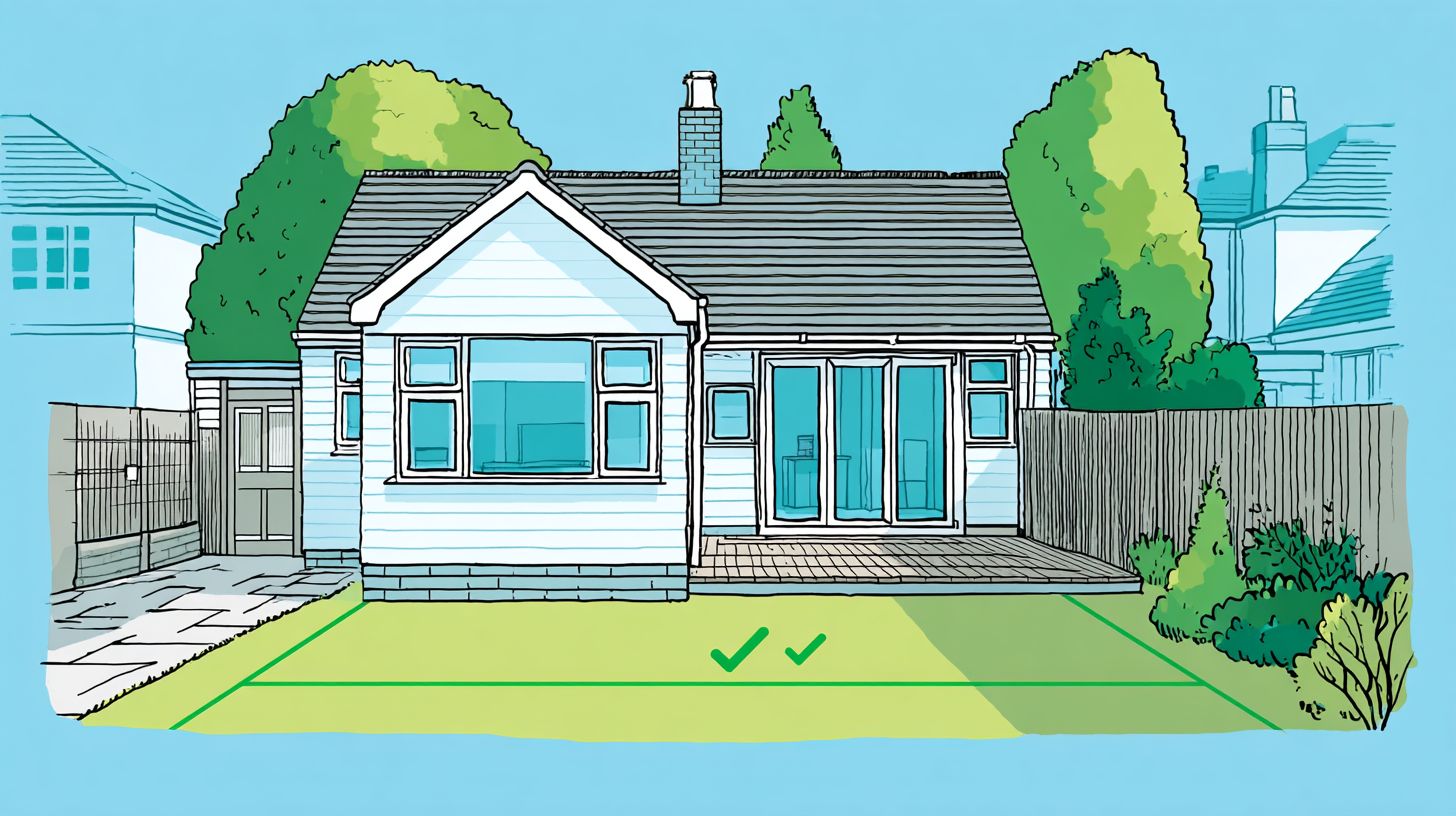
For single-storey rear extensions, the maximum depth is 3 metres for semi-detached or terraced homes and 4 metres for detached properties, provided the extension doesn’t exceed half the width of the original house. How big of an extension can you do without planning permission? These limits apply under permitted development, but you may need prior approval for larger ones up to 8 metres.
Can I build a two-storey extension without planning permission, and how big can it be?
Two-storey extensions generally require planning permission. Permitted development rights in England and Wales do not allow two-storey side extensions without permission; however, single-storey side extensions are permitted up to 4 metres in height if set back from the front by at least 1 metre and meeting other conditions such as not exceeding half the width of the original house. How big of an extension can you do without planning permission? For two-storey options, they are very restricted—often limited to rear extensions not exceeding 3 metres in depth—and full permission is usually needed to avoid issues.
How big of an extension can you do without planning permission in a conservation area?
In a Conservation Area, National Park, Broads or World Heritage Site in England and Wales, permitted development rights are more limited, so single-storey rear extensions are capped at 3 metres depth for all house types, and side extensions are prohibited entirely under permitted development. How big of an extension can you do without planning permission? Always consult your local council, as additional rules, such as Article 4 directions, could reduce sizes further to preserve the area’s character.
What height restrictions apply to extensions without needing planning permission?
Under permitted development in England and Wales, single-storey extensions cannot exceed 4 metres in height, the height of the eaves must not exceed the existing house, and for extensions within 2 metres of a boundary, the height cannot exceed 3 metres. For other extensions, the maximum eaves height is 3-4 metres depending on the roof type and proximity to boundaries. How big of an extension can you do without planning permission? Height limits ensure the extension doesn’t overshadow neighbours, and exceeding them typically triggers the need for full planning approval.
Do loft conversions count towards extension size limits without planning permission?
Loft conversions can add up to 40 cubic metres of space for terraced houses or 50 for detached/semi-detached without planning permission, but they must not extend beyond the original roof slope. How big of an extension can you do without planning permission? These are separate from ground-level extensions, so combining them requires checking total permitted development volume to stay compliant.