
Dreaming of Expanding Your UK Home? Adding a single storey extension to your house can transform your living space without the hassle of full planning permission. Under permitted development rights, many homeowners qualify for these extensions, bypassing traditional applications if rules are met. This guide breaks down eligibility, size limits, location restrictions, and more—empowering you to plan confidently and avoid costly pitfalls.
Key Takeaways:
Eligibility Criteria for Houses
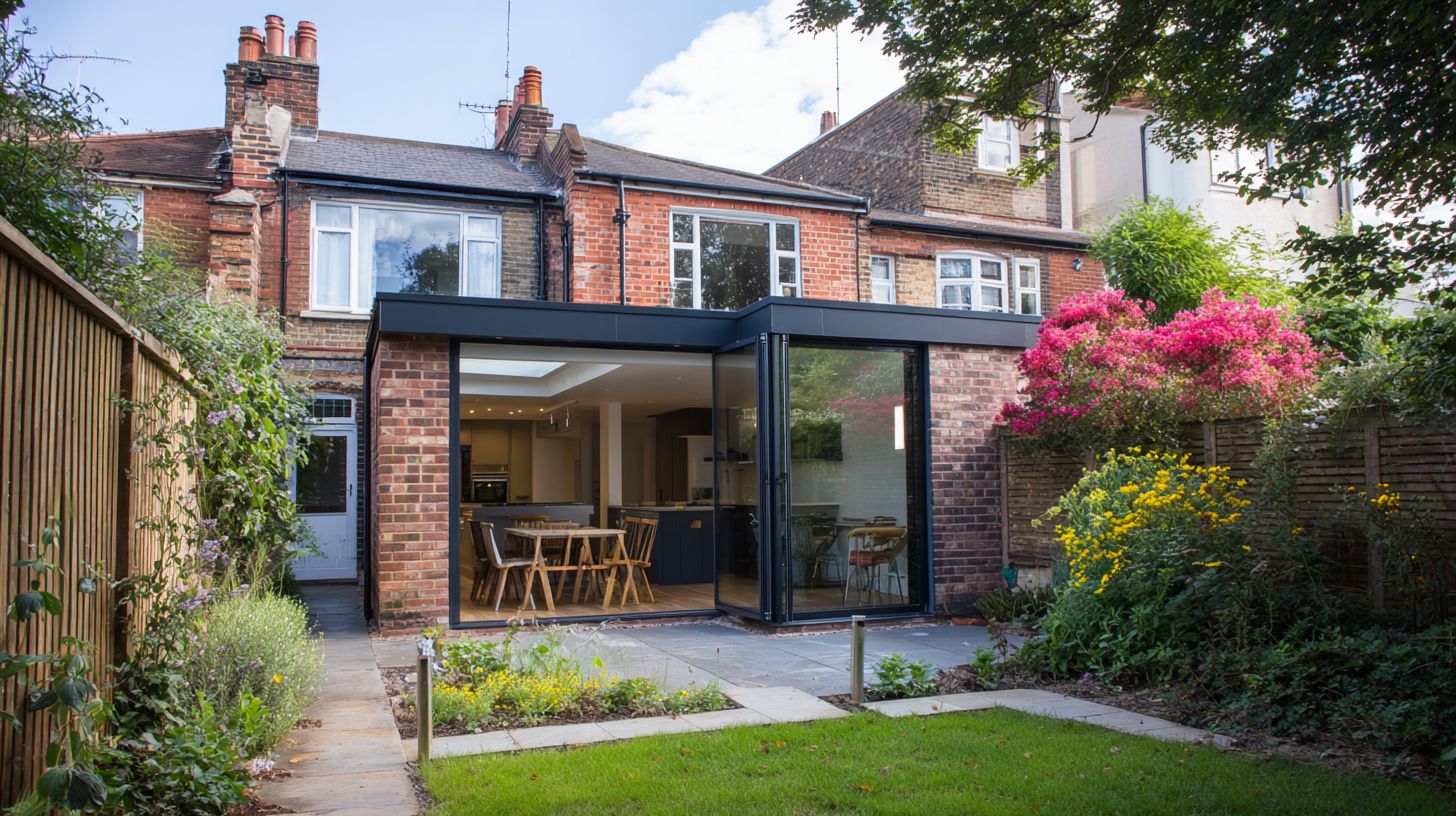
To qualify for permitted development rights on houses in England and Wales, the property must be the original dwellinghouse as it was first built (if constructed after 1 July 1948) or as it stood on 1 July 1948 (whichever is the later), excluding flats and certain converted buildings. Once eligibility is confirmed, exploring detailed planning and build guidance for single-storey rear extensions can help you move forward effectively.
Applicable Property Types
Permitted development rights apply exclusively to single-family dwellinghouses, encompassing detached, semi-detached, and terraced properties, but excluding maisonettes, flats, and holiday homes.
To ascertain eligibility, it is advisable to conduct the following verification steps:
- First, confirm the property’s classification as a Class C3 dwellinghouse by obtaining relevant documents from the Land Registry. These can be downloaded online for a fee of £3, with results typically available within 1-2 days, in accordance with guidance provided on gov.uk.
- Second, ensure the property is not a purpose-built flat, which falls under Class C4 for small houses in multiple occupation.
- Third, for properties with conversions or alterations after 1948 that may have affected permitted development rights, consult the local planning authority or apply for a Lawful Development Certificate to confirm eligibility and mitigate the risk of enforcement action.
A frequent oversight involves presuming that bungalows qualify for full permitted development rights; in reality, they are limited to single-storey extensions.
In devolved regions such as Wales, reference the Welsh Government guidelines (available at gov.wales/planning). Multi-storey additions are subject to heightened scrutiny under the Town and Country Planning Act 1990.
Original Building Status
Permitted development rights apply to the original dwellinghouse in England and Wales, meaning the building as it stood on 1 July 1948 or as first built if later, provided no prior enlargements have exhausted the available rights, such as extensions that exceed permissible limits.
To evaluate this status, adhere to the following numbered steps:
- Examine historical planning records from the Local Planning Authority through complimentary online searches on their portal or the national Planning Portal.
- Compare the current footprint to the original using Ordnance Survey maps, which are available for £5-£20 per sheet on ordnancesurvey.co.uk.
- In cases where alterations are suspected, submit an application for a Lawful Development Certificate (fee of £100-£300, with an 8-week processing period) to verify the status.
It is advisable to avoid the frequent error of disregarding cumulative extensions, as illustrated in the 2022 High Court case R (on the application of Fidler) v SSCLG, in which a post-1948 conversion resulted in the invalidation of permitted development rights. This approach ensures adherence to the regulations outlined in the Town and Country Planning Act.
Location and Area Restrictions
In designated areas, such as conservation areas in England and Wales, permitted development rights for extensions are more restricted. Single-storey rear extensions are limited to a maximum projection of 3 meters from the original rear wall for all house types, side extensions are not permitted, and no specific 10% volume limit applies; instead, extensions must adhere to height restrictions and use matching materials. Unrestricted areas allow larger projections subject to the standard permitted development limits.
Conservation Areas and Listed Buildings
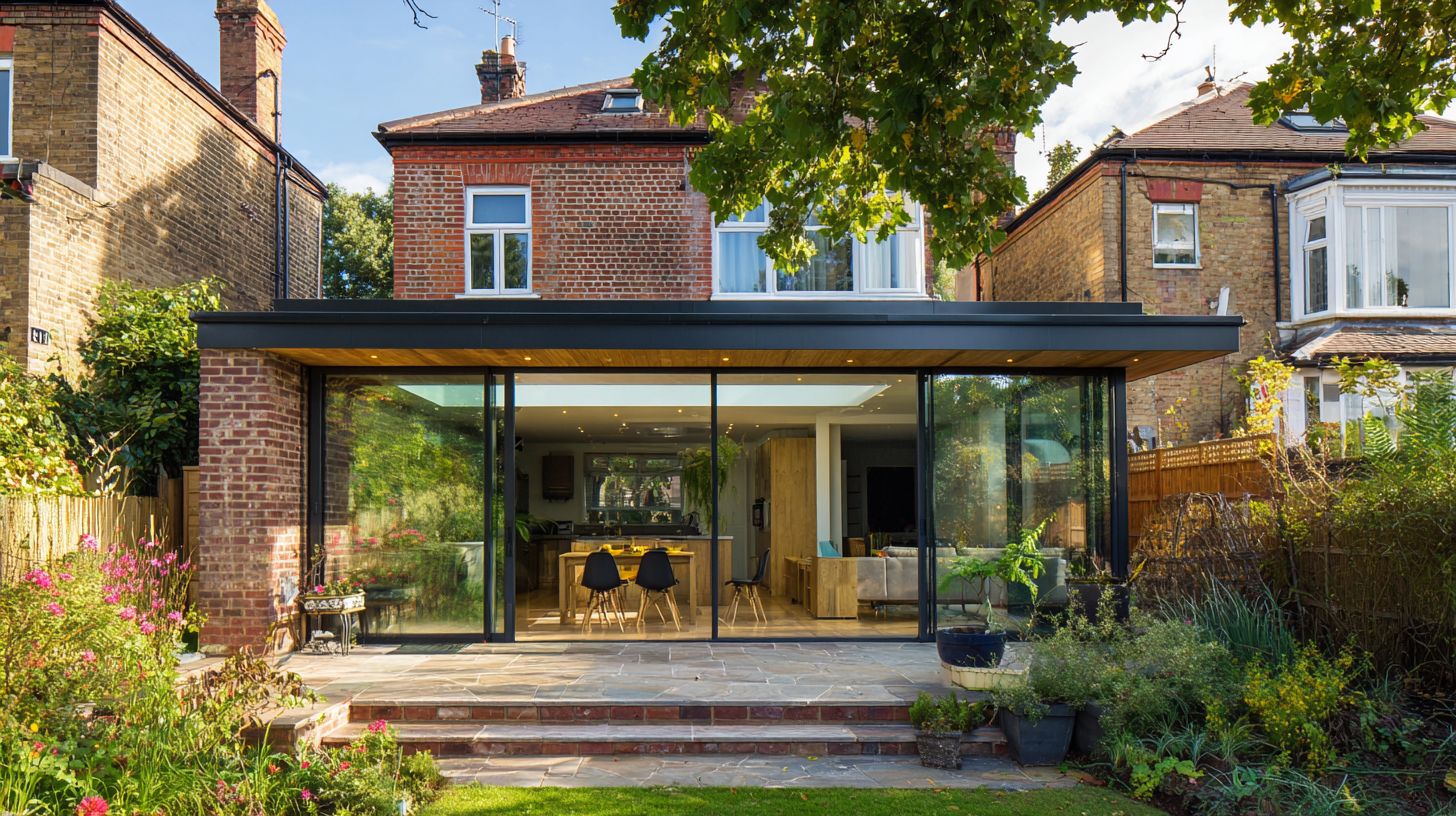
In conservation areas or World Heritage Sites, rear extensions must utilise materials that precisely match those of the original building, and prior approval is required for any external alterations.
Key guidelines to adhere to include the following:
- Extensions in conservation areas are subject to additional restrictions that may require full planning permission rather than permitted development rights; verify the property’s status through your local authority or the Historic England online register for listed buildings, as detailed in the UK Government’s guidance on the historic environment.
- For listed buildings, full planning permission is required, which overrides permitted development rights.
- Submit an application for prior approval to the Local Planning Authority, accompanied by a fee of £96 and subject to a 42-day decision period.
In case of non-compliance, an appeal may be lodged with the Planning Inspectorate, though be aware of potential Community Infrastructure Levy charges. Pursuant to the Planning (Listed Buildings and Conservation Areas) Act 1990, an extension within the Bath World Heritage Site was rejected in 2022 owing to the use of mismatched brickwork, thereby emphasising the critical need for exact material replication to preserve historic integrity.
National Parks and AONBs
In National Parks and Areas of Outstanding Natural Beauty (AONBs), single-storey extensions are limited to a maximum of 10 square metres, which is more restrictive than the 40 square metres permitted in other locations.
To comply with these regulations effectively, adhere to the following steps:
- Confirm the property’s location and AONB designation using Natural England’s free online mapping tool.
- Restrict the extension’s height to no more than 4 metres and its width to the span of the original house, while ensuring it does not extend beyond the existing footprint.
- For designs that may affect scenic views, obtain prior approval from the local planning authority, which involves a fee of £96.
A primary concern in these areas is visual intrusion, which can be mitigated through the use of subdued colours, native landscaping, and low-profile materials. According to Dartmoor’s 2023 report, 75% of applications necessitated modifications to achieve approval, emphasising the importance of proactive design adjustments.
Size Limits for Rear Extensions
Under permitted development rights, rear extensions for detached houses may extend up to 4 metres from the rear wall, whereas those for attached houses are restricted to 3 metres. Additionally, the eaves height of such extensions must not exceed 3 metres.
Depth Projections
The depth allowance for single-storey rear extensions is restricted to 3 metres for terraced or semi-detached houses and 4 metres for detached properties, with measurements taken from the original rear wall, as outlined in the UK Government’s guidance on when permission is required.
To ensure precise compliance, adhere to the following procedures outlined in the General Permitted Development Order (GPDO) Schedule 2, Class A:
- Determine the location of the original rear wall by consulting pre-extension photographs, property deeds, or historical plans obtained from the local authority.
- Verify that the extension’s projection does not exceed 50% of the total curtilage (garden) area, thereby avoiding the requirement for full planning permission.
- In the case of wrap-around designs, aggregate the rear depth with side elevation limits (up to 3.6 metres for detached houses) to compute the overall footprint.
A frequent error involves incorporating verandas or porches into the depth calculation, which is expressly prohibited. For instance, a 3.5-metre projection on a semi-detached property in Manchester was granted approval through a lawful development certificate, affirming adherence to GPDO regulations (source: UK Planning Portal, 2023 guidelines).
Height Restrictions

The height of eaves for rear extensions must not exceed 3 metres if the extension is situated within 2 metres of a boundary, or 4 metres in total height for pitched roofs. Ensure any upper windows comply with privacy rules and do not overlook neighbouring ground floor areas.
To ensure compliance, measure the eaves height from the ground level to the underside of the eaves using a laser level tool, which is available for approximately £20 at DIY stores.
For dual-pitched roofs, the ridge height may reach a maximum of 4 metres, while flat roofs are limited to 3 metres. If a taller design is required, the extension should be positioned at least 2 metres from the boundary to avoid these restrictions.
Building Regulations Part L mandates the use of efficient insulation, which may influence height decisions to optimise energy performance. Additionally, comply with regulations for chimney, flue, soil, vent, and pipe installations if incorporating heating or drainage systems.
In a notable case, a home extension in Yorkshire was required to be reduced from 3.5 metres at the eaves to conform to these regulations, as determined by a ruling from the Planning Inspectorate on appeal.
Rules for Side Extensions
Side extensions are limited to a single storey on the ground floor, with a maximum width equivalent to that of the original house and no projection forward of the principal elevation. No upper storey is permitted.
To ensure compliance with the UK’s General Permitted Development Order (GPDO) Class A.1(e), the following best practices should be observed for exercising permitted development rights. If the side extension involves a shared party wall, follow the Party Wall etc. Act 1996 by serving notices on adjoining owners and appointing surveyors if necessary to agree on a party wall award.
- Positioning: The extension must not project forward of the principal elevation. If on a side elevation facing a highway, additional restrictions may apply; consult the local planning authority for site-specific advice.
- Height and materials: The eaves height must not exceed the height of the existing house, and the overall height must not exceed 4 metres if within 2 metres of the boundary; materials should match those of the original house to achieve seamless integration.
- Design restrictions: Balconies and verandas must be avoided to remain within the permitted development limits.
For certain larger extensions, prior approval should be obtained from the local planning authority, which incurs a fee (currently around £120) and may be subject to the Community Infrastructure Levy depending on the development scale, typically requiring 8 weeks for processing.
A frequent challenge is encroachment onto boundaries; this can be addressed through a professional survey conducted by a Royal Institution of Chartered Surveyors (RICS) member, with an average cost of £400.
For instance, a side infill extension in Birmingham successfully added 2.5 metres in width without requiring formal permission by adhering strictly to these guidelines, thereby avoiding enforcement action.
Materials and Design Requirements
Extensions to a property must incorporate materials that closely resemble those of the existing structure, such as bricks and slate roofs that match in appearance, in order to preserve visual harmony.
To ensure compliance with these requirements, adhere to the following specific design guidelines:
- Select bricks by matching their colour and texture to the original, utilising samples from reputable suppliers, and achieving a close visual match.
- Maintain the roof pitch at a minimum of 15 degrees where it aligns with the original structure, employing slate or equivalent tiles to uphold authenticity.
- Replicate the existing window styles using double-glazed uPVC frames that accurately mimic the original design.
Failure to use matching materials can result in rejection of planning applications. For regulatory compliance with building regulations, consult Approved Document 7: Materials and Workmanship.
For example, an extension in a conservation area in Bath successfully employed reclaimed tiles, securing approval from Historic England by maintaining the Georgian aesthetic. Obtain professional planning drawings to streamline your permission process and avoid common pitfalls.
Other Key Conditions
Additional conditions prohibit the construction of balconies, verandas, or platforms exceeding 0.3 metres in height, while also mandating party wall agreements for any shared boundaries.
To effectively navigate permitted development rights for home extensions in the United Kingdom, it is imperative to address the following key conditions through practical and compliant solutions:
- **Avoid Raised Platforms**: Select ground-level designs to ensure adherence to height restrictions, such as patios or decking installed flush with the existing floor surface.
- **Party Wall Agreement**: Following the Party Wall etc. Act 1996, provide formal notification to neighbouring property owners at least two months in advance; allocate a budget of approximately £1,000 for surveyor or solicitor fees to prepare and execute the party wall award.
- **Building Regulations Approval**: Submit comprehensive plans for evaluation of structural integrity, with costs typically ranging from £200 to £500, facilitated through inspections by the local authority.
- **Prohibition on Chimneys, Flues, or Vent Pipes**: Relocate all necessary utilities to the primary structure, while ensuring full compliance with established ventilation standards.
- **Prior Approval for Larger Extensions**: For extensions under the larger home extension scheme (up to 8 metres for detached or 6 metres for others), submit an application for prior approval to the relevant local planning authority, including options like conservatories that must meet specific glazing and thermal efficiency rules. The total area of the house should not exceed 50% larger than the original.
Failure to secure a party wall agreement may precipitate costly disputes, with potential legal fees reaching up to £20,000. A survey by the Royal Institution of Chartered Surveyors (RICS) on a terraced house extension in London illustrated that proactive resolution of such matters averted £15,000 in costs associated with project delays.
Frequently Asked Questions
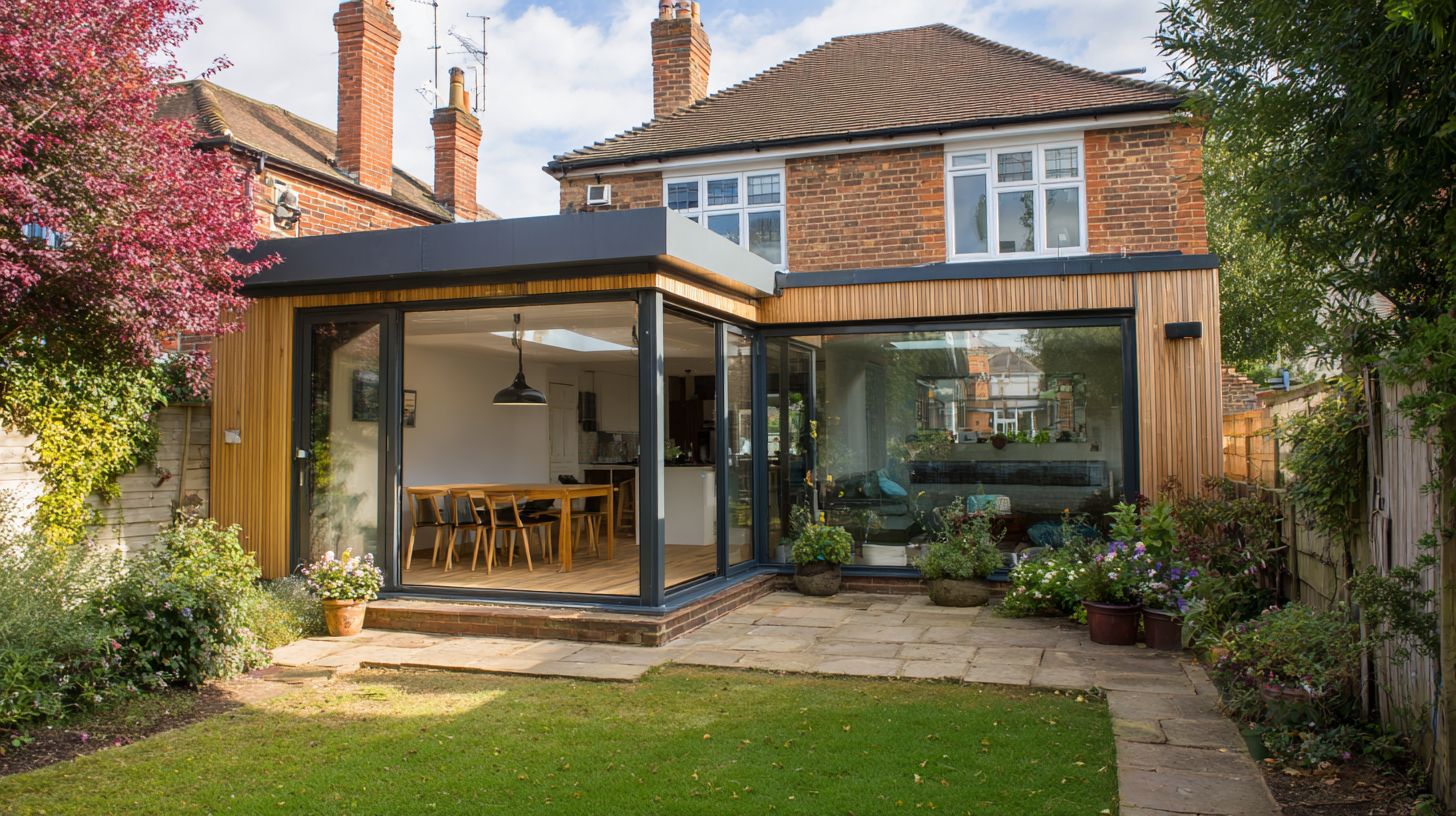
What are the permitted development rules for Single storey extensions in England and Wales?
The permitted development rules for single-storey extensions in England and Wales allow homeowners to build without full planning permission if certain criteria are met. For rear extensions, the maximum depth is 3 metres for semi-detached or terraced houses and 4 metres for detached houses (or up to 6 metres and 8 metres respectively with prior approval via the Larger Home Extension scheme). The height must not exceed 4 metres, with eaves no higher than the existing house, and the extension must not cover more than half the width of the original house. It must also use materials similar to the existing property and not be forward of the principal elevation. These rules apply to houses, not flats or designated land like conservation areas.
Do single-storey side extensions fall under permitted development rules in England and Wales?
Yes, single-storey side extensions can qualify under permitted development rules in England and Wales, but with stricter limits. They must be no more than half the width of the original house, single-storey only (max height 4 metres), and positioned between the principal elevation and the rear wall. The extension cannot be forward of the front wall and must match the existing house’s materials. Importantly, side extensions require the house to be detached, and they do not qualify on designated land or if they obscure lines of sight for roads.
What height restrictions apply to permitted development for single-storey extensions in England and Wales?
Under permitted development rules for single-storey extensions in England and Wales, the overall height is capped at 4 metres from ground level, including the roof. The eaves must not exceed the height of the existing house’s eaves, and for pitched roofs, the extension should align with the existing structure. These limits ensure the extension doesn’t dominate the property or affect neighbours, and exceeding them typically requires full planning permission.
Can I build a single-storey rear extension without planning permission in England and Wales?
Yes, you can build a single-storey rear extension without planning permission under permitted development rules in England and Wales, provided it adheres to size limits: up to 3 metres deep for attached houses or 4 metres for detached (or larger with prior approval). It must not extend beyond the rear wall by more than the specified depth, cover more than 50% of the garden area cumulatively with other extensions, and must be at the rear only. Always check if your property is in a conservation area or national park, where these rights may not apply.
Are there any materials requirements for single-storey extensions under UK permitted development?
Permitted development rules for single-storey extensions in England and Wales require that materials used are of a similar appearance to those on the existing house to maintain visual harmony. This includes bricks, roofing, and cladding that blend with the original structure. Using dissimilar materials could void permitted development status, necessitating planning permission. Exceptions might apply if a design statement justifies alternatives, but it’s best to consult local planning authorities.
What properties are excluded from permitted development rules for single-storey extensions in England and Wales?
Permitted development rules for single-storey extensions in England and Wales do not apply to flats, maisonettes, or converted houses (like those previously shops). They are also restricted on designated land such as Areas of Outstanding Natural Beauty, conservation areas, or national parks. Additionally, properties with Article 4 directions (local restrictions removing permitted development rights) or listed buildings are excluded, requiring full planning permission instead.