
Planning Your UK Extension: Trees and Foundation Depth Building an extension near trees within 5 metres demands careful consideration of how their roots affect foundations, especially on expansive clay soils. In the UK, mature trees extract soil moisture, potentially causing shrinkage and subsidence that requires deeper foundations to comply with NHBC standards and Building Regulations Part A. Discover risk assessments for common species like willow and oak, plus expert tips to safeguard your project without unnecessary costs.
Key Takeaways:
- Trees within 5 meters can extract soil moisture, leading to subsidence and structural damage; UK NHBC standards require deeper foundations for high-water-demand species like willow and poplar to prevent cracking.
- Proximity zones classify risk: trees closer than 5 meters, especially oaks or maples, may necessitate foundation depths increased by 1-2 meters per Building Regulations Part A.
- Consult a structural engineer or specialists such as rtpiconsultants for site-specific evaluation, as root spread patterns vary by species and soil type, ensuring compliance and safety for your extension.
Understanding Tree Impact on Foundations
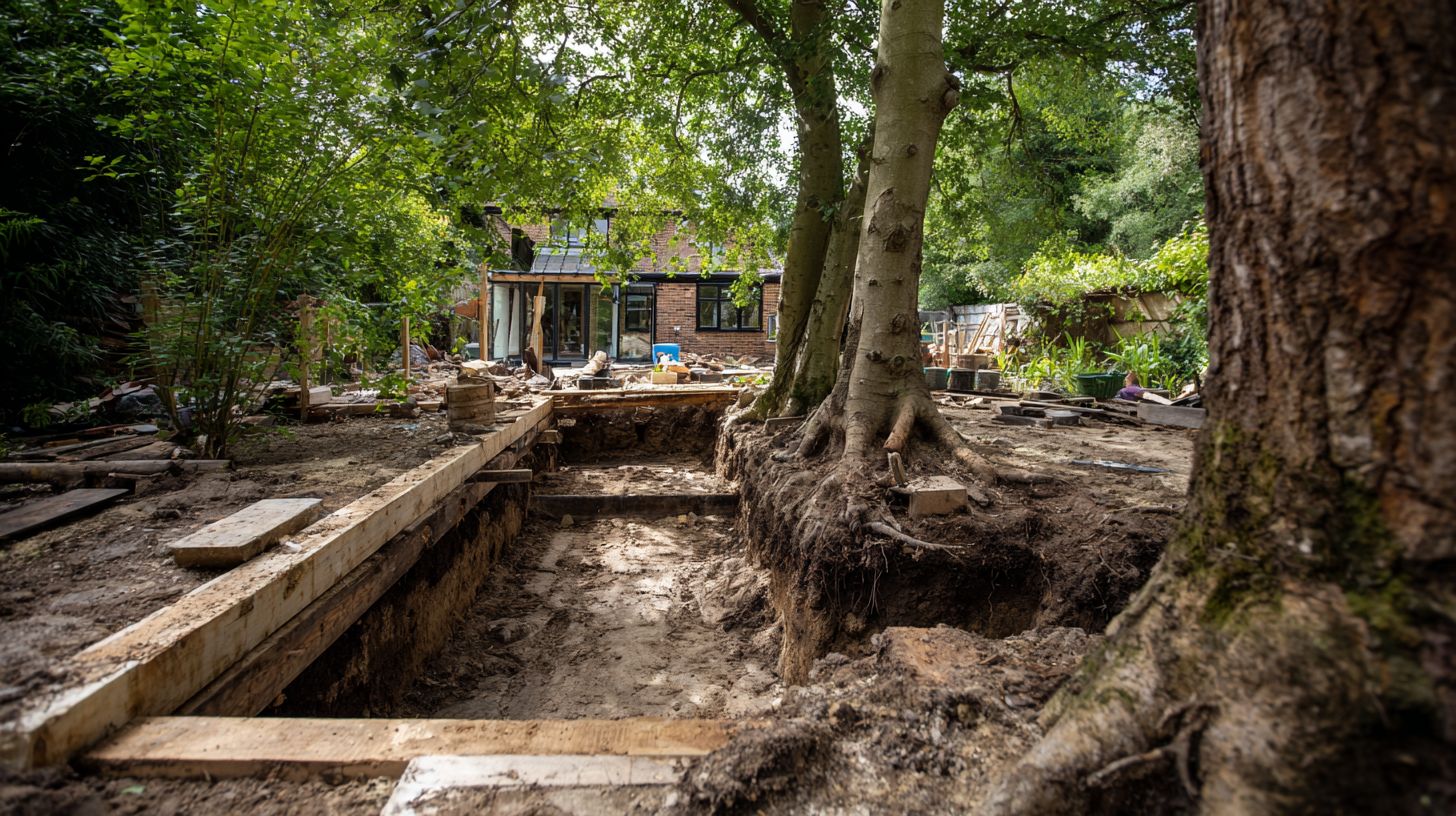
Trees exert a significant influence on building foundations by modifying soil moisture content levels, which can precipitate subsidence or heave in as many as 20% of UK properties situated near mature specimens, according to the Royal Institution of Chartered Surveyors (RICS). This approach has significant implications for extension projects— our 2 storey side extension guide demonstrates the practical application in planning and building regulations.
Soil Moisture Extraction by Trees
Trees can extract up to 1,500 litres of water per day from the soil through their roots via water uptake, thereby generating seasonal moisture deficits of 50-100 mm in shrinkable clays such as London Clay, as outlined in BRE Digest 412.
To evaluate the potential impacts on building foundations, adhere to the following systematic approach:
- Root absorption mechanics: Determine transpiration rates; for coniferous trees, anticipate 200-500 mm per year, subject to variations by species and climatic conditions (BRE Report BR 412). Such rates may be quantified through soil moisture profiling techniques.
- Deficit calculation: Utilise site-specific data, including NHBC tables, to compute cumulative seasonal and permanent deficits, incorporating factors such as tree age and soil characteristics.
- Foundation impact: Soil drying and desiccation induces 5-10% volumetric shrinkage in clay, which may precipitate subsidence. BRE investigations indicate that water extraction zones extend to 1.5 times the radius of the tree canopy.
A frequent oversight involves neglecting moisture probes; precise monitoring is best achieved with soil suction tensiometers. Engage geotechnical engineers at the outset for project management to address and mitigate associated risks effectively.
Root Growth and Spread Patterns
Tree roots generally extend horizontally two to three times the radius of the tree’s canopy, with penetration depths reaching up to two metres in clay soils. This growth can reduce the bearing capacity of affected zones by 20 to 30 per cent, as evidenced by soil mechanics studies conducted at the University of Bristol.
Root systems differ significantly among tree species, thereby influencing associated structural risks. For instance, shallow fibrous roots, such as those found in willows, can extend laterally 10 to 15 metres, facilitating efficient nutrient absorption but increasing the likelihood of surface disruption.
In comparison, deep taproots in oak trees may reach depths of three metres or greater, providing soil stabilisation while posing risks of foundation penetration when trees are planted in proximity.
Roots frequently infiltrate cracks in concrete structures, resulting in expansion and subsequent heave as they regrow. This phenomenon is illustrated in the root spread diagrams from CIRIA Report 143, which can be visualised through freely available online schematics depicting radial patterns.
To mitigate these risks, it is recommended to excavate at least 1.5 to 2 metres beyond the canopy edges prior to construction, or consider tree felling and crown reduction. Additionally, root barriers, such as geotextile fabrics installed to a depth of 60 centimetres, should be employed in accordance with UK Building Regulations guidelines.
UK Regulations and Guidelines
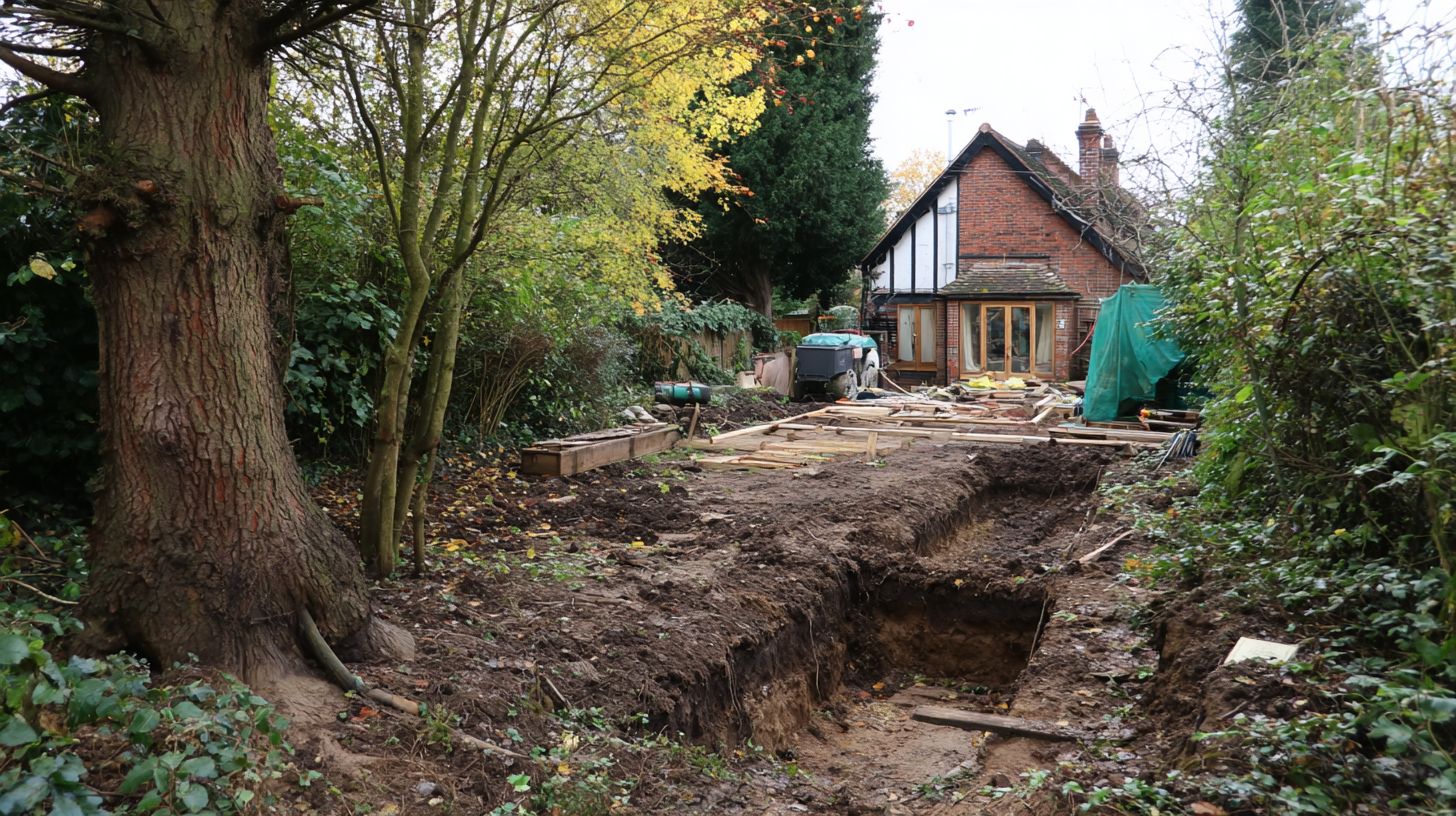
In the United Kingdom, building regulations require the implementation of tree-aware foundation designs to mitigate the risks of subsidence. The NHBC Standards mandate assessments for sites situated within 12 metres of trees, ensuring alignment with Part A requirements for maintaining structural integrity. Those planning a conservatory extension might find our guide to Planning & Building Regulations For Conservatories in UK particularly useful for navigating these requirements.
NHBC Standards for Foundations
NHBC Chapter 4.2 outlines the required foundation depths in relation to trees, recommending depths of 1.5 to 3 metres in clay soils proximate to high-water-demand species to sustain a load-bearing capacity exceeding 100 kN/m².
To implement these guidelines with precision, the key standards are delineated as follows:
- **Volume Change Potential Classification**: Evaluate the soil based on the Plasticity Index (PI); clays exhibiting a PI greater than 35% present a high risk of shrinkage and swelling, necessitating deeper foundations in accordance with BRE Digest 412.
- **Foundation Types**: Employ strip foundations when trees are situated more than 10 metres from the structure, transitioning to raft foundations within 5 metres to optimise load distribution, as specified in the NHBC Standards.
- **Drainage Integration**: Position drains and sewers at a minimum distance of 1 metre from tree roots to prevent waterlogging, in line with NHBC Standards 2023 (Chapter 5.3). A pertinent example is a development in Newcastle upon Tyne, where the application of raft foundations and root barriers effectively mitigated clay heave, thereby ensuring structural stability in soils with elevated PI values.
Building Regulations Part A
Building Regulations Part A (Structure) stipulates that foundations must be designed to accommodate movements induced by trees, necessitating the involvement of a structural engineer for any excavations in proximity to trees.
To achieve compliance, it is imperative to adhere to the following key steps:
- Submit comprehensive plans through the Planning Portal, incorporating arborist reports that detail tree species, root protection zones, tree preservation orders (TPOs), and potential risks of subsidence.
- Evaluate ground conditions by excavating trial pits to a depth of 4 metres, and conduct soil testing for clay content and shrinkage potential in accordance with BS 5930 guidelines.
- Implement risk mitigation measures as approved by a structural engineer, including the installation of root barriers or deep pile foundations, in line with BS 5837 standards.
It is essential to avoid common errors, such as failing to consider the impact on adjacent structures under the party wall act 1996, which may result in differential settlement.
For guidance on load calculations, consult the updates to Approved Document A (2013). A notable case of successful compliance is the approval granted for a house extension in the North East region, following a thorough Part A review that addressed the effects of an adjacent oak tree.
Trees Within 5 Metres: Risk Assessment
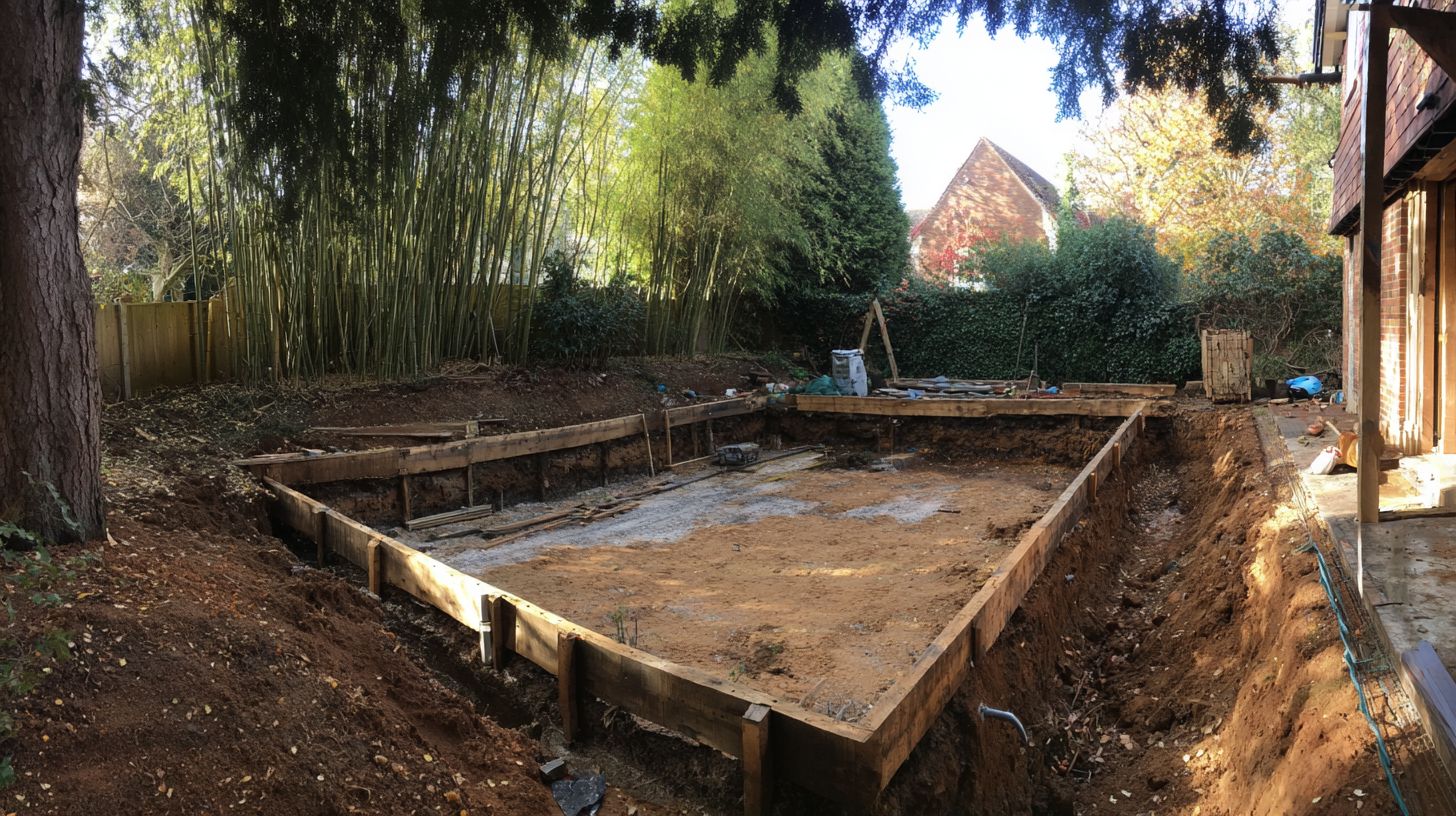
Properties situated within 5 metres of trees are subject to elevated subsidence risks, particularly in clay soils prone to shrinkage and swelling. To properly evaluate these impacts on your extension’s foundations, follow the planning guidelines in our 2 Storey Side Extension Guide | Planning & Build.
Proximity Thresholds and Zones
The National House-Building Council (NHBC) delineates proximity zones as extending 5 metres for low-risk trees and up to 12 metres for high-risk trees, particularly in contaminated landfill sites. These zones underscore the differential risks posed to foundation stability.
Principal concerns encompass the following:
- Within the 0-5 metre zone: High risk, necessitating post-construction crack monitoring and level monitoring to identify potential subsidence.
- Within the 5-10 metre zone: Medium risk, with the potential for heave in clay soils that may induce uplift.
- Beyond 10 metres: Low risk, though evaluation of piling requirements is advisable to achieve deeper stability.
To address these risks, geophysical surveys such as ground-penetrating radar—costing between £500 and £1,000 per site—should be employed for precise root mapping. Adherence to the CIRIA C750 guidelines for tree-root assessments is recommended.
In a project undertaken in Newcastle upon Tyne, the adjustment of the 5-metre threshold based on such surveys averted 20 cm of settlement, thereby preserving structural integrity.
Common UK Trees Affecting Foundations
In the United Kingdom, tree species such as willow and oak account for 60% of foundation issues attributable to trees. According to the NHBC’s Chapter 4.2: Building Near Trees, the National House-Building Council (NHBC) water demand ratings classify these species as high-risk, particularly in clay-dominated regions like the North East.
High-Risk Species (e.g., Willow, Poplar)

Willow and poplar trees consume over 1,000 litres of water per day, leading to seasonal soil moisture deficits of up to 150 mm in shrinkable clay soils and requiring tree removal in approximately 30% of affected sites, according to surveys conducted by the Royal Institution of Chartered Surveyors (RICS).
| Species | Water Demand (L/day) | Root Spread (m) | Risk Mitigation | Example Impact |
|---|---|---|---|---|
| Willow | 1,200 | 15-20 | Root barriers or felling | Subsidence in 50% of cases |
| Poplar | 900 | 10-15 | Relocation | Heave in loamy soils |
To mitigate these risks, it is recommended to engage a structural engineer for site-specific evaluations. For tree felling under Tree Preservation Orders (TPOs), submit an application to the local council through their online portal, including arborist reports and evidence of subsidence.
The approval process generally requires 8 to 12 weeks and is governed by the Environment Act 2021 regulations. It is advisable to retain certified professionals, such as those affiliated with the Arboricultural Association, to enhance the strength of the application.
Medium-Risk Species (e.g., Oak, Maple)
Oak and maple trees present medium-level risks, characterised by root spreads extending 10-15 metres and daily water uptake ranging from 500-800 litres, which can generate soil moisture deficits of 50-75 mm. This necessitates foundation adjustments in approximately 20% of developments across the United Kingdom.
In comparison to high-risk species such as willow, oak and maple trees are generally more manageable. To mitigate the potential for subsidence, foundations for oak trees should be deepened by 1 metre, while heave barriers should be installed for maple trees.
Retaining these trees enhances biodiversity and ensures compliance with Tree Preservation Orders (TPOs).
| Species | Deficit Potential (mm) | Foundation Adjustment | Pros/Cons of Retention |
|---|---|---|---|
| Oak | 75 | +1m depth | Pros: High biodiversity value; Cons: TPO restrictions limit pruning |
| Maple | 50 | Heave barriers | Pros: Easier crown reduction; Cons: Potential clay heave in wet soils |
Best practices for managing these risks include the installation of root barriers, such as 600 mm deep HDPE sheets costing £20 per metre, which can reduce foundation adjustment expenses by 30%, in accordance with Forestry Commission guidelines on urban tree retention.
Determining Required Foundation Depth
The depth of foundations for house extensions must incorporate considerations for tree influence, which often requires an increase from the standard 1 metre to 2.5 metres or more in clay soils. These adjustments are determined through calculations based on NHBC Tables 16-19, which address load-bearing requirements in zones affected by tree roots.
Tree-Specific Depth Adjustments
For an oak tree situated in shrinkable clay soil, foundation depths should be adjusted to 2-3 metres, depending on moisture content and structural load, in order to prevent differential settlements of 10-20 cm, as calculated per research findings in BRE Digest 298 guidelines from the Building Research Establishment.
To accurately determine foundation depths, adhere to the following structured procedure:
- Classify the tree species and soil type, for instance, high-plasticity clay with a plasticity index (PI) of 40%, in accordance with BS 5930 standards.
- Compute the required depth using the NHBC formula: depth = base depth + tree factor × mature height (e.g., 0.5 m base depth + 0.4 × 15 m oak height = 6.5 m potential depth, subsequently adjusted downward based on site-specific conditions).
- Validate the assessment through trial pits spaced at 1.5-metre intervals to evaluate root zones.
Common errors involve underestimating the seasonal deficit in moisture content, which can result in heave risks; it is imperative to incorporate a variability factor of 20-30%.
As an illustrative example, a willow tree located 10 metres from a building extension necessitates a foundation depth of 2.2 metres to mitigate 15 cm of settlement, according to BRE Digest 298 data.
Professional Site Evaluation
Engaging the services of a structural engineer for site evaluation facilitates the identification of tree-related risks with 95% accuracy through methods including level monitoring and soil boreholes, thereby preventing structural damage repairs exceeding £50,000.
Best practices include:
- Engaging a RICS-accredited engineer to conduct a comprehensive survey, at a cost of £1,000–£3,000, for assessing clay shrinkage and tree root influence in accordance with BS 5837 standards.
- Performing essential tests, such as the California Bearing Ratio (CBR) for evaluating soil capacity, and installing crack monitoring gauges to track structural movement over a 12-month period.
- Implementing the recommended measures, including deep piling foundations for sites susceptible to heave.
In a North East loft conversion project overseen by LABC, an early evaluation resulted in the adoption of a raft foundation, reducing subsidence risk by 80% and yielding savings of £40,000 on potential remedial works.
”’
Frequently Asked Questions
### Which trees within 5 metres of my extension will affect how deep my foundations will need to be in UK?
In the UK, trees within 5 metres of your extension can significantly influence foundation depths due to their root systems extracting moisture from the soil, potentially causing subsidence or heave. Common problematic trees include oak, willow, poplar, and sycamore, as they have extensive roots that can extend up to 1.5 times their height. According to NHBC guidelines, you must assess the tree’s species, maturity, and proximity to determine if deeper foundations (often 1-2 metres or more) are required to avoid clay shrinkage. Consult a structural engineer or arborist for a site-specific evaluation.
### How do I identify if trees within 5 metres of my extension will affect foundation depths in the UK?
To identify if trees within 5 metres of your extension will affect how deep your foundations need to be in the UK, start by noting the tree species and their water demand rating—high-demand trees like horse chestnut, silver birch, or conifer trees are more likely to cause issues by drying out shrinkable soils. Measure the exact distance from the trunk to your proposed extension site. Use tools like the NHBC Chapter 4.2 standards, which classify influence zones based on canopy spread. If any tree falls within the 5-metre radius and is on clay soil, expect adjusted foundation depths; a professional tree report is often mandatory for building control approval.
### What are the NHBC guidelines for trees within 5 metres affecting foundation depths for extensions in the UK?
The NHBC (National House Building Council) guidelines in the UK specify that trees within 5 metres of your extension can necessitate deeper foundations to counteract moisture-related ground movement. For instance, on shrinkable clay soils, trees like elm or lime with high water demand may require foundations up to 3 metres deep if within this zone. The guidelines use a table for minimum depths based on tree type, soil, and distance—e.g., 1 metre for low-risk trees, but deeper for mature specimens. Always submit a site plan showing tree locations when applying for planning permission to ensure compliance.
### Why do certain trees within 5 metres of my extension require deeper foundations in the UK?
Certain trees within 5 metres of your extension require deeper foundations in England and Wales because their roots deplete soil moisture, leading to uneven settlement in clay-heavy ground, which is common across much of England and Wales. Species such as ash or beech are particularly aggressive, with roots spreading widely to absorb water, potentially causing cracks in shallow foundations. England and Wales building regulations, enforced by local authorities, mandate deeper footings (typically 900mm to 2.5m) to reach stable, non-influenced strata. A geotechnical investigation can quantify the risk and recommend precise depths.
Can I remove trees within 5 metres of my extension to avoid deeper foundations in England and Wales?
Removing trees within 5 metres of your extension might reduce the need for deeper foundations in England and Wales, but it’s not always straightforward due to protected status under the Town and Country Planning Act. Trees like those in conservation areas or with Tree Preservation Orders (TPOs) require council permission, and removal could trigger soil heave as moisture rebounds. Even post-removal, foundations may still need to account for past influence per BS 5837 standards. Consult an arboriculturalist and structural engineer to assess if alternatives like root barriers are viable before planning any felling.
What should I do if a neighbour’s tree is within 5 metres of my extension affecting foundation depths in England and Wales?
If a neighbour’s tree is within 5 metres of your extension and affects how deep your foundations need to be in England and Wales, begin by discussing the issue amicably, as roots can cross boundaries. Under common law, you may trim encroaching roots, but full removal requires their consent or legal action if damage occurs. For building purposes, include the tree in your planning application, referencing CIRIA Report 143 for subsidence risks. Hire a qualified surveyor to map the root zone and propose solutions like deeper load-bearing strip foundations or piles, ensuring your extension complies with England and Wales Part A building regulations.