
Key Takeaways:
Permitted Development Rights Overview in England and Wales
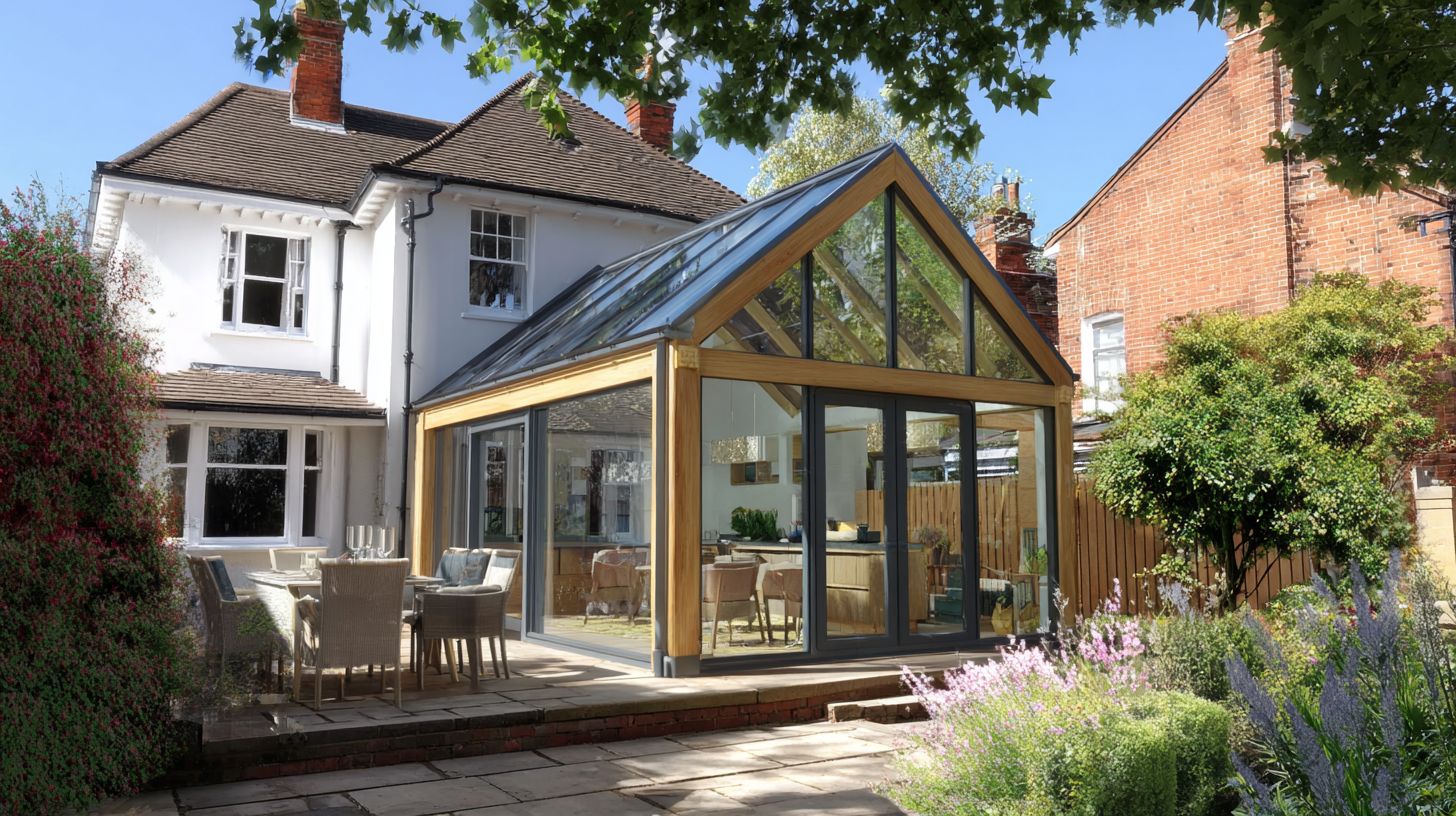
Under the permitted development rights framework in England and Wales, homeowners are authorised to construct conservatories, including open-plan conservatory designs, provided that together with other extensions they do not cover more than 50% of the land around the original house without necessitating full planning permission. These rules form part of broader planning and building regulations for conservatories in the UK, which outline additional limits on size, height, and location to ensure compliance.
What Qualifies as Permitted Development
A conservatory may qualify as permitted development under Class A of the Town and Country Planning (General Permitted Development) (England) Order 2015 (as amended) provided it constitutes a single-storey rear extension at ground level, is attached to the external wall of the original house, and does not exceed four metres in depth for detached properties or three metres for other properties, with options up to eight metres or six metres respectively under prior approval.
To determine whether your conservatory meets these criteria, adhere to the following structured steps:
- Confirm the footprint of the original house by consulting pre-1948 records (approximately 2-3 hours, with a £3 fee via the Land Registry) to establish the baseline for the ‘original house.
- Evaluate measurements against specified limits, including a maximum of half the width of the original house for side extensions.
- Review any existing extensions to ensure that the total coverage does not surpass 50% of the land around the original house.
A frequent oversight involves disregarding the four-year rule for retrospective approval; for example, a conservatory constructed in London in 2018 was granted legal status in 2022 upon demonstration of four years’ continuous existence without formal complaints. It is advisable to consult the Planning Portal’s checklist tool for comprehensive guidance, in accordance with established UK planning regulations.
General Conditions and Eligibility
Eligibility for permitted development rights necessitates that the conservatory be situated on land where no Community Infrastructure Levy (CIL) charge would apply, and that no unresolved restrictive covenants exist, potentially requiring a party wall agreement. Neighbour consultation is required solely in instances where the structure is positioned within 2 metres of a boundary.
To ascertain eligibility, it is advisable to evaluate the following five essential conditions, incorporating practical verification steps, in accordance with the Permitted development rights for householders: technical guidance from the Department for Levelling Up, Housing and Communities (DLUHC):
- Balconies verandas are not permitted under Class A.e prohibitions. Utilise the Planning Portal’s complimentary eligibility assessment tool, a brief five-minute questionnaire, to confirm compliance.
- The extension must not face a highway; therefore, it should be limited to side or rear elevations.
- These rights apply to dwellinghouses, with the original house size measured as it stood on 1 July 1948 (or as originally built if constructed later). Verify the property’s construction date through official Land Registry records.
- Prior developments must not have exceeded permissible limits. Compute the floor area ratio relative to the original house size employing detailed site plans.
- Designated areas, such as national parks, are excluded. Refer to local authority mapping resources for confirmation.
Regarding restrictive covenants, it is recommended to obtain a professional legal assessment (typically costing £200–£500 through a qualified solicitor) to identify any such covenants and explore options for their discharge.
Size and Dimension Limits
These restrictions cap the total additional floor area at 50% of the original house’s footprint and limit the depth to four metres for rear extensions on detached properties (or three metres for other houses) under standard permitted development rights; larger extensions up to eight metres (detached) or six metres (others) may be possible with prior approval from the local planning authority. Learn more about single storey rear extensions, including how to navigate these limits effectively.
Such measures are designed to maintain harmony with neighbourhood aesthetics, as evidenced by feedback from 60% of local authorities in a 2021 study conducted by the Town and Country Planning Association (TCPA).
Maximum Floor Area Restrictions
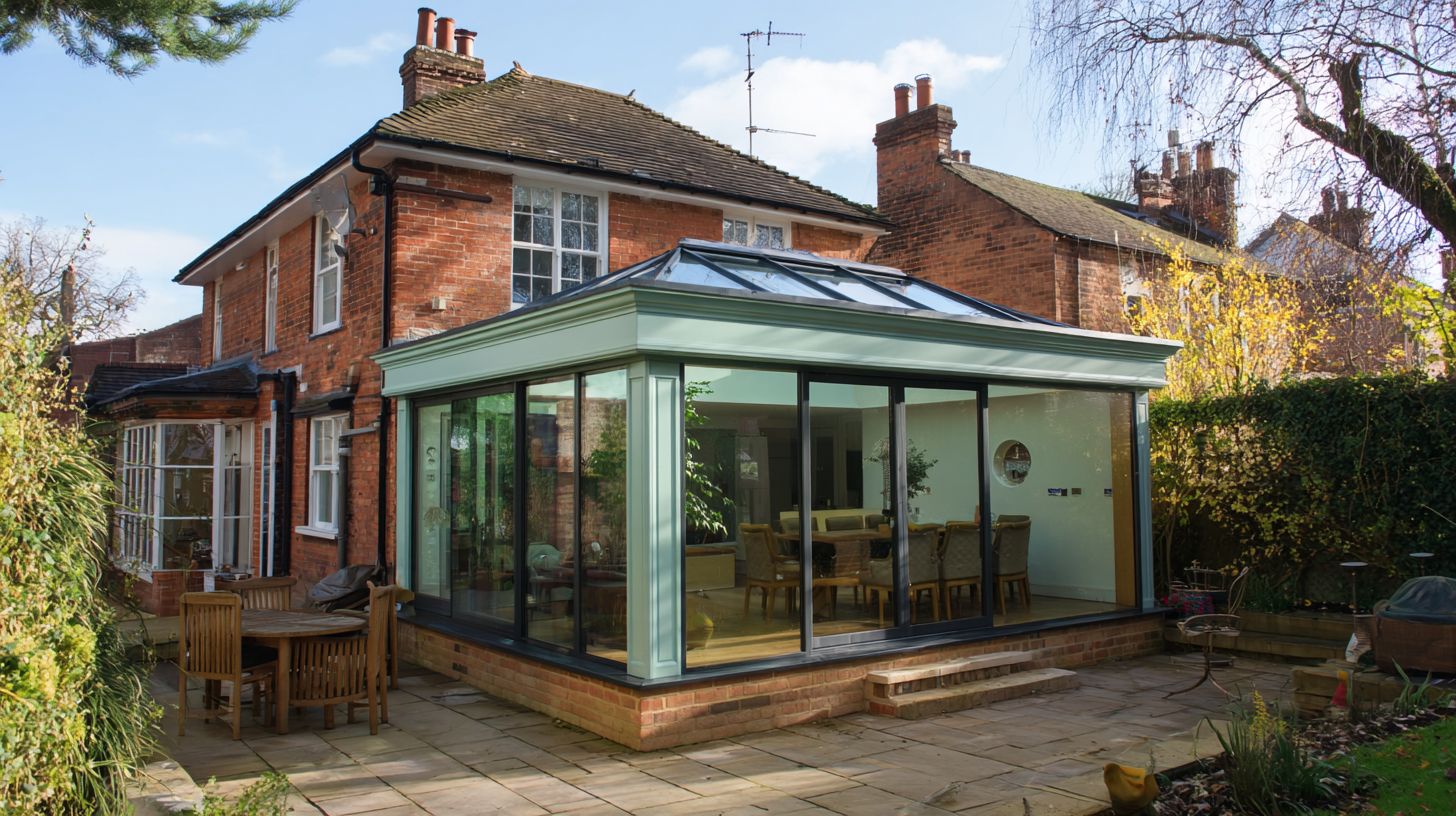
The maximum floor area for a conservatory is restricted to 50% of the original footprint of the house. For example, a bungalow with an original footprint of 100 m² may incorporate up to 50 m² for such an extension; however, the total floor area of all extensions must not exceed this cumulative limit, including any previous additions.
To ensure precise calculations, adhere to the following steps in accordance with UK permitted development regulations (Town and Country Planning (General Permitted Development) Order 2015):
- Establish the original footprint by consulting Ordnance Survey maps (available for download at a cost of £10 from ordnancesurvey.co.uk) or historical photographs, excluding any additions constructed after 1948 (approximately 1 hour required).
- Deduct the area of existing extensions: For an 80 m² semi-detached house from the 1940s with a 10 m² garage, the allowable additional area is 30 m² (using the Excel formula: =original_area*0.5 – existing_extensions).
- Assess the dimensions of the proposed conservatory—for instance, a room measuring 4 m x 3 m (12 m²) would comply with the specified limits.
It is essential to avoid inaccuracies, such as the inclusion of outbuildings in calculations. According to the RICS 2023 Home Extension Guide, each additional 10 m² of extension can enhance the property’s value by £10,000 to £15,000.
Height and Eaves Guidelines
The eaves height of conservatory roofs must not exceed 3 metres when situated within 2 metres of a boundary distance, whereas the overall roof ridge height for pitched roofs with appropriate roof pitch is limited to 4 metres, in accordance with the General Permitted Development Order (GPDO) to reduce visual impact.
For flat roofs, which are prevalent in contemporary lean-to designs, the maximum height is restricted to 3 metres from ground level to prevent violations of permitted development rights. Pitched or tiled roof adhere to comparable eaves height restrictions but permit a ridge height of up to 4 metres; for example, a 25-degree roof pitch is suitable for a 3.5-metre span.
To assess compliance effectively, the free version of SketchUp may be utilised for 3D modelling, with initial setup requiring approximately 30 minutes.
A common challenge in sloping gardens involves surpassing permissible heights, which can be addressed through the installation of retaining walls at an estimated cost of £500.
The BRE 2019 report underscores the role of solar gains in influencing approval criteria, thereby underscoring the importance of incorporating energy-efficient design principles. A 2021 report by the Scottish Government found that such improvements in energy standards for new domestic buildings can significantly enhance compliance with building regulations.
Location and Positioning Rules
Conservatories must be located at the rear or side extension of the original house structure, must comply with height restrictions near boundaries (e.g., no part exceeding 3 metres in height within 2 metres of a rear boundary), and are not permitted on principal elevations facing highways or within designated land areas, such as national parks in England and Wales.
To ensure full compliance, adhere to the following structured mapping procedures:
- Utilise Google Earth, a freely available tool, to approximately delineate property boundaries.
- Confirm adherence to distance requirements, including limitations for side extensions to no more than half the width of the original house and ensuring they do not project forward of the existing side wall.
- Prohibit designs facing the front elevation, in accordance with Class A.c restrictions.
For sites with constrained dimensions, consider submitting an application for a side extension variance via a Lawful Development Certificate (LDC), which incurs application fees of £258 in England, with variations in Wales.
For instance, a semi-detached property in Wales successfully incorporated a compliant 3-metre rear extension under the 2022 Permitted Development regulations.
Refer to the Town and Country Planning Act (TCPA) best practices to preserve neighbouring privacy through appropriate screening of views.
Materials and Design Standards
Conservatory designs are required to incorporate energy efficient glazing installation with a U-value of no greater than 1.6 W/m²K, along with a thermal barrier and heating system separating the conservatory from the original structure of the house, including compliance with Part F and Part O for ventilation like background ventilators, purge ventilation, and mechanical extractor. These measures ensure compliance with the updated Part L building regulations of June 2022, particularly in the context of climate change mitigation, and may involve structural opening and checks with the water board for VAT exemption under the original house rule. Similar regulatory considerations extend to other home extensions, such as garage conversions, detailed in our Garage Conversion Guide | Planning, Regs & Build Details.
To implement these requirements effectively, the following best practices are recommended:
- Select uPVC or timber frames to provide enhanced durability and thermal insulation.
- Incorporate double-glazed units featuring solar control glass, which can reduce solar gains by up to 40% in compliance with Part O, as demonstrated in studies conducted by the Building Research Establishment (BRE).
- Integrate heating systems through ventilators that comply with Part F regulations, maintaining background ventilation at a minimum of 5,000 mm² equivalent area and purge ventilation in compliance with Part F requirements.
Heat loss calculations should employ the formula Q = U × A × ΔT. For instance, a 20 m² wall with a U-value of 1.6 W/m²K and a temperature differential of 20°C results in a heat loss of 512 W; this can be further minimised through the use of thermal barriers.
Non-compliant single glazing must be avoided at all costs.
All installations require FENSA certification to fully satisfy regulatory standards.
Cases Requiring Full Planning Permission
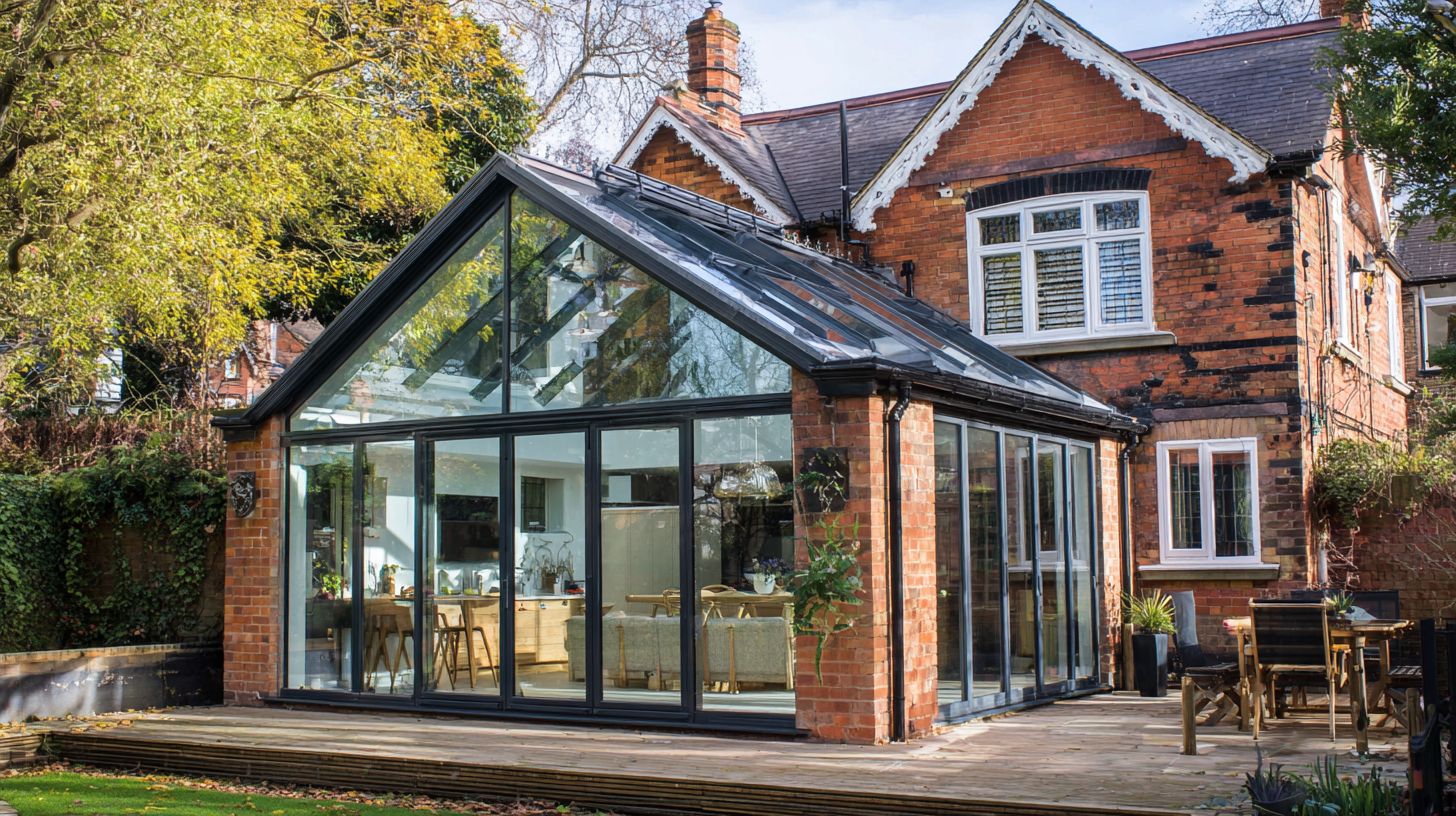
Full planning permission is mandatory for conservatories that exceed the established permitted development limits or are located in designated sensitive areas.
As a result, it is essential to prepare comprehensive and detailed submissions when applying to the relevant local planning authority.
Listed Buildings and Conservation Areas
Since the Town and Country Planning Act 1947 came into force on 1 July 1948, in listed buildings (numbering over 400,000 in the United Kingdom) and conservation areas (encompassing approximately 10% of England), all works involving conservatories necessitate full planning permission and listed building consent. This requirement is exemplified by a June 2022 case in Oxford, where the addition to a Grade II listed property was approved following a £2,000 heritage assessment.
To successfully navigate these regulatory processes, adhere to the following key steps:
- Submit the application to the local planning authority through the Planning Portal (with a fee of £258 in England), incorporating detailed drawings and a comprehensive design statement.
- Undertake consultations with neighbours and, where relevant, obtain a Party Wall Agreement (requiring two months’ notice under the Party Wall etc. Act 1996 for boundaries shared with adjacent properties).
- Develop a heritage impact assessment, ensuring that elements such as the roof pitch align with the original building to reduce visual impact, as Historic England advises in its guidance on design in the historic environment.
Should the application be rejected, an appeal may be lodged with the Planning Inspectorate (PINS), which has a success rate of approximately 35-40% for householder appeals in England and Wales (based on recent government data).
Application Process and Fees
The complete planning application process for conservatories typically requires 8 to 13 weeks to complete. It begins with a fee of £258 for householder applications in England and Wales (based on 2024 rates), potentially including Community Infrastructure Levy contributions, submitted through the Planning Portal, along with a potential additional fee for structural opening approvals from building control.
To manage this process effectively, adhere to the following numbered steps:
- Assemble essential documentation, such as site plans and elevations; utilise AutoCAD LT (£30 per month) for precise drafting.
- Submit the application electronically via the Planning Portal (a process that generally takes about one hour).
- Notify the relevant water authority if drainage systems are affected, and be prepared for any applicable verification fees as per local regulations.
- Address any supplementary fees, while noting that labour costs for extensions valued under £40,000 qualify for VAT exemption.
Common challenges include insufficient neighbour consultations, which may prolong the approval period by up to four weeks. For a deep dive into building regulations specific to conservatories, our comprehensive Conservatories guide covers essential requirements, including the installation of mechanical extractors for ventilation.
Approved planning applications can increase property value by up to 7%, thereby justifying the effort for long-term return on investment.
Frequently Asked Questions
What are the planning rules for conservatories in the UK?
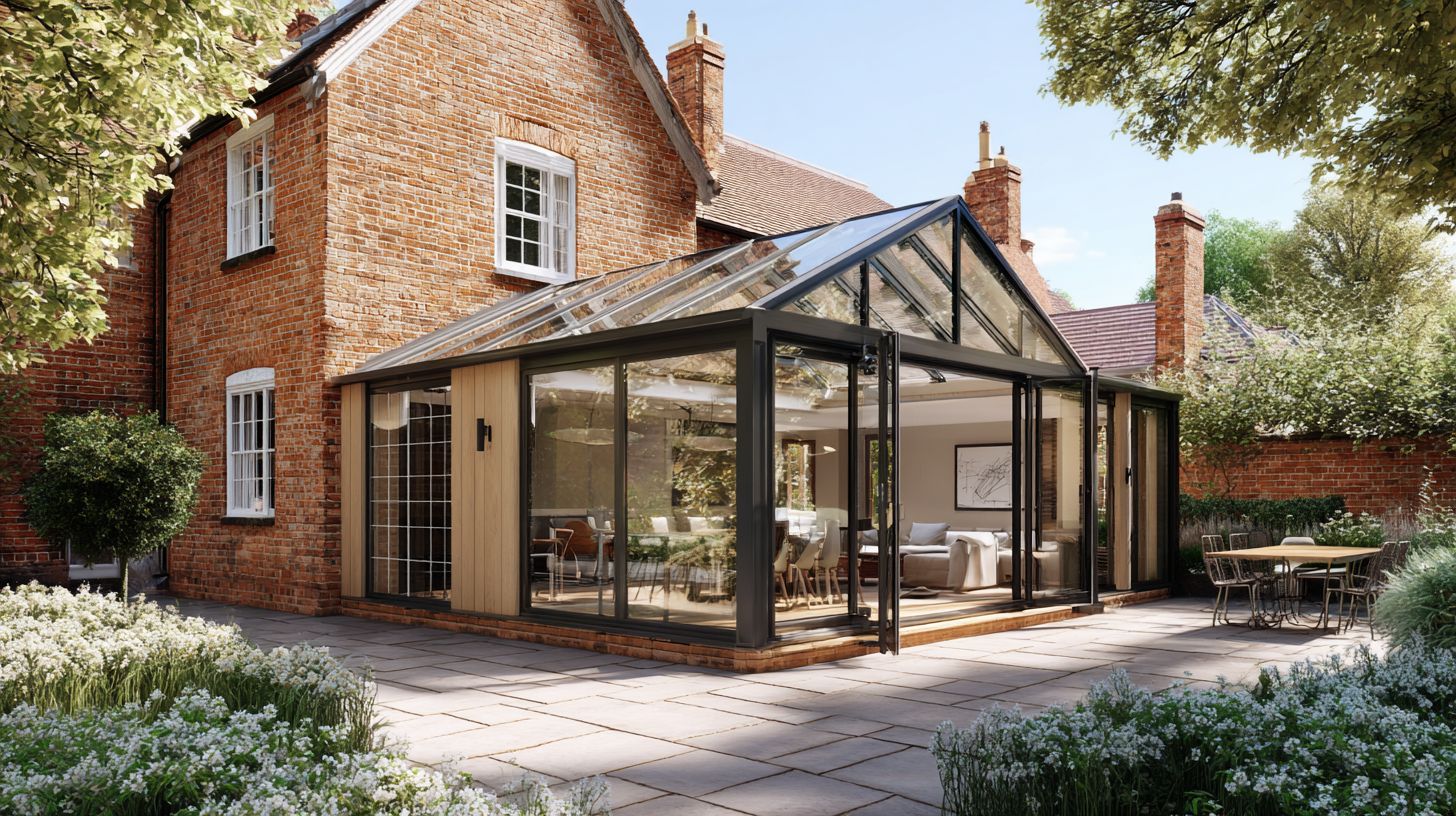
The planning rules for conservatories in England and Wales generally fall under permitted development rights, meaning you may not need formal planning permission if the conservatory meets specific criteria. These rules allow extensions like conservatories up to 3 meters in depth for terraced or semi-detached houses and 4 meters for detached houses, provided they do not exceed the half width of the original house and are not forward of the principal elevation facing a highway. Always check with your local planning authority, as rules can vary in conservation areas, national parks, or for listed buildings.
Do I need planning permission for adding a conservatory to my home?
Under the planning rules for conservatories in England and Wales, you often don’t need planning permission if it qualifies as permitted development. This includes limits on size (e.g., no more than 4 meters projection from the rear wall for detached homes) and conditions like using similar materials to the existing house. However, if your property is in a designated area or the conservatory exceeds these limits, you must apply for permission through your local council to avoid enforcement action.
What size can a conservatory be without needing planning permission?
The planning rules for conservatories in England and Wales specify size limits under permitted development: up to 3 meters deep for terraced or semi-detached properties and 4 meters for detached ones, with the extension not covering more than half the original house width. Height is capped at 4 meters for pitched roofs or 3 meters for flat roofs if within 2 meters of boundaries. Exceeding these requires full planning approval, so measure carefully and consult local guidelines.
Are there different planning rules for conservatories in conservation areas?
Yes, the planning rules for conservatories in England and Wales are stricter in conservation areas, where permitted development rights are often limited or removed. You may need planning permission even for small conservatories to preserve the area’s character. Check with your local authority early, as they might require designs that match historical features, and failure to comply could lead to removal orders.
Can I build a conservatory on the side of my house under UK planning rules?
According to the planning rules for conservatories in England and Wales, side extensions like conservatories are allowed under permitted development but must be single-storey, no taller than 4 meters, and at least 2 meters from boundaries unless the total height is under 2.5 meters. They cannot face a highway and must use non-combustible materials if near boundaries. If these aren’t met, apply for planning permission to ensure compliance.
What happens if I build a conservatory without following the planning rules?
If you ignore the planning rules for conservatories in England and Wales and build without permission when required, your local council can issue an enforcement notice to alter or demolish it, potentially with fines up to £20,000 or more in serious cases, unless protected by the four-year rule. It’s best to seek pre-application advice or submit a lawful development certificate to confirm your plans are permitted, avoiding costly retrospective applications.