
Your Guide To Single Storey Rear Extensions in the UK
Single-Storey Rear Extensions: Planning, Building Regs, Structure, Drainage & Costs — The Complete Guide
A single-storey rear extension can turn a small kitchen and dark back room into a light, social space that flows to the garden. Done well, it glides through approvals, stays comfortable year-round and adds real value. Done poorly, it falls foul of neighbour tests, traps a manhole under the island, or overheats in summer. This guide maps the safest route from first sketch to completion.
What makes a great single-storey rear extension?
Flow first: simple routes from hall to garden without cutting through the cook zone.
Daylight strategy: top-light the middle (rooflights/lanterns), frame views out, and avoid glare.
Approvals-friendly massing: depth, height and boundary treatment considered before you draw elevations.
Real-world buildability: access for diggers, spoil removal, temporary weathering and structural sequencing.
Comfort & performance: warm slab, airtight envelope, reliable ventilation, sensible acoustics.
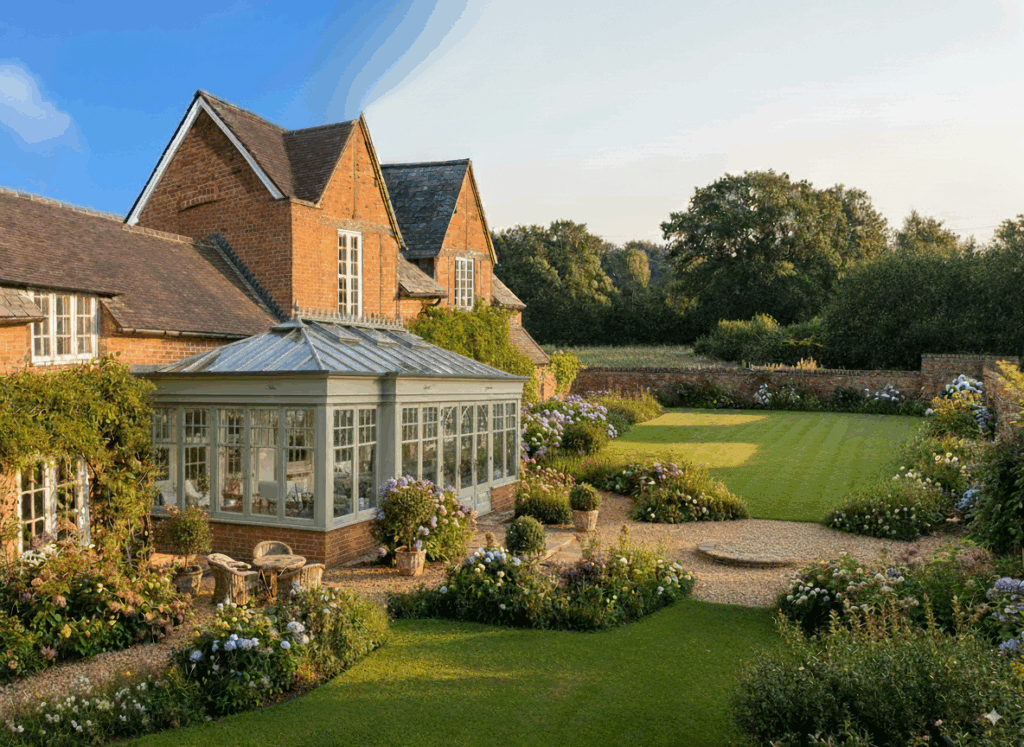
Planning Permission vs Permitted Development (PD)
Many single-storey rear extensions on houses (not flats/maisonettes) can be built under householder PD rights if they meet limits and conditions. Key ideas:
Depth & height: PD limits control how far you can project and how high walls/eaves/roof can be. Taller masses near boundaries are constrained.
“Original house” basis: measurements are from the original rear wall (as first built / at the base date), not from later additions.
Materials & appearance: should be similar to the existing dwelling under PD.
Designated land & Article 4: conservation areas, AONBs, National Parks and Article 4 streets can remove or restrict PD.
No forward projection: PD rear extensions must sit behind the principal elevation (i.e., not alter the front).
Larger Home Extension (Prior Approval)
Some houses can go deeper than standard PD via the “larger home extension” neighbour-consultation process (prior approval). Typical thresholds allow noticeably greater depth for detached vs semi/terrace homes, subject to neighbour comments and council approval. If accepted, it’s still a PD route but with extra checks.
When you’ll need Planning Permission
You exceed PD limits/conditions or you’re in a designation that removes PD.
The design or materials differ significantly from the host dwelling.
You want prominent roof forms or large side projections that don’t meet PD wording.
Flats/maisonettes always need planning (PD rules for houses don’t apply).
Practical strategy: If comfortably within PD or prior-approval thresholds, assemble a tidy drawing set and consider a Lawful Development Certificate for paper certainty. If you’re nudging limits, a householder planning application with a short, policy-aware note is usually cleaner.
Neighbour Amenity — pass the tests before you submit
Most councils apply simple geometry checks:
45-degree test (plan): from your neighbour’s nearest rear window, does your extension sit within a 45° fan? Trim depth/height or chamfer corners if it fails.
25-degree (vertical) test: from the neighbour’s window cill, a 25° line to your roof/eaves; large solid walls close to the boundary often fail this.
Sense of enclosure: long, high flank walls near boundaries can feel overbearing; step down eaves, hip/chamfer the corner, or break up mass.
Overlooking: single-storey rear glazing rarely causes room-to-room overlooking, but raised terraces/platforms can. Keep finished levels sensible and guard privacy.
Building Regulations — what Building Control will check
Irrespective of planning/PD, Building Regs apply. Expect checks on:
Part A (Structure): foundation capacity, wall stability, beams/lintels for knock-throughs, padstones/bearings, temporary works sequencing, lateral restraint straps and wall ties.
Part B (Fire): cavity barriers, fire-stopping at junctions, alarms; boundary separation rules for walls/eaves near the boundary (affects openings/materials).
Part C (Moisture): DPC/DPM continuity, cavity trays and weeps at abutments, robust flashing details, interstitial condensation control.
Part E (Sound): party elements in semis/terraces; internal acoustic quality in open-plan spaces.
Part F (Ventilation): mechanical extract in kitchens vented to outside (recirculation alone isn’t enough), background and purge ventilation; whole-dwelling rates if you tighten the envelope.
Part G/H (Water/Drainage): safe hot water delivery, appliance connections; foul and surface water layout; manholes kept external.
Part K (Protection from falling/impact): steps/thresholds/guarding; safety glazing in critical locations.
Part L (Energy): compliant U-values for walls/roof/floor, window/door performance, thermal bridge treatment and area-weighted/SAP checks.
Part M (Access): reasonable provision — thresholds and clear widths.
Part P (Electrics): notifiable circuits and certification at completion.
Extension types & roof forms that behave
Simple rear projection: lean-to/cat-slide roof or a warm flat roof with rooflights; aligns easily with PD and neighbour tests.
Side-return infill: transforms Victorian/Edwardian plans; use party-wall rooflights to pull light into the centre; mind overshadowing to the neighbour’s window.
Wrap-around (rear + side): powerful but massy; keep the corner subservient with a lower element, stepped plan, varied roof heights or chamfers.
Roof choices
Warm flat roof: slim, great for multiple rooflights/lanterns; needs proper falls, tapered insulation where required, robust upstands and accessible outlets.
Lean-to pitch: kind to headroom at the existing rear wall; watch minimum pitch for tile types; consider rooflights at the high end to drive light deep.
Parapet with internal gutter: elegant, but detail overflow/maintenance access and cavity trays at abutments.
Structure & knock-throughs — beams, frames & sequencing
Opening the back of the house for a kitchen-diner typically means removing structural walls:
Beams/goalposts: RSJs/UBs sized for span and load (roof, any rooms over). Big openings often need goalpost/box frames for stiffness; limit deflection so sliders don’t bind.
Bearings & padstones: don’t perch on weak piers; provide adequate bearings on sound masonry with padstones.
Temporary works: needle-props and phased demo; weather protection over a live home is key.
Lateral stability: when walls go, the floor/roof still need to resist wind; re-establish straps and shear panels.
Cold bridges at steels: insulate around steelwork that crosses to the cold side; specify thermal breaks where practical.
Foundations & levels — trench, piles/raft & thresholds
Trench-fill/strip is common on competent ground.
Piles + ground beams or an engineer-designed raft make sense where trenches collapse, depths get excessive (trees/shrinkable clays), or access is tight.
Set finished floor level (FFL) early: align with existing floors and plan a flush threshold to the garden with a channel drain and falls away from the sill.
Retained manholes: never inside. Relocate or reroute early to avoid redesign.
Drainage, build-over & SuDS
Foul water: short, graded runs; rodding access; relocate manholes outside the footprint.
Public sewers/laterals: if you’re over or within ~3 m, you may need a build-over/near agreement with protective details (bridging lintels, diverted runs). Apply early.
Surface water: size gutters/downpipes; provide soakaways or compliant discharge; consider permeable paving and rain-garden planters when enlarging patios.
Thermal, moisture & airtightness — comfort you can feel
DPM/DPC continuity: lap slab DPM to wall DPCs; upstands at edges/frames; protect with trims.
Thermal bridge control: insulated cavity closers to all openings; treat floor-wall and wall-roof junctions; wrap steel penetrations.
Airtightness: define an air-barrier line; tapes around windows/doors; seal services before plaster.
Condensation control: prefer warm roofs for flat roofs; ventilate where a cold roof is unavoidable; add vapour control layers on the warm side.
Services & ventilation — design them now, not on site
Ventilation & extraction (critical):
Duct cooker hoods to outside; choose the right duct diameter and keep routes short/straight; avoid terminating in the roof void.
Provide background ventilation (trickle) and purge ventilation (openings on opposite façades if possible).
Very airtight schemes benefit from MEV/MVHR — decide early.
Heating & hot water:
UFH in a new insulated slab is ideal; zone it separately for control.
Check boiler/heat pump capacity; additional bathrooms/utility demand hot water capacity.
Summer comfort: pair solar-control glazing with cross-ventilation or consider a discreet air-to-air heat pump (heating/cooling).
Electrics & data:
Dedicated circuits for ovens/induction; RCD protection; plan island power/water before screed.
Hard-wire data to dining/desk zones — Wi-Fi extenders are hit-and-miss.
Daylight, glazing & overheating
Rooflights/lanterns: position above prep/island or the plan centre; use multiple smaller units to spread light and manage solar gain.
Large sliders/bi-folds: coordinate beam depth and a flush threshold detail; consider solar-control glass, external shading or generous reveals on west/south elevations.
Cross-vent routes: pair openings to purge heat quickly in summer.
Party Wall etc. Act 1996 — common triggers
You’ll likely need to serve notice if you:
Excavate within 3 m of a neighbour’s building and deeper than their foundations (or certain 6 m cases),
Build a new wall on/at the boundary, or
Cut into/raise a party wall (e.g., to insert beams or flashings).
Provide foundation sections and beam details with notices to speed agreement, and allow time for an Award if neighbours dissent.
Kitchen & family-space layout — numbers that make it work
Between parallel runs: target 1000–1100 mm (1200 mm if two cooks).
Around islands: 1000–1200 mm clear; ≥1100 mm where doors face each other.
Seating at islands: 300–350 mm knee overhang; ~600 mm per stool.
Zones, not triangles: keep sink–dishwasher–bin tight; landing space either side of hob and near fridge; group tall units to one side for calm lines.
Lighting layers: task (under-cabinet), ambient (ceiling/pendants), and accent (shelves/walls) on dimmable circuits.
Costs, timelines & procurement
Indicative programme
Survey, concept & planning/LDC/prior approval: 3–8 weeks (add ~8 weeks for a planning decision if needed).
Technical design & Building Control: 2–6 weeks.
On-site build: 8–16+ weeks depending on structure, glazing lead times, foundations and finishes.
Key cost drivers
Foundation type (deep trench vs piles/raft), steelwork size, glazing quantity/spec, drainage diversions/build-over, kitchen/utility fit-out, roofing choice, external works.
Procurement
Traditional tender with drawings + specification + schedules (windows/doors, kitchen, finishes), or D&B with clear Employer’s Requirements.
Lock appliance models early — MEP coordination depends on them.
Common pitfalls (and how to dodge them)
Manhole under the island: discovered late — survey drains and relocate externally early.
Extractor dead-end: long, kinked ducts → poor airflow — plan the route day one.
Overheating: huge west glazing without shading — add solar control + cross-vent.
Cold bridges at steels/thresholds: condensation risk — insulate & use thermal breaks.
Headroom losses: chunky beams/over-thick build-ups — coordinate structure with ceiling lines.
Party Wall left late: notices served when the digger arrives — start during technical design.
PD misread: measured from an existing extension, not the original house — re-measure before committing.
Internalised downpipes: forgotten in demolition — reroute rainwater early with proper capacity.
Step-by-step workflow we recommend
Feasibility & constraints — PD vs planning/prior approval, Article 4, conservation, neighbour tests, drains/sewers, trees, access.
Measured survey — plans/levels; note drains/manholes, downpipes, meters, boiler, consumer unit, garden levels.
Concept options — massing, roof form, daylight strategy, MEP routes; run neighbour tests.
Planning/LDC/prior approval — choose the route; prepare a clean, policy-aware pack.
Structure — beam/goalpost design; foundation strategy (trench vs piles/raft); temporary works plan.
Technical design — U-values, membranes/VCL, junction details; extraction route; drainage layouts; UFH zoning; appliance schedules.
Party Wall & build-over — serve/apply early with clear sections.
Tender & contract — drawings/specs/schedules; programme milestones and inspection points.
Build & inspections — photograph membranes/insulation/steel bearings before covering; keep certificates.
Completion — snag, Building Control completion, O&M pack (as-builts, manuals, warranties).
FAQs
Do I need planning for a standard rear extension?
Often no if within PD or via the Larger Home Extension prior-approval route. Check designations and measure from the original house.
Can I keep a manhole inside the new extension?
No — relocate externally or reroute; Building Control expects accessible chambers outside the footprint.
Do flat roofs always leak?
No — a correctly detailed warm roof with proper falls, upstands, outlets and maintenance access is robust and efficient.
How much space around an island is comfortable?
Aim for 1000–1200 mm clear all round; allow more where appliance doors face each other.
Is UFH worth it?
Yes — in a well-insulated slab with good controls, UFH gives even comfort and frees wall space.
Next steps
Share your address, brief (island vs peninsular, glazing goals, depth target) and any past plans. We’ll confirm the planning route, run neighbour tests, set structure/foundation strategy, and produce planning + Building Regs drawings with crisp junction details — so your extension feels effortless on paper and on site.

Quick Links
Get In Touch
Building 13, Thames Enterprise Centre, Princess Margaret Road, East Tilbury, Essex, RM18 8RH
- Phone: 0800 494 7023
- Hours: Mon-Fri 8:30AM - 5:30PM
Get In Touch
Building 13, Thames Enterprise Centre, Princess Margaret Road, East Tilbury, Essex, RM18 8RH
- Phone: 0800 494 7023
- Hours: Mon-Fri 8:30AM - 5:30PM